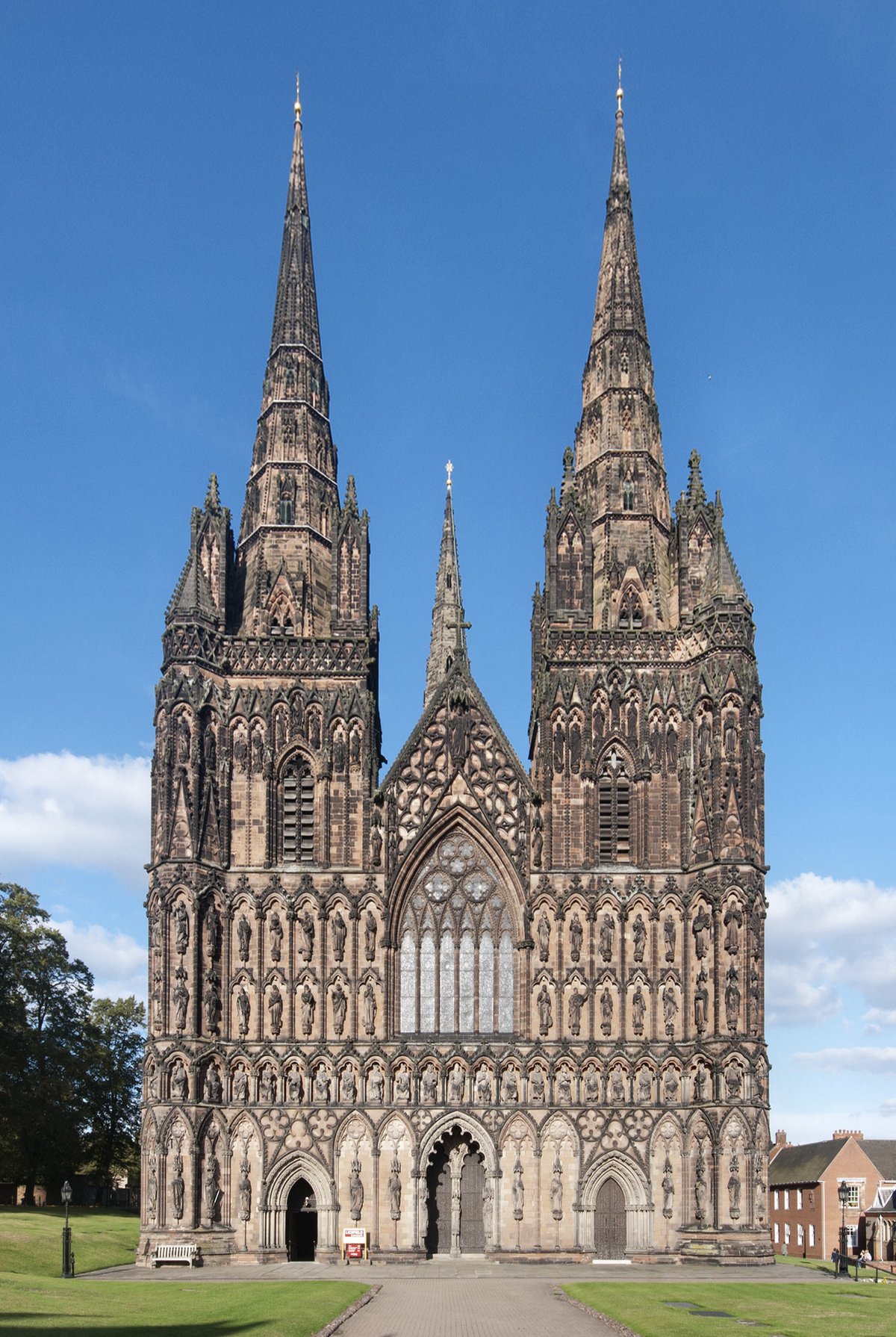
Lichfield Cathedral is known as the Cathedral Church of Saint Mary and Saint Chad, but the city it's named after, Lichfield, actually owes its name to the cathedral. The name Lichfield first appeared in 700 when it was named Lichfelah tham gesecattre, which translates to 'Lichfeld, the church referred to as the cathedral.'
The diocese of Mercia was established in 656, and a cathedral was consecrated on the present site in 700, making it the oldest cathedral in England.
Chad, the fifth bishop of the diocese, is believed to have been buried at the site, but his grave was moved in 1538, during the English Reformation. The cathedral was besieged three times during the English Civil War and suffered severe damage.
The present day building was built between the early 13th and mid-14th century in the Decorated Gothic style. Many of the details of the building date from the restorations undertaken by George Gilbert Scott, due to the soft sandstone of which it is constructed and war damage. The cathedral is the second largest in the UK, with an internal length of 113 meters and a breadth of 21 meters. Its central spire is 77 meters high and the western spires are about 58 meters, with the southern spire being slightly taller than the northern one. The stone for the cathedral was quarried locally.
Sources: Wikipedia, OpenStreetMap, Wikidata, Wikimedia Commons
Written by Nicolo Ciampini
Discuss this with the author and others
No comments yet. Be the first to start the conversation.