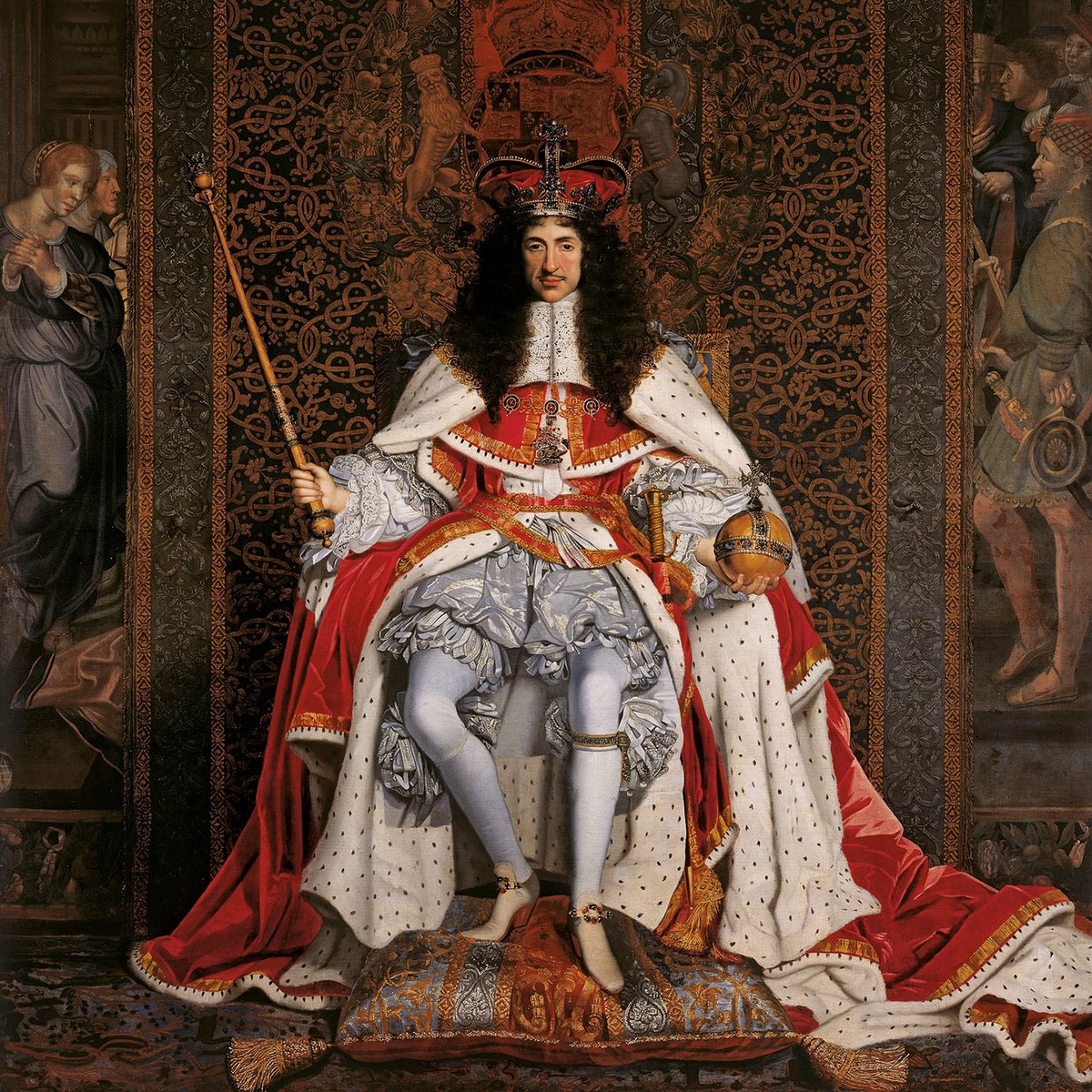
In the heart of London, a 1-metre-tall sculpture of marble stands today. Commissioned by Planet Art, the sculpture commemorates the Stuart Restoration of 1660, when King Charles II returned to the English throne, ending the Interregnum and the Commonwealth of England. The statue depicts the King on his 30th birthday, a day that became a public holiday known as Oak Apple Day. The base of the sculpture is inscribed with the key dates of the Restoration period, and its material symbolizes the grandeur and solidity of the monarchy restored.
The sculpture stands on Whitehall, near the site of Whitehall Palace, where the beheaded Charles I was held before his execution in 1649. One hundred years later, his son, Charles II, was welcomed back to London and to the English throne by the people and the British army, led by General George Monck.
The Stuart Restoration had profound political and cultural consequences. The Interregnum had been characterized by the rule of the Lord Protector Oliver Cromwell, who had closed the theatres and cracked down on public religious expression. With the Restoration, the theatres reopened, and Restoration comedy and literature flourished. Women appeared on the public stage for the first time in England, and the court of Charles II became an important centre of artistic and literary life.
However, the Restoration did not come without controversy. Ten of the regicides, those who had signed the death warrant of Charles I, were executed in October 1660, and their bodies were subjected to posthumous execution in 1661. A further nineteen regicides were imprisoned for life.
The sculpture, titled 'Restoration', was unveiled in 2004, as a memorial to the Stuart Restoration and the events of 1660.
Sources: Wikipedia, OpenStreetMap, Wikidata, Wikimedia Commons
Written by Nicolo Ciampini
Discuss this with the author and others
No comments yet. Be the first to start the conversation.