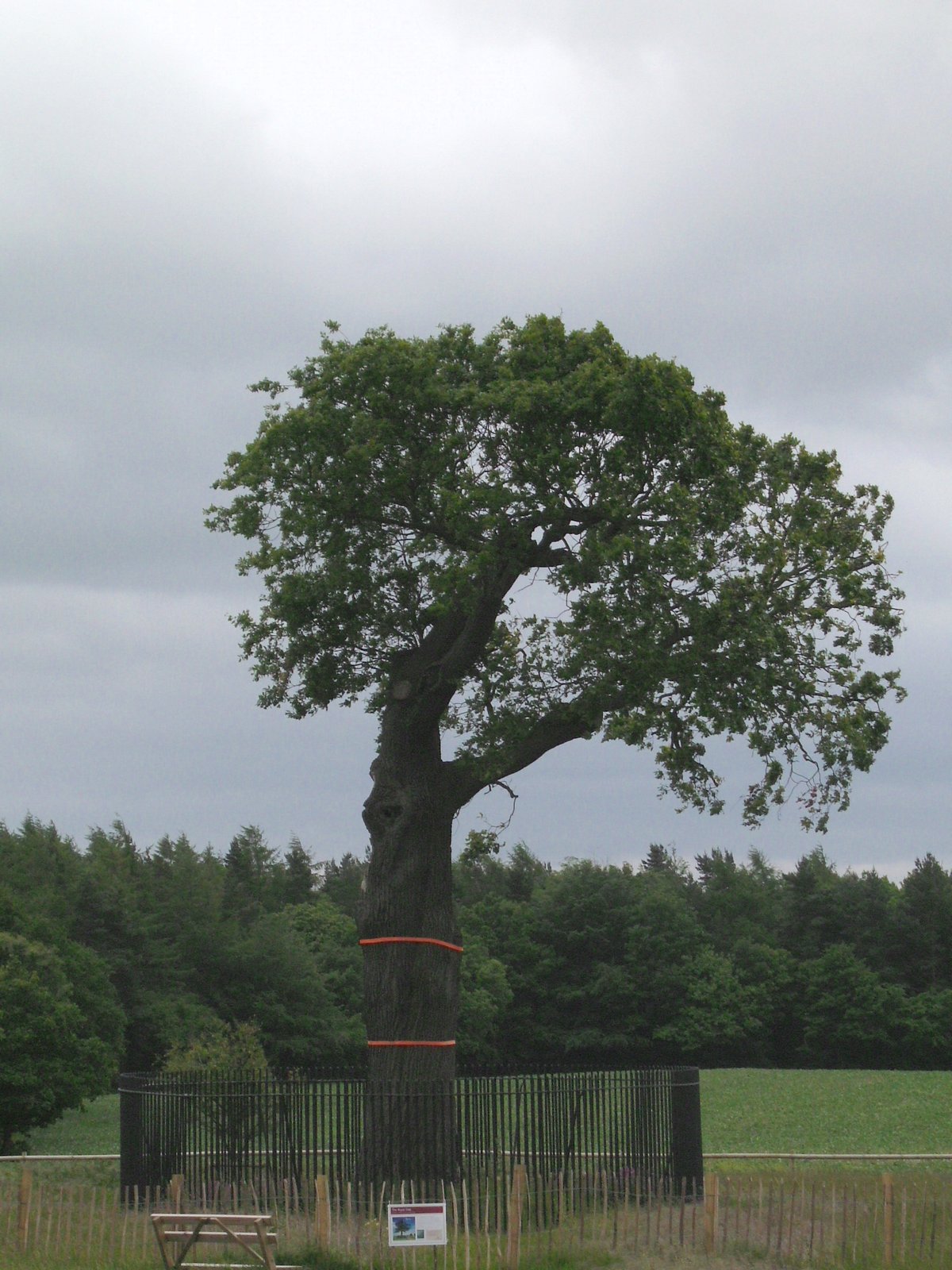
Charles II, with his followers, fled to France but were forced to hide in a pollarded oak tree near Boscobel House in Warwickshire. A Parliamentarian offered a grand sum for the king's capture, but the Oak provided cover. On the night of 6 September 1651, Charles found shelter in a priest hole at Boscobel House. The following day, Charles, along with the Pendrel brothers, made their escape eastwards to Moseley Old Hall. Later, Charles, having been restored to the throne in 1660, granted annuities to the Penderels for their services and granted Major William Careless the surname of Carlos and a new coat of arms.
Large slipware dishes representing the Boscobel Oak also show the Lion and the Unicorn supporting it. The original oak tree was reportedly destroyed by souvenir hunters in 1725, but a statue known as the Son of Royal Oak stands at the site today, believed to be a descendant of the original tree.
Sources: Wikipedia, OpenStreetMap, Wikidata, Wikimedia Commons
Written by Nicolo Ciampini
Discuss this with the author and others
No comments yet. Be the first to start the conversation.