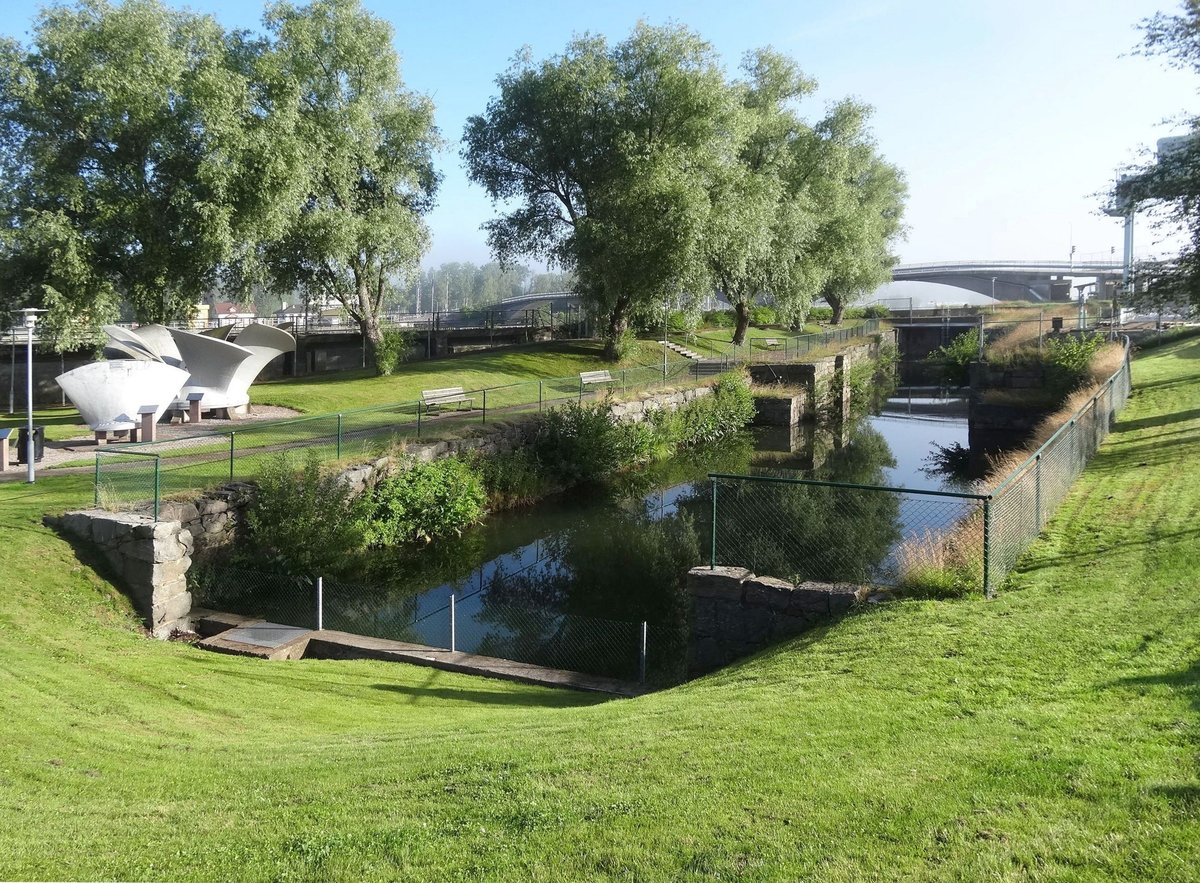

For centuries, the four-metre waterfall at Lilla Edet stood as a barrier to navigation on the Göta älv. Before the first stone was laid, ships had to be hauled across land to bypass the drop. Records show that in 1064, King Harald Hårdråde of Norway had to do exactly this, dragging 60 Viking ships overland to reach Lake Vänern.
To solve this, King Johan III proposed a lock in the 1580s. Completed in 1607, Lilla Edets sluss became one of Sweden's first locks. It was a vital piece of infrastructure that allowed for a steady flow of trade, though it required constant repair. During the 1600s, the facility was even seized as collateral by Denmark and later fell into the hands of the city of Gothenburg in 1651.
The lock survived several wars and a major reconstruction in 1784 before the demands of trade outpaced its capacity. In 1832, the larger Ströms kanal was built on the opposite side of the river, eventually leading to the decommissioning of the original 1607 structure.
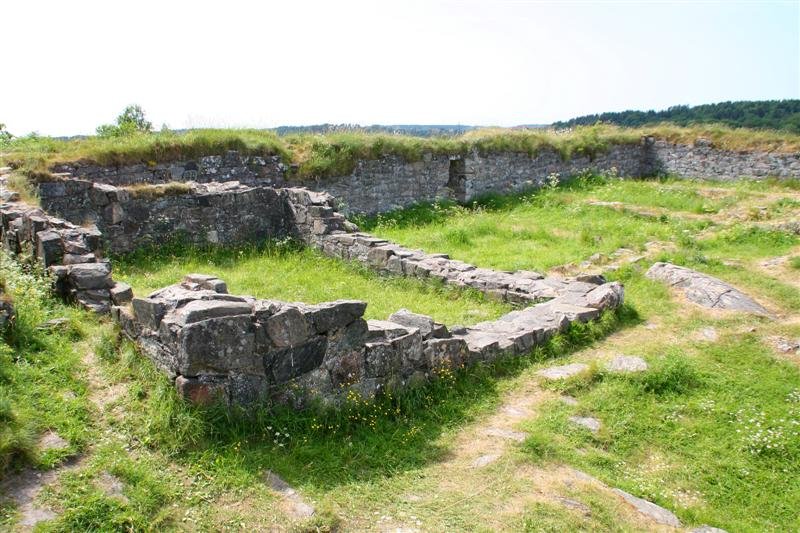
Today, the modern navigation system is part of the Trollhätte kanal, but you can still see remnants of the 17th-century lock east of the current power station. A nearby memorial stone from 1930 marks the site of a tragic fire in 1830, when 47 soldiers from the Västgöta-Dals regiment drowned while fighting the flames.
Sources: Wikipedia, OpenStreetMap, Wikidata, Wikimedia Commons

Written by Nik Frost
Discuss this with the author and others
No comments yet. Be the first to start the conversation.