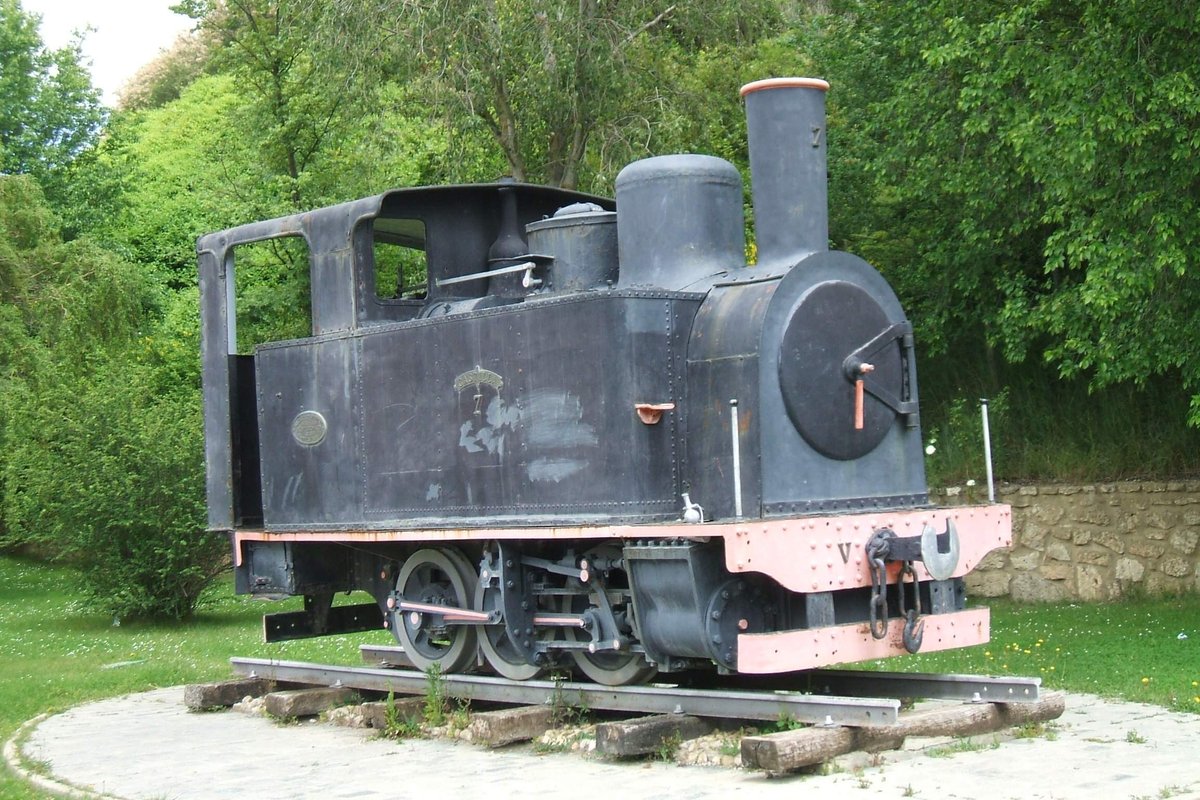

The Compañía del Ferrocarril Económico de Valladolid a Medina de Rioseco was a Spanish railway company that operated between 1884 and 1969. Known as the ‘tren burra’ (slow train), it connected the cities of Valladolid and Medina de Rioseco. The line was intended to serve as a barrier between the aristocracy of Valladolid and the working class of Medina, both cities divided by their social status and political leanings. The train was slow, but it symbolized the divide economically, socially, and politically.
The line was constructed between 1881 and 1884, but its operation faced significant economic difficulties. By the end of 1927, the superior council of railways requested the company’s integration with the Compañía de Ferrocarriles Secundarios de Castilla. The state took over the line on October 7, 1930, and handed it over to ‘Secundarios de Castilla’ on October 31. The line was integrated into FEVE in 1965 and closed in 1969. In the early 21st century, the use of the line was reduced, leading to the conversion of its track into a cycling greenway in the 2010s to increase cycling tourism in the province.
The number 6 locomotive, known as Rioseco, is the only one that is preserved, restored in the 1980s and displayed in Plaza de San Bartolomé in Valladolid, near the old station of the same name. The number 6 locomotive was acquired by the company between 1911 and 1913.
Sources: Wikipedia, OpenStreetMap, Wikidata, Wikimedia Commons
Written by Nik Frost
Discuss this with the author and others
No comments yet. Be the first to start the conversation.