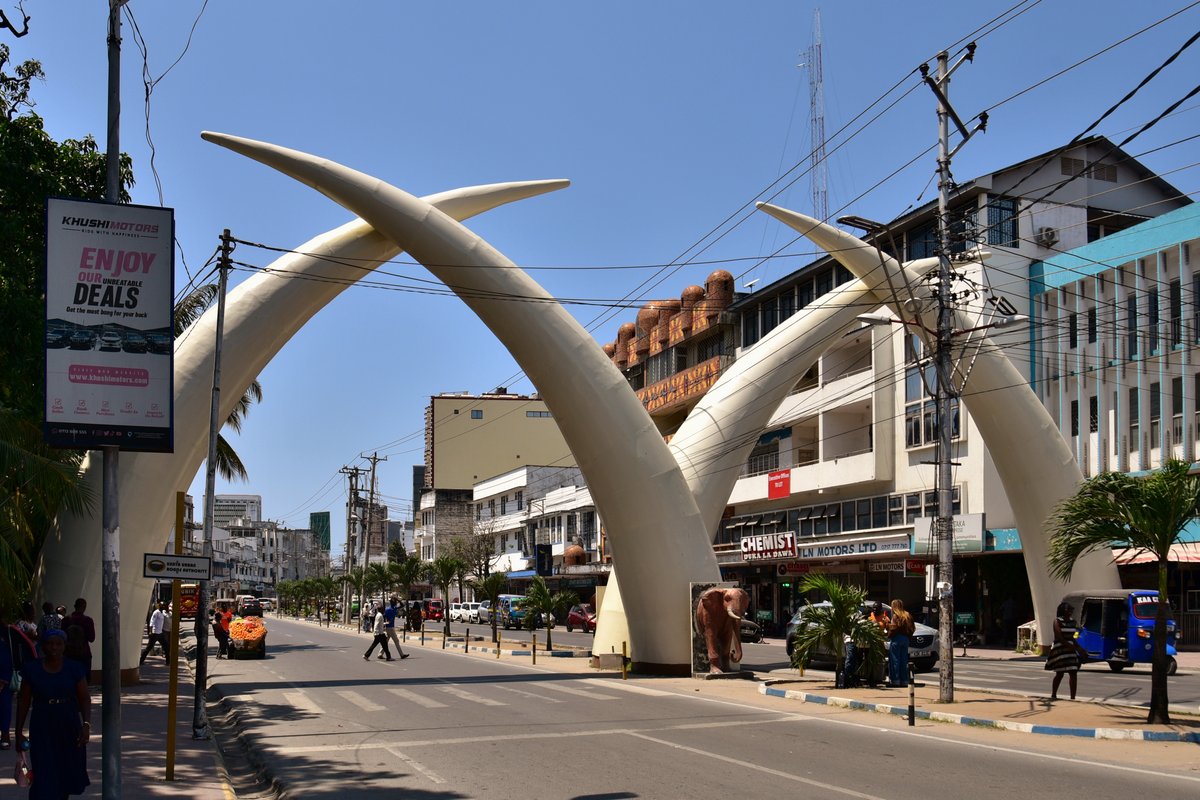

The Mombasa tusks, also known as Mapembe ya Ndovu, form a monument over Moi Avenue, a major thoroughfare in Mombasa, Kenya. Built in the 1950s to commemorate visits by the British royal family, the monument originally comprised two wooden structures resembling tusks. Today, there are four aluminium tusks arranged in an M shape, under the jurisdiction of the National Museums of Kenya and the city's municipal government.
The original wooden and canvas tusks were constructed in 1952 by the British administration to commemorate the visit of Queen Elizabeth II to the city. They were erected on Kilindini Road, which led to the Queen's residence at the Mombasa Yachting Club. The monument became a local attraction where companies and residents made public announcements. Because the original structures made such an impression, the municipal council commissioned a more permanent set in 1956 to accommodate a wider road and the visit of Princess Margaret.
The new tusks were built by a local family company, Haji Suleman Haji Ladh & sons, a few metres away from the original site. Made of weather-resistant aluminium, the four tusks form the shape of the letter M for Mombasa. Since then, the white tusks have been repainted several times by United States Marines visiting the city. While the municipal government restricts commercial advertising, the National Museums of Kenya charges for commercial filming of the monument, which remains a popular tourist destination and local meeting place.
Sources: Wikipedia, OpenStreetMap, Wikidata, Wikimedia Commons
Written by Mutabor
Discuss this with the author and others
No comments yet. Be the first to start the conversation.