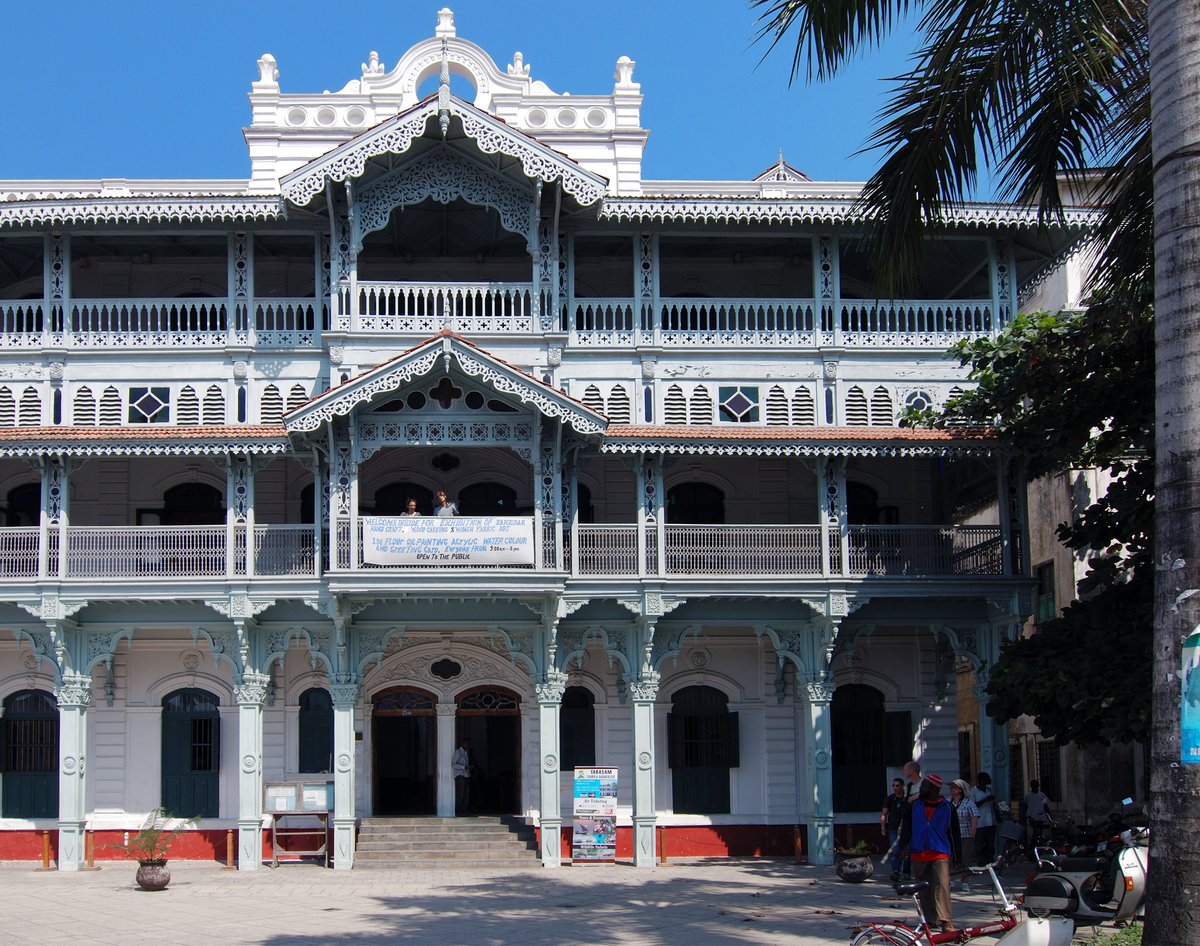

In the year 1887, a wealthy Ismaili Indian named Tharia Topan sought to build a grand structure in Stone Town. This monument was to honor Queen Victoria's Golden Jubilee and serve as a charitable hospital for the poor. However, death claimed Tharia Topan in 1891, leaving the stone skeleton of his dream haunting the earth as an unfinished shell.
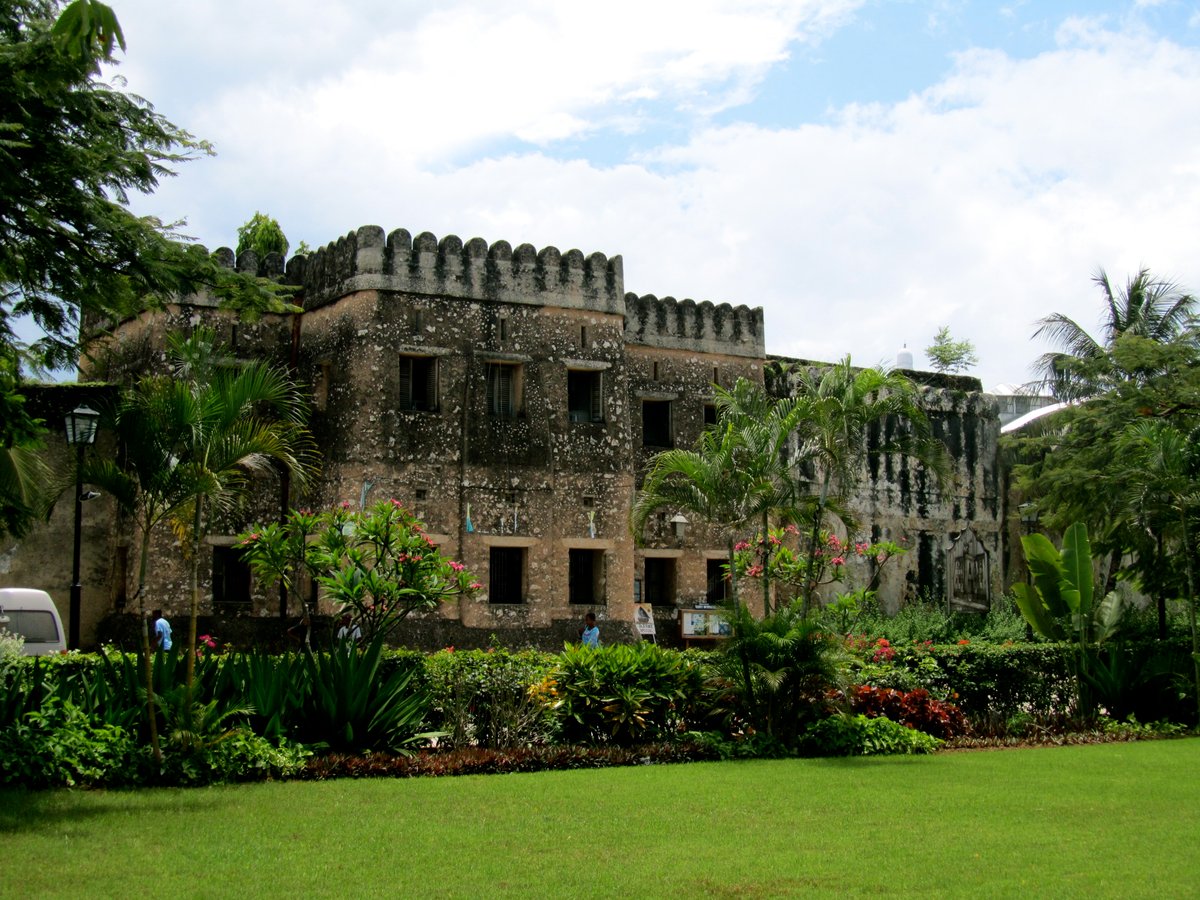
His widow attempted to breathe life into the stones, but by 1893 her gold was spent. A bitter family quarrel forced the sale of the site to a new master who finished the work in 1894. The edifice rose from Zanzibari coral rag and limestone, cloaked in European neo-classical stucco. Its wooden balconies held Indian stained glass, a marriage of worlds in a house of stone.
By 1900, a prominent Indian merchant named Haji Nasser Nurmohamed claimed the property. He turned the ground floor into a dispensary while partitioning the upper levels into living quarters. But the tides of fate turned in 1964 during the Zanzibar Revolution. The government seized the building, and it fell into a long sleep of rot and decay.
In 1990, the Aga Khan Trust for Culture sought to awaken the ruins as part of a plan to restore the history of Stone Town. This labor of resurrection was completed in April 1994. Today, the building holds a covered courtyard and carved bridges, serving as a museum to tell the tales of Zanzibar.
Sources: Wikipedia, OpenStreetMap, Wikidata, Wikimedia Commons
Written by Mutabor
Discuss this with the author and others
No comments yet. Be the first to start the conversation.