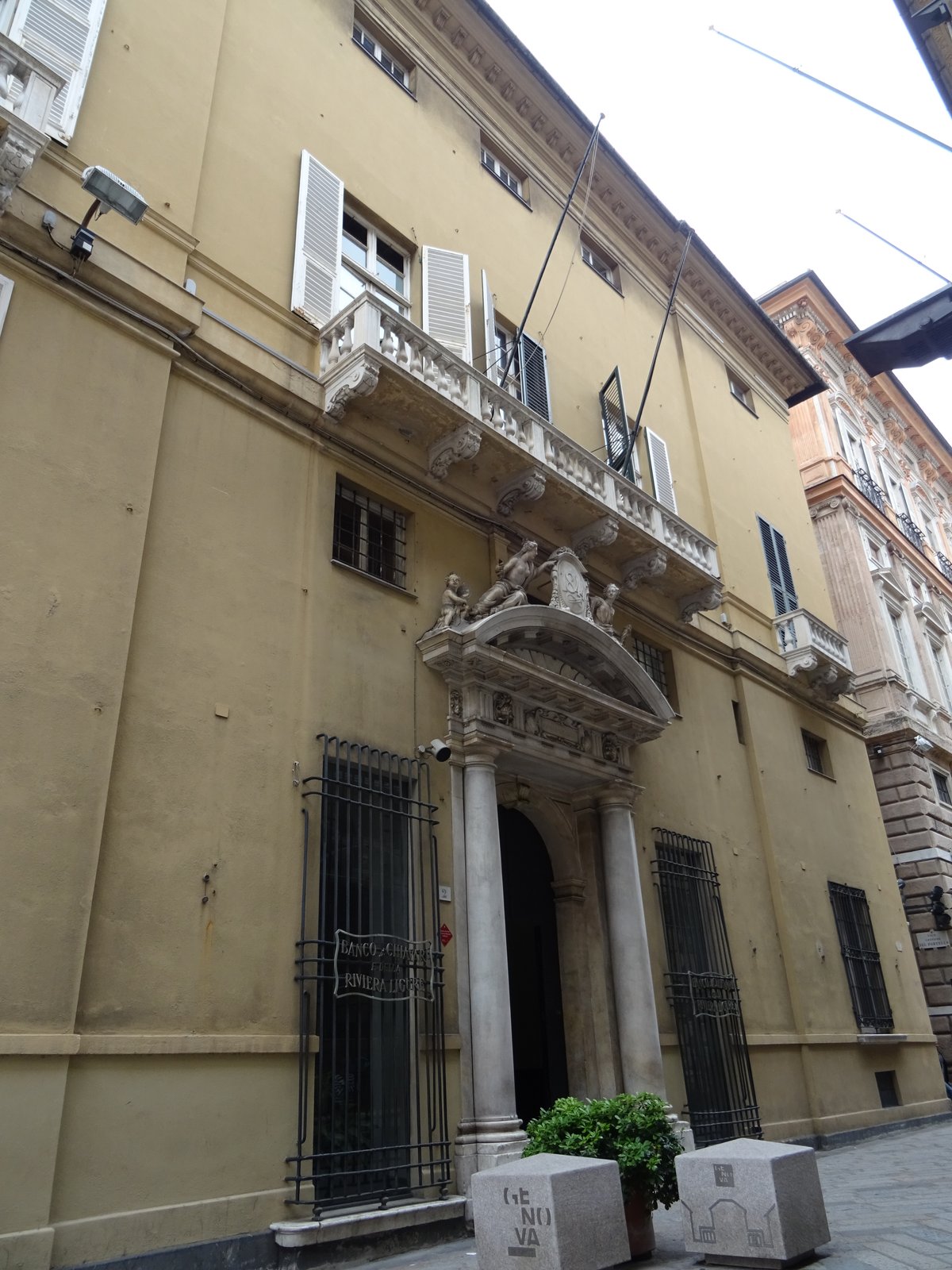

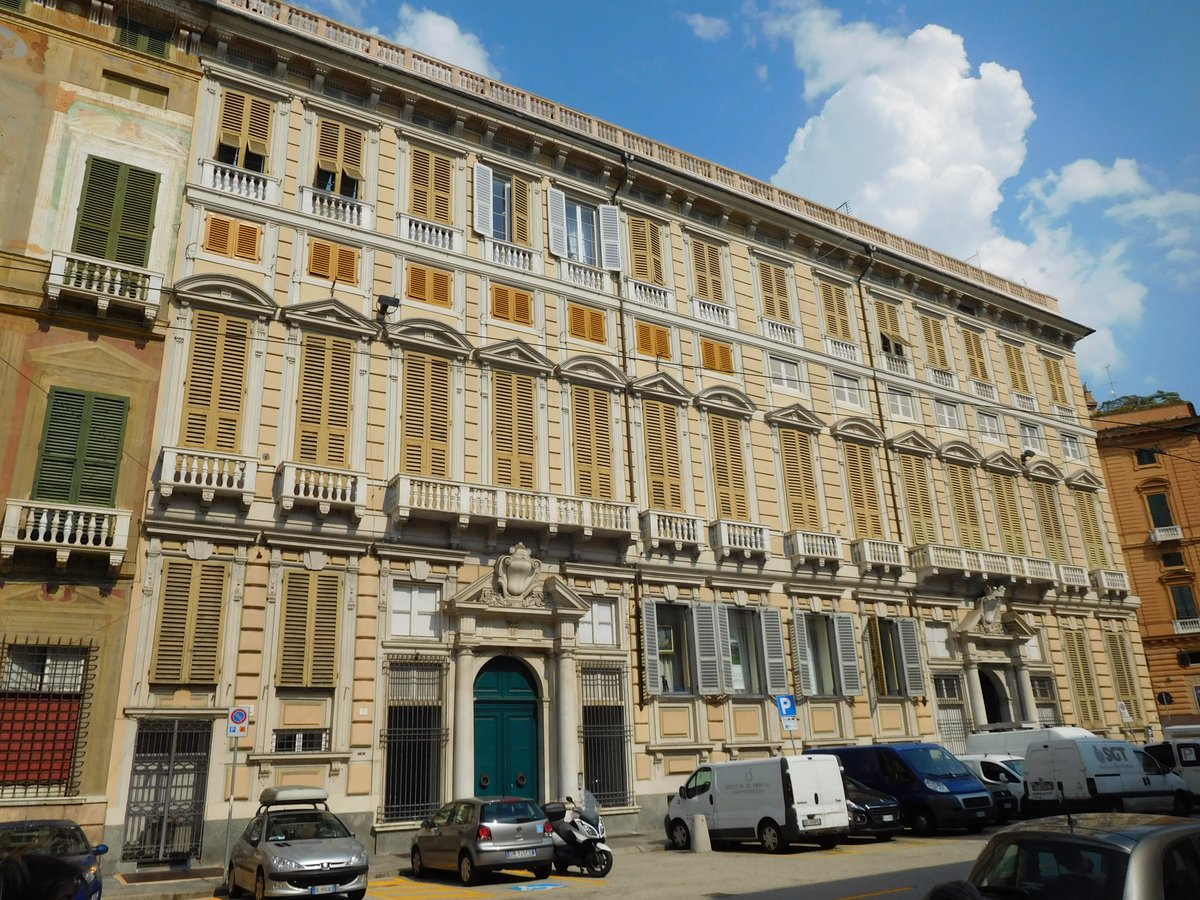
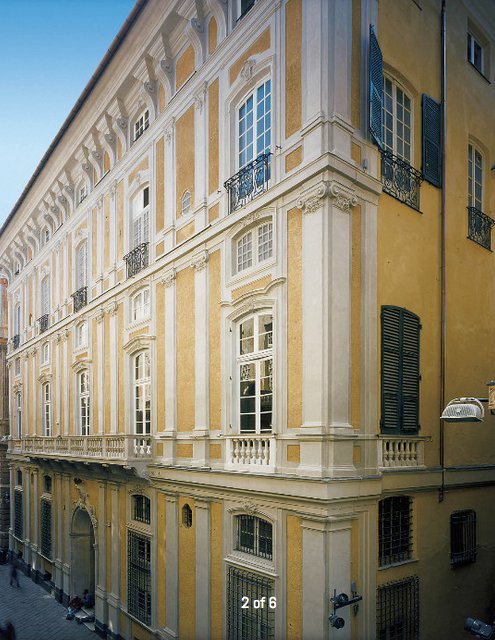
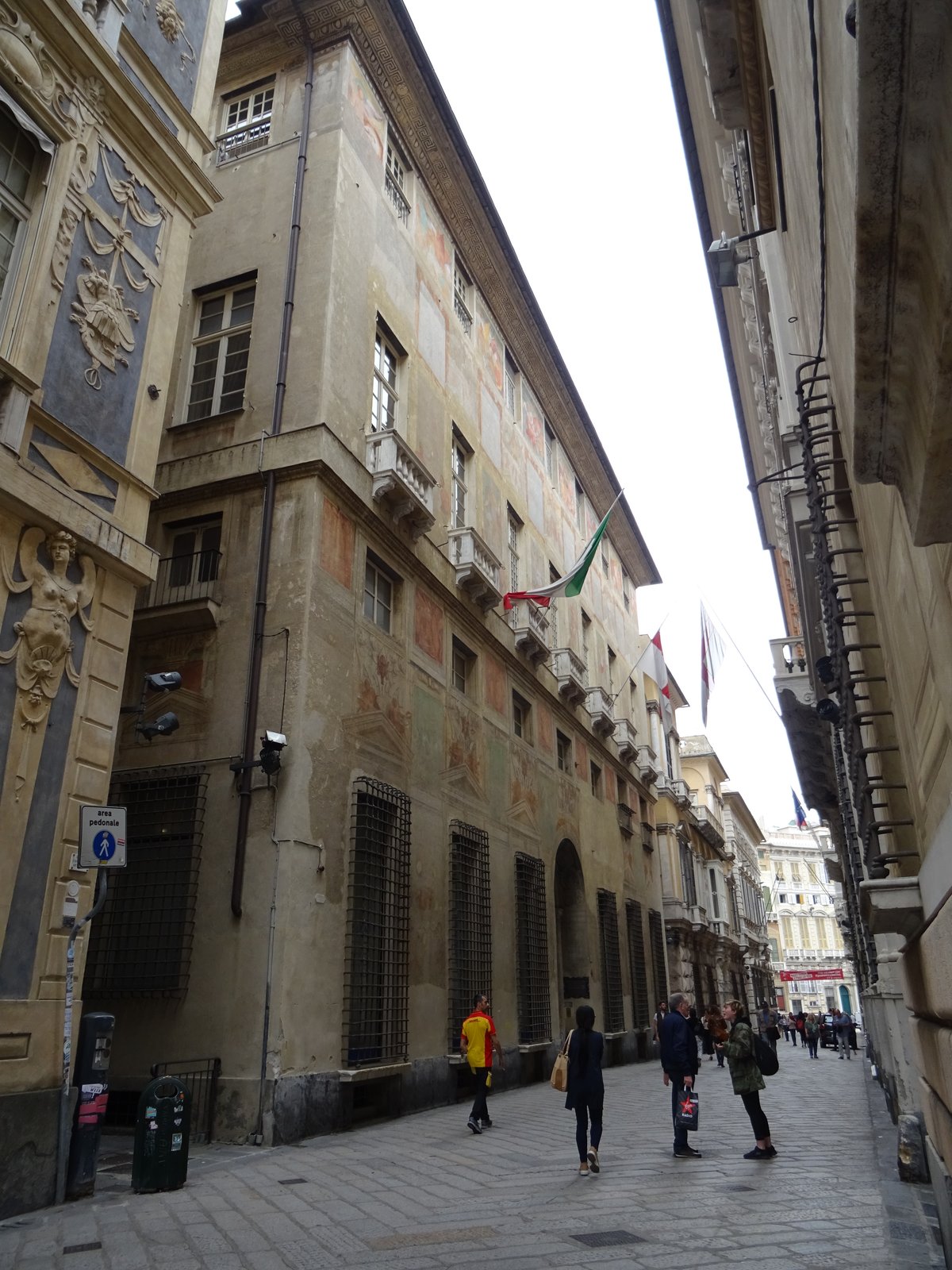
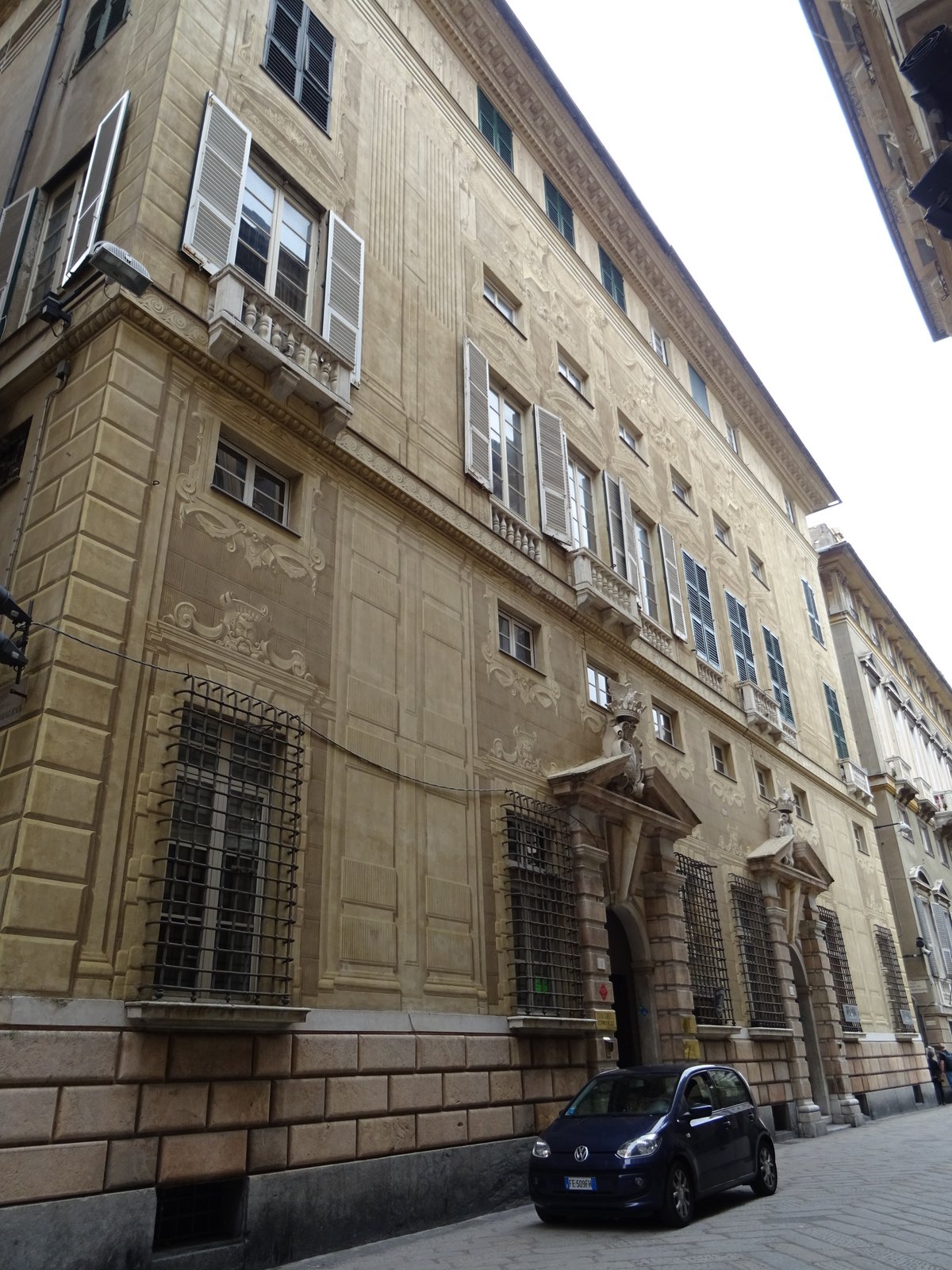
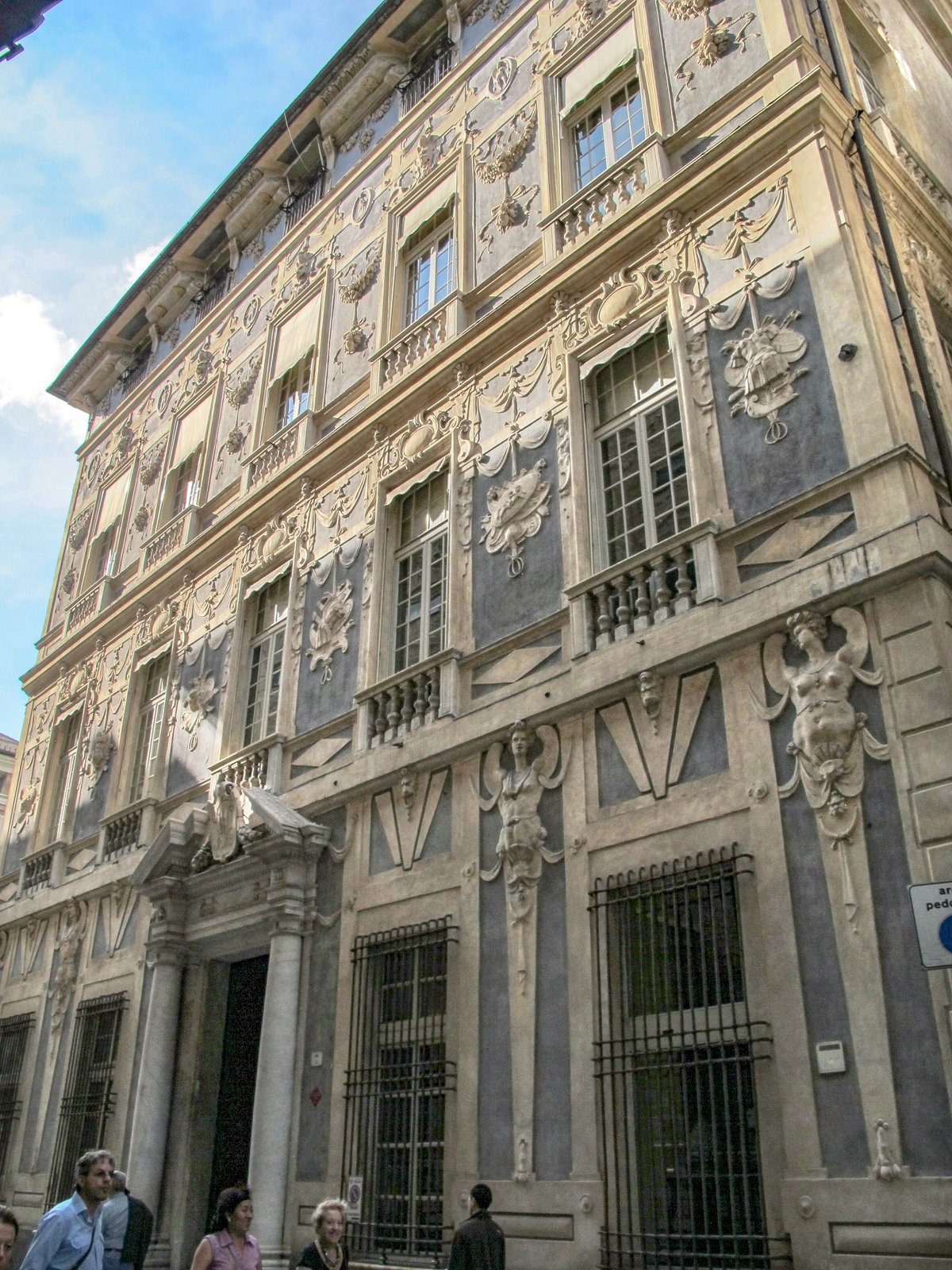
The Palazzo Pantaleo Spinola, also known as Palazzo Gambaro, is located at number 2 in the historical centre of Genoa. Built by the architect Bernardo Spazio and continued by Pietro Orsolino until 1558, it was commissioned for Pantaleo Spinola, who died in 1536 without ever living in the palace. The building is part of the Rolli di Genova and was included in the UNESCO World Heritage list in 2006. Today, it serves as the headquarters of the Banco di Chiavari e della Riviera Ligure.
The façade features simple lines, balconies, and a portal surmounted by two marble statues representing Prudence and Vigilance. The ground floor is richly frescoed with biblical episodes painted in the first decades of the Seventeenth century by Giovanni Carlone, including The End of Assalon. A remarkable glass compass made in 1923 is also located on this floor.
On the upper floor, the palazzo houses 16th-century frescoes by the Semino and Calvi brothers, alongside the high achievements of Genoese Baroque by Domenico Piola and Giovanni Battista Carlone. In the hall on the piano nobile, a vault was frescoed at the end of the 17th century by Piola and Paolo Brozzi, depicting a mythological subject with an allegorical meaning extolling peace. Other salons feature works by Piola and Carlone depicting scenes from Roman history and the Life of Lucretia.
The salon leads to a terrace whose nymphaeum once housed a famous marble group by Pierre Puget depicting the Abduction of Elena. That masterpiece is now housed in the Museum of St. Augustine. The building was previously owned by the Giustiniani and the Gambaro family, the latter of whom covered the nudity of the figures above the portal.
Sources: Wikipedia, OpenStreetMap, Wikidata, Wikimedia Commons
Written by Nicolo Ciampini
Discuss this with the author and others
No comments yet. Be the first to start the conversation.