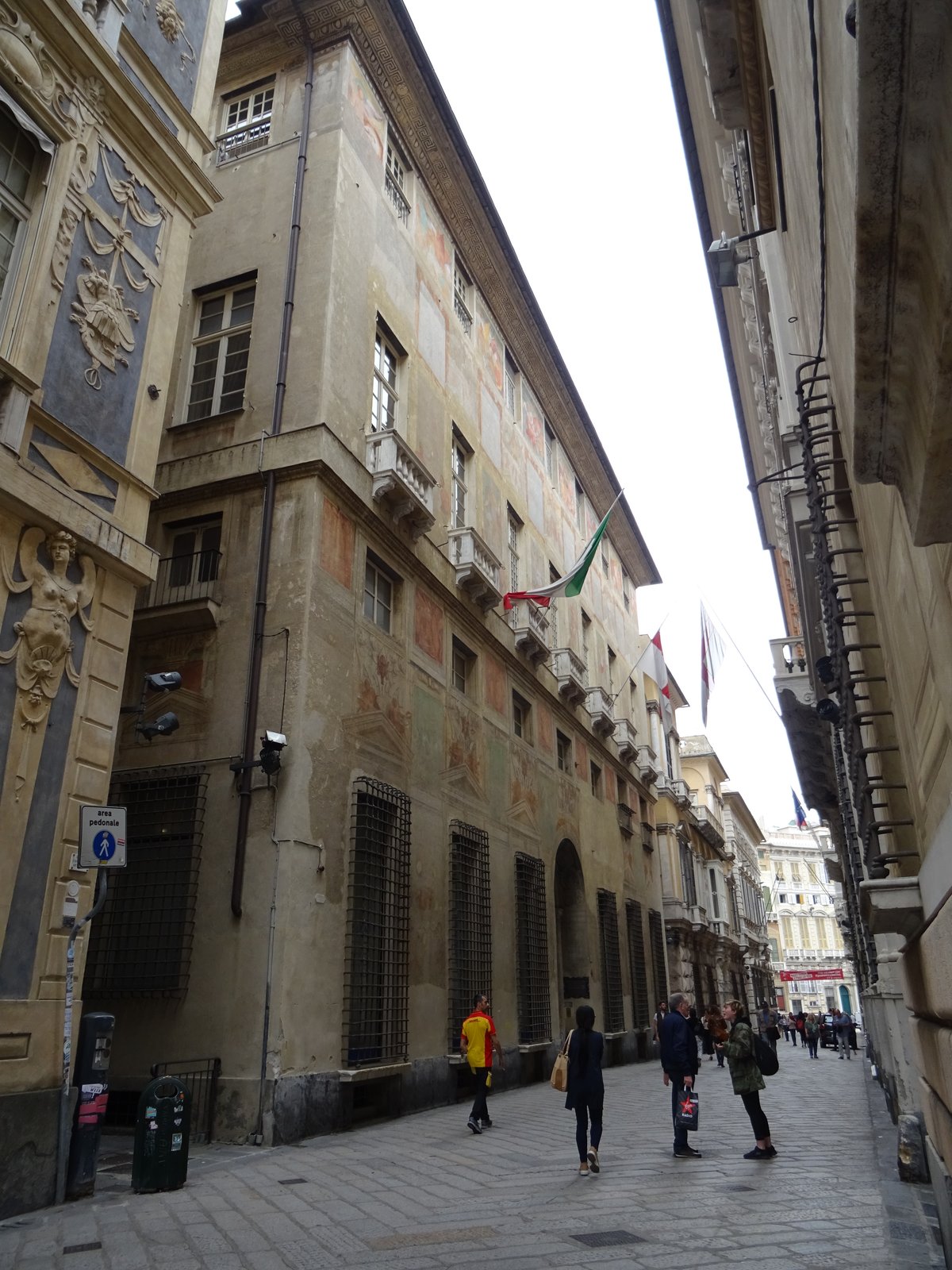

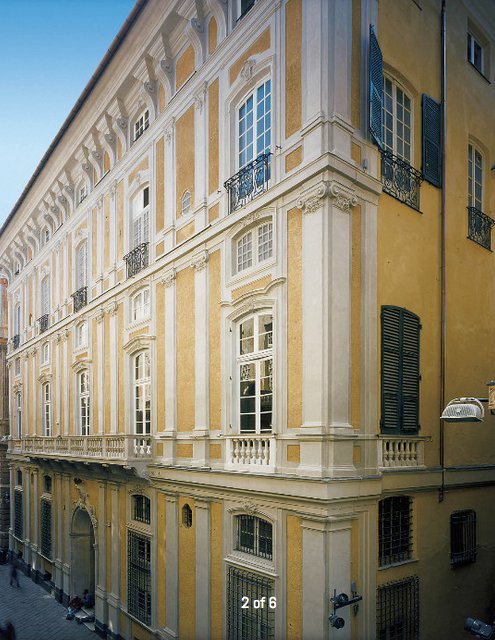
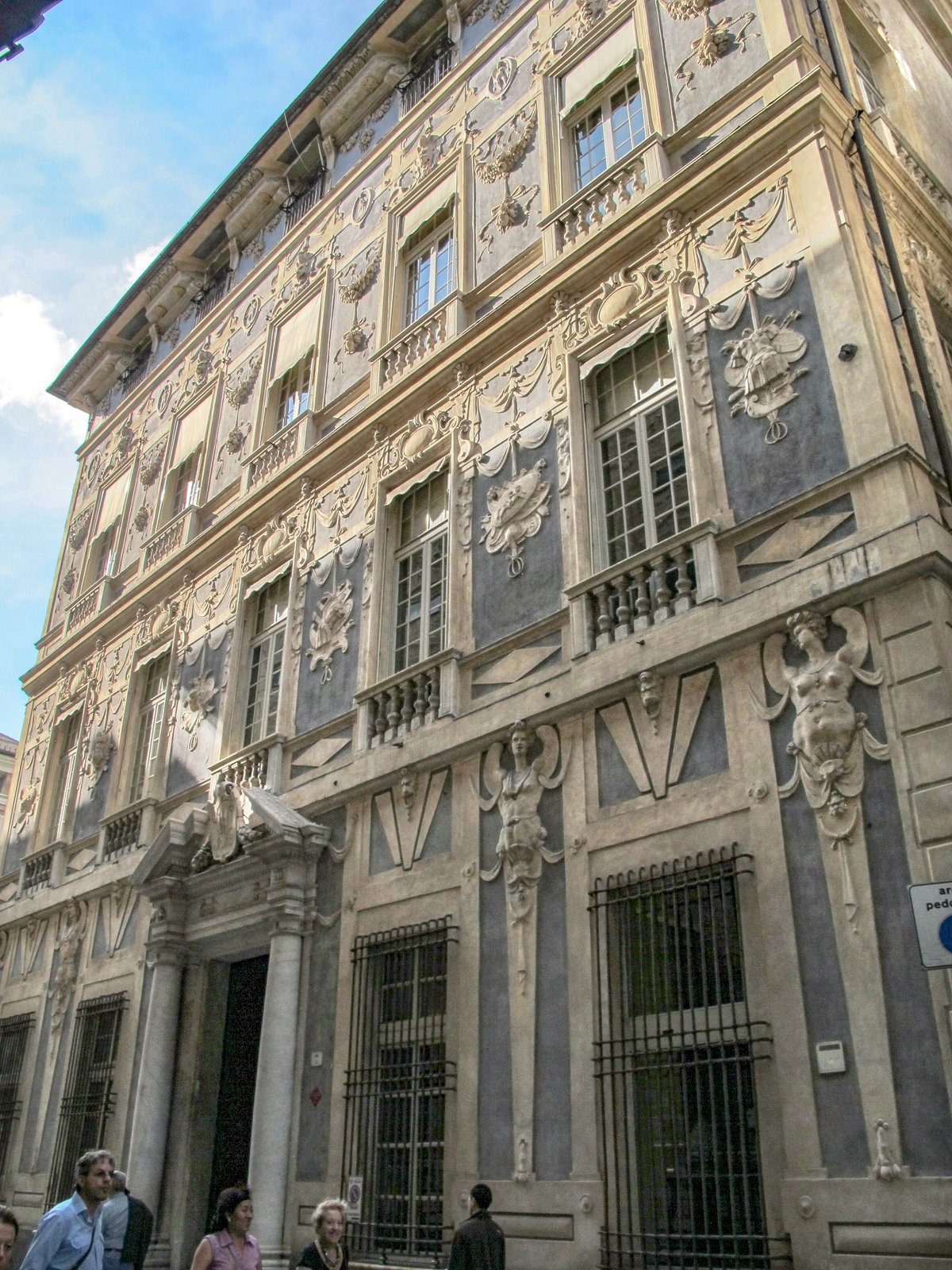
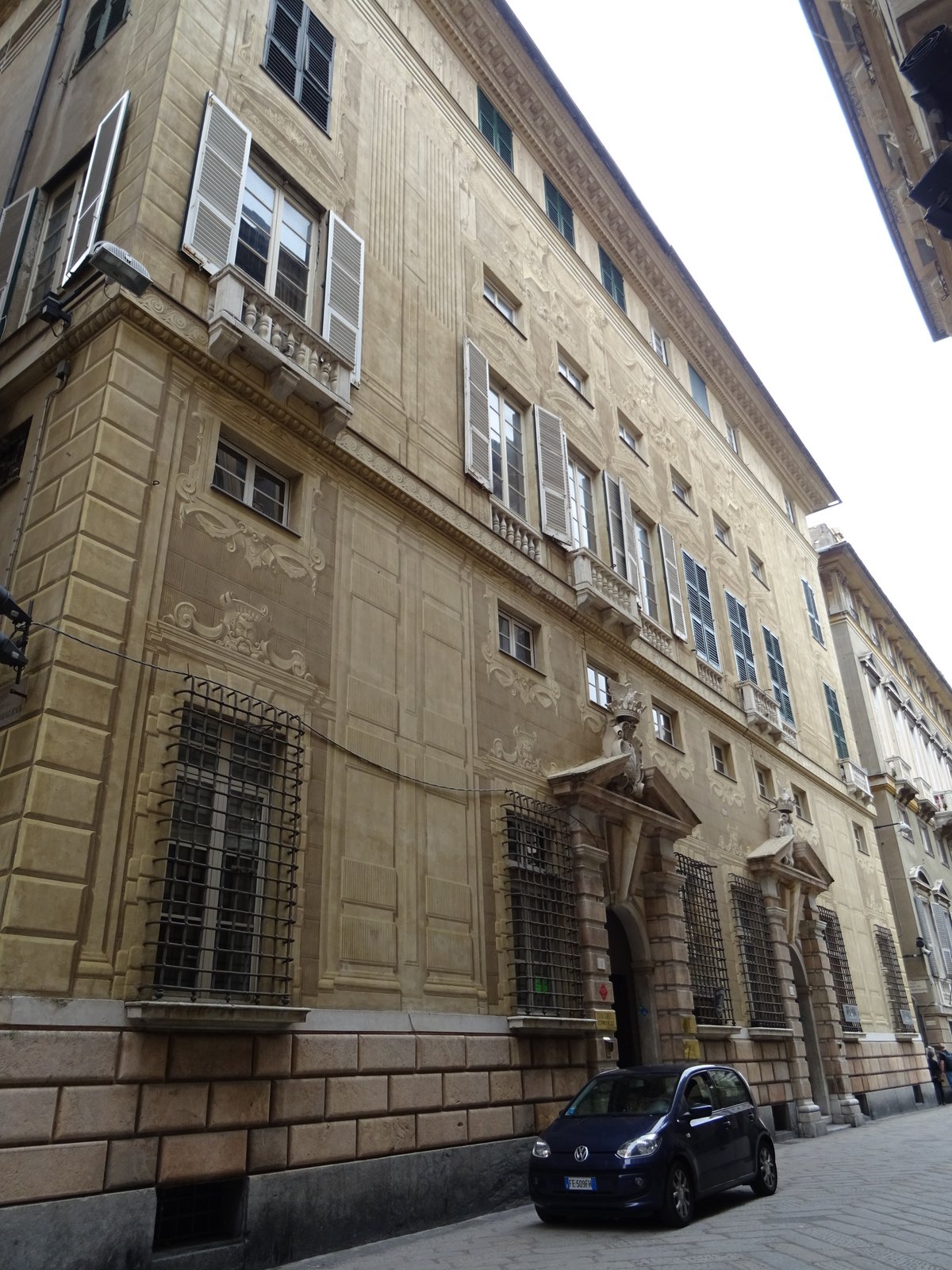
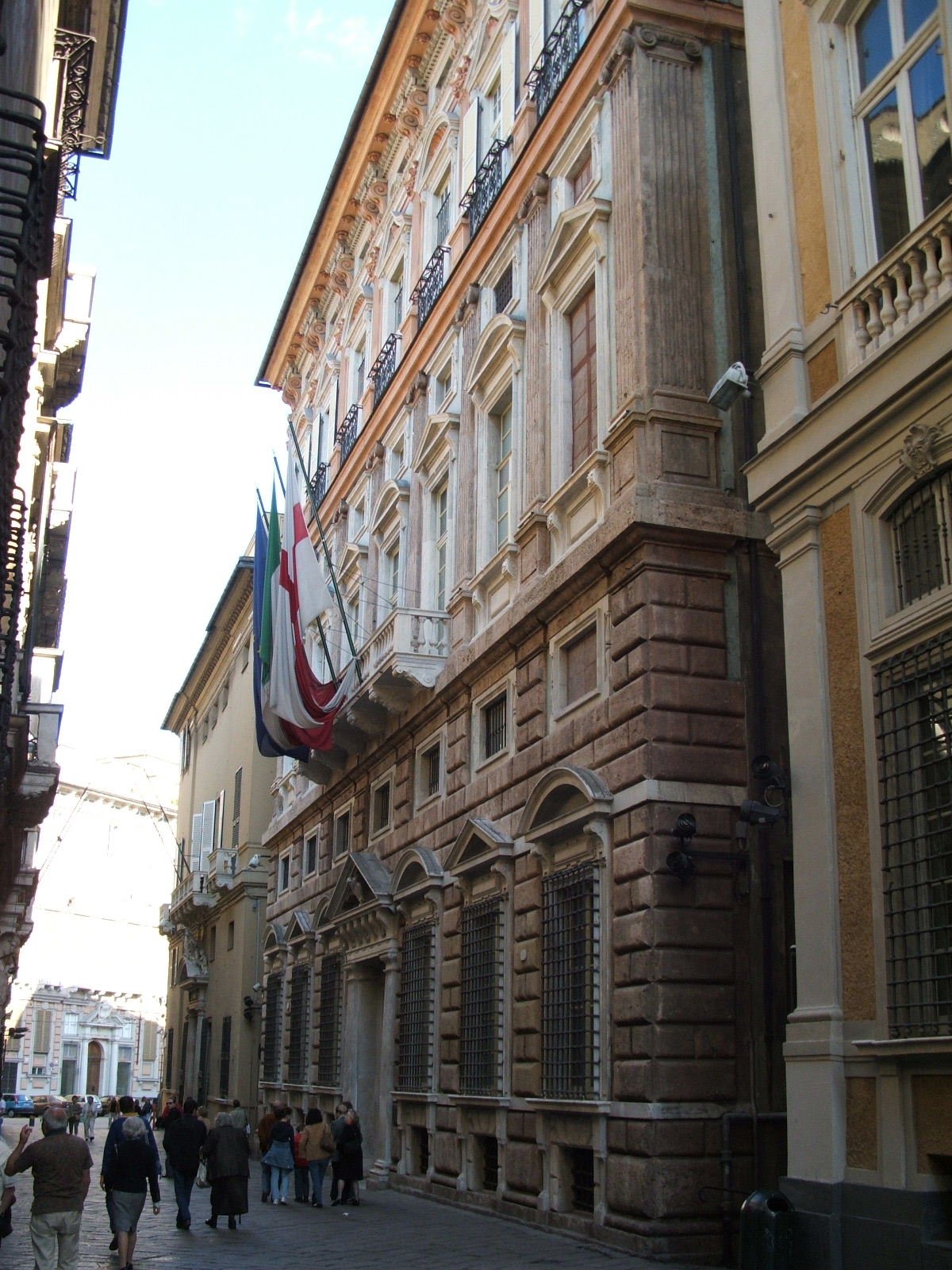
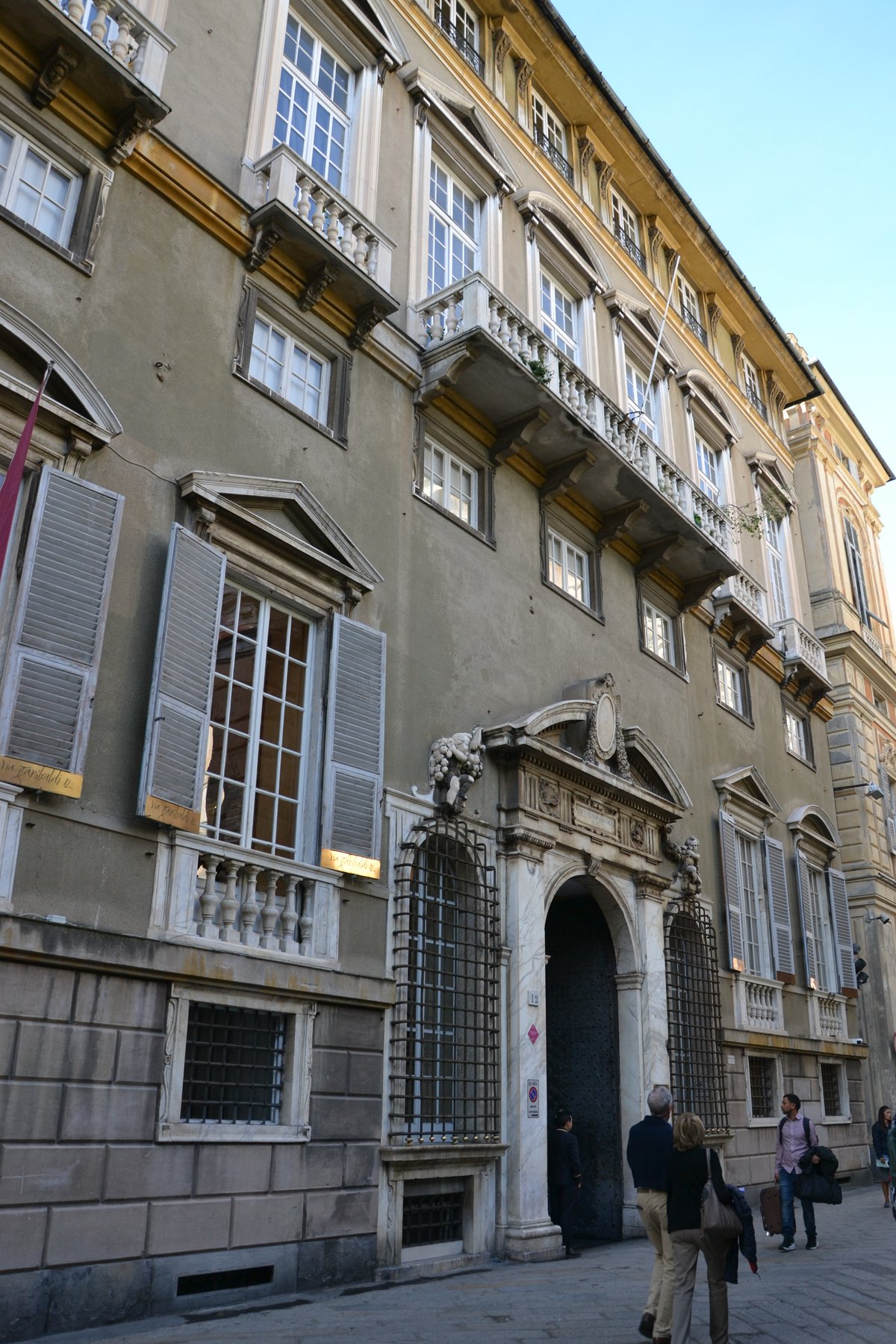
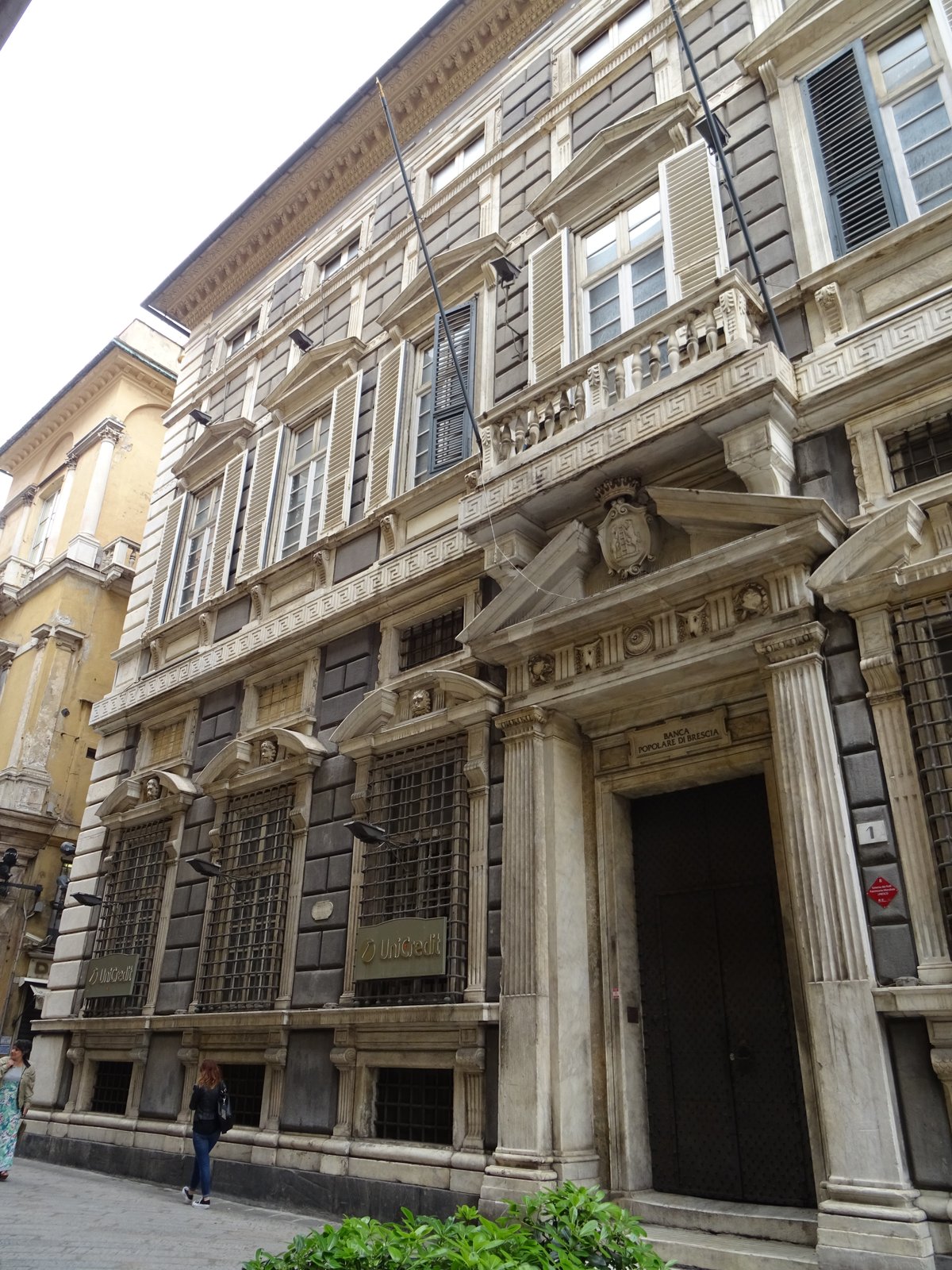
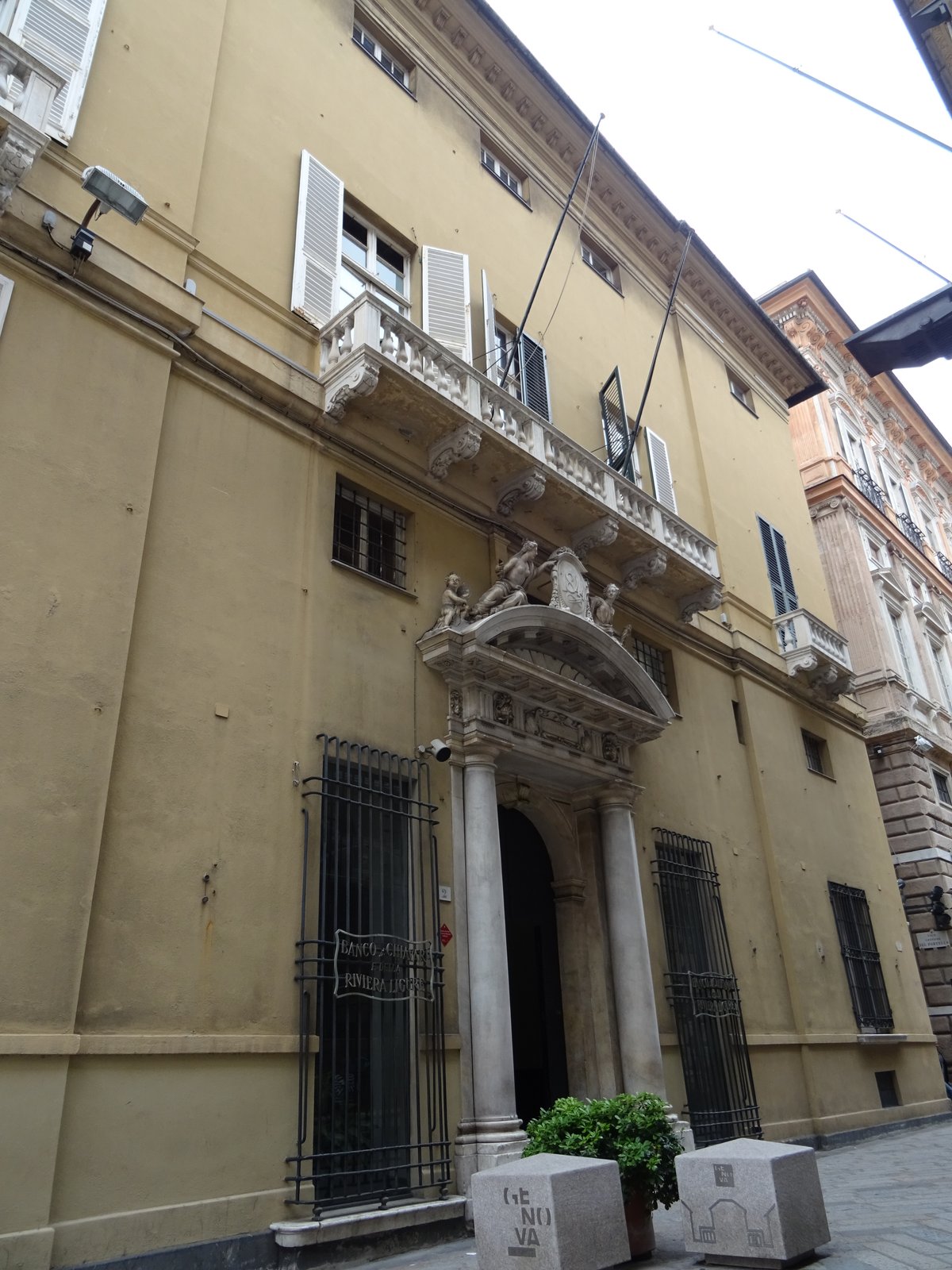
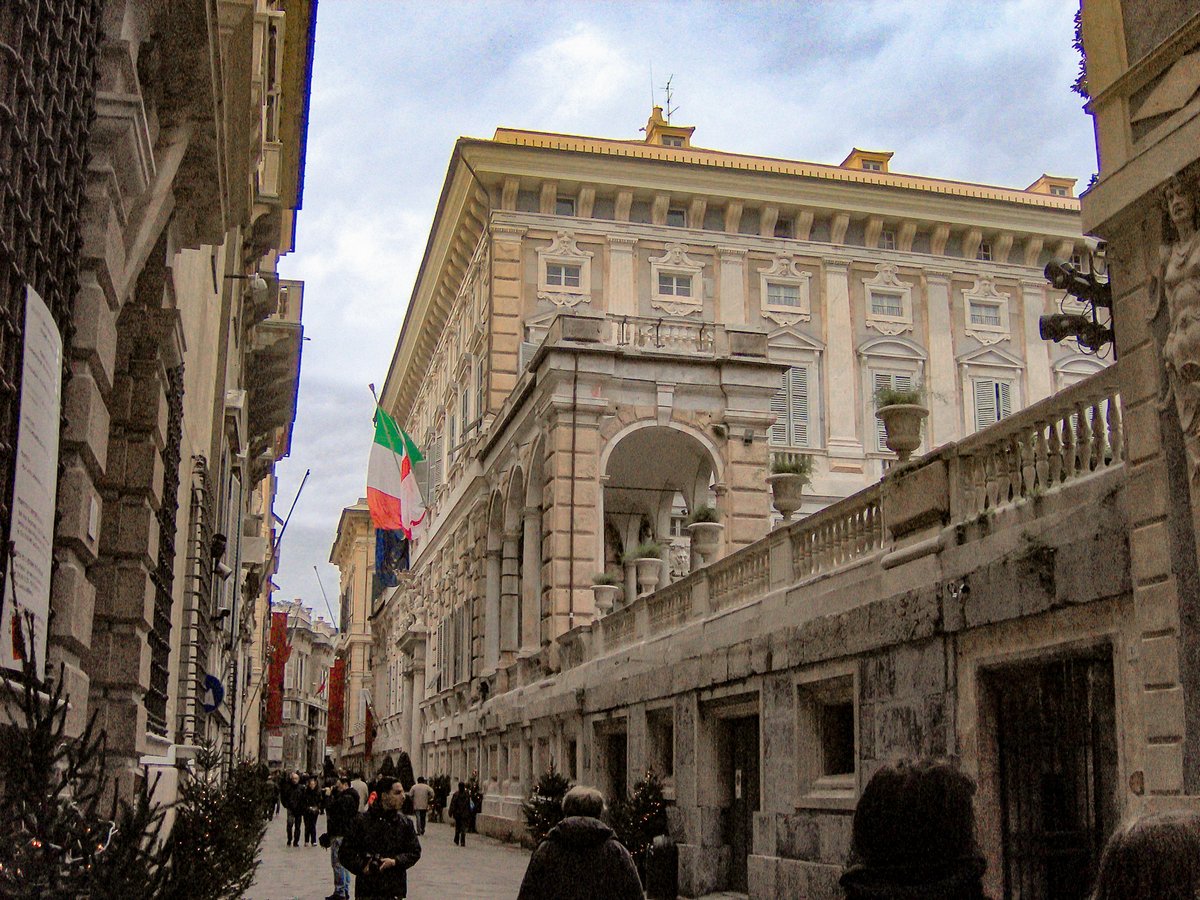
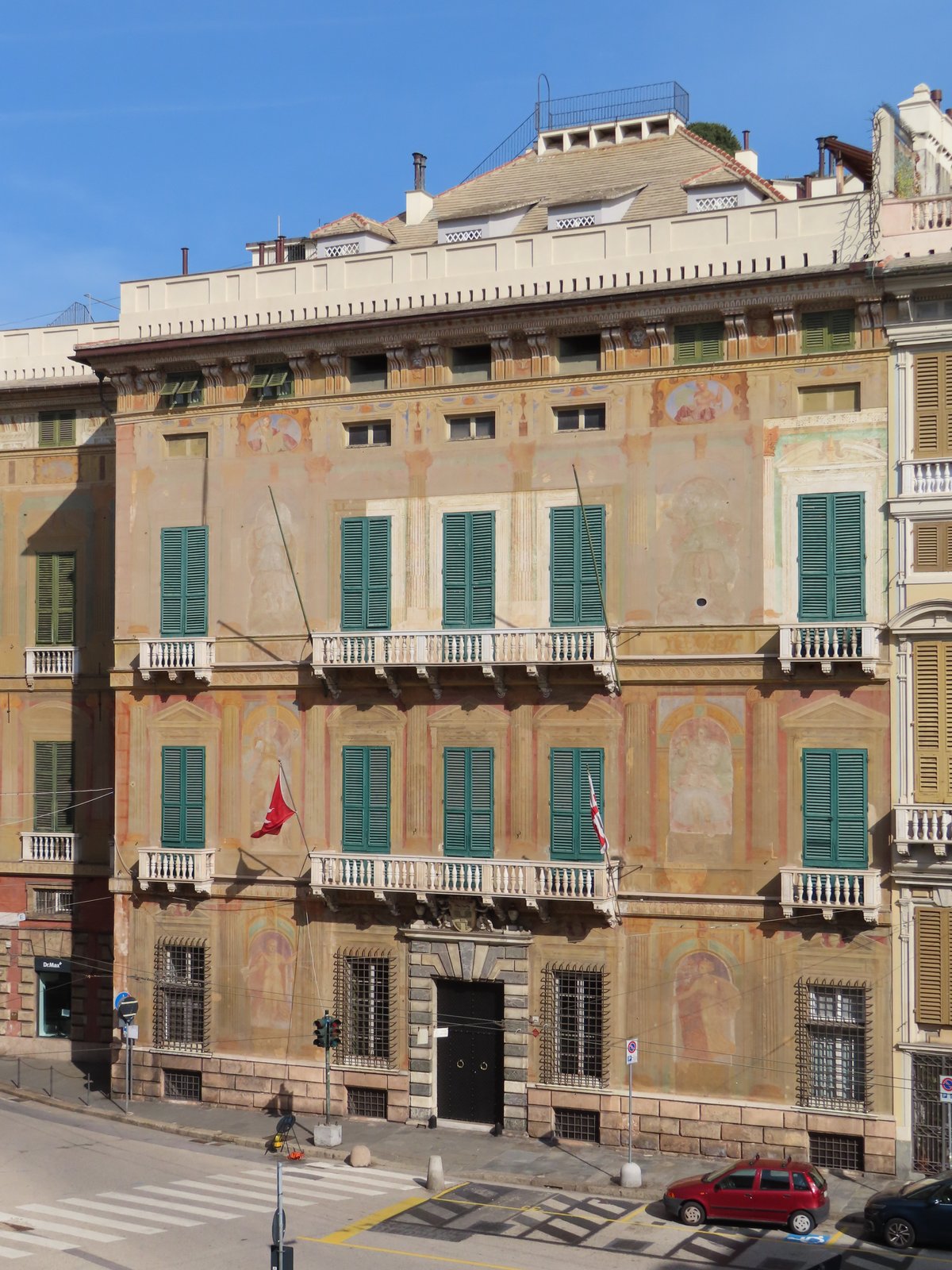
In 1558, Angelo Giovanni Spinola, an ambassador of the Republic of Genoa to Spain and a banker in Toledo to Emperor Charles V, commissioned a palace in Genoa. The work was designed by the architect Giovanni Ponzello and eventually completed in 1576 by Spinola's son, Giulio. The palace's exterior is decorated with frescoes executed by the Calvi brothers, possibly together with Lazzaro Tavarone, depicting members of the House of Spinola dressed as Roman condottieri.
To expand the property, Giulio ordered the excavation of part of the hill behind the palace in 1580 to create a courtyard and a garden. The building was part of the Palazzi dei Rolli, the system of private residences used to host notable visitors during state visits. In 1919, the palace was sold to the bank Crédit Commercial de France and was converted into an office building. It passed to the Banca d'America e d'Italia in 1926 and now belongs to Deutsche Bank.
Today, this palazzo is part of the 42 palaces that form the UNESCO World Heritage Site Genoa: Le Strade Nuove and the system of the Palazzi dei Rolli. The staircase is decorated with grotesque frescoes leading to the upper floor, which features frescoes by Andrea Semino, Bernardo Castello and Lazzaro Tavarone. A fresco attributed to Semino shows the building in its original state as viewed from a mountain.
Sources: Wikipedia, OpenStreetMap, Wikidata, Wikimedia Commons
Written by Nicolo Ciampini
Discuss this with the author and others
No comments yet. Be the first to start the conversation.