
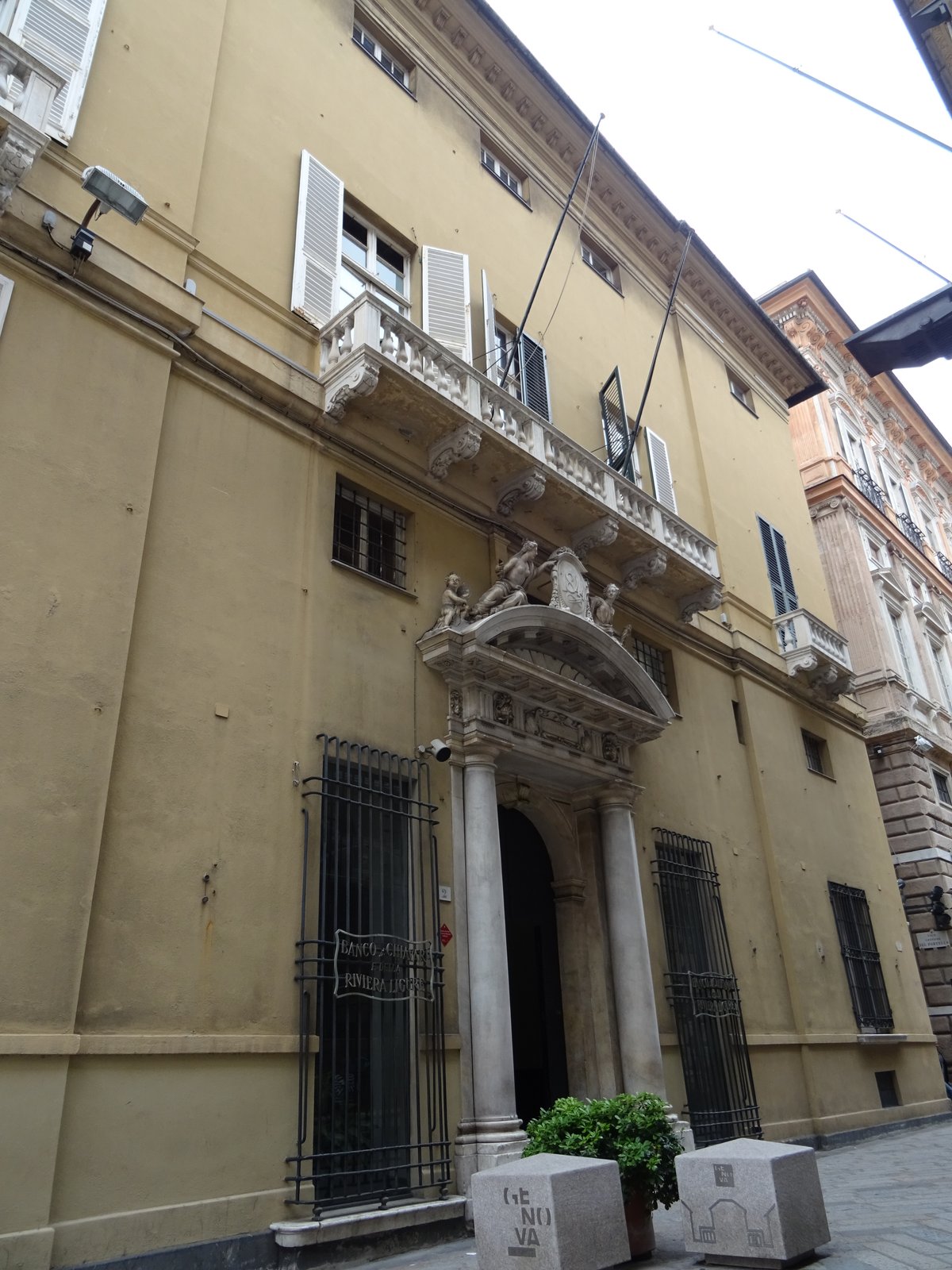
In the early 17th century, Luigi Centurione purchased the Palazzo Podestà from Nicolosio Lomellino. Following a quarrel with the Genoese painter Bernardo Strozzi, Centurione ordered the artist's work to be concealed. Documents from 1625 confirm the dispute regarding three rooms on the first piano nobile, where the frescoes were covered with a thick layer of plaster and a false ceiling. It was not until 2002 that the Allegory of Faith was removed to reappear beneath the surface.
The painting depicts a rowing lifeboat from which a woman representing the Christian faith is helped to land on dry land to bring the faith to the natives of the New World. The surrounding lunettes feature exotic animals, while the boat also holds two sailors and the four evangelists. A nobleman with a sword, assumed to be Christopher Columbus, is also depicted; his exploits were a frequent subject in the decoration of Genoese palaces.
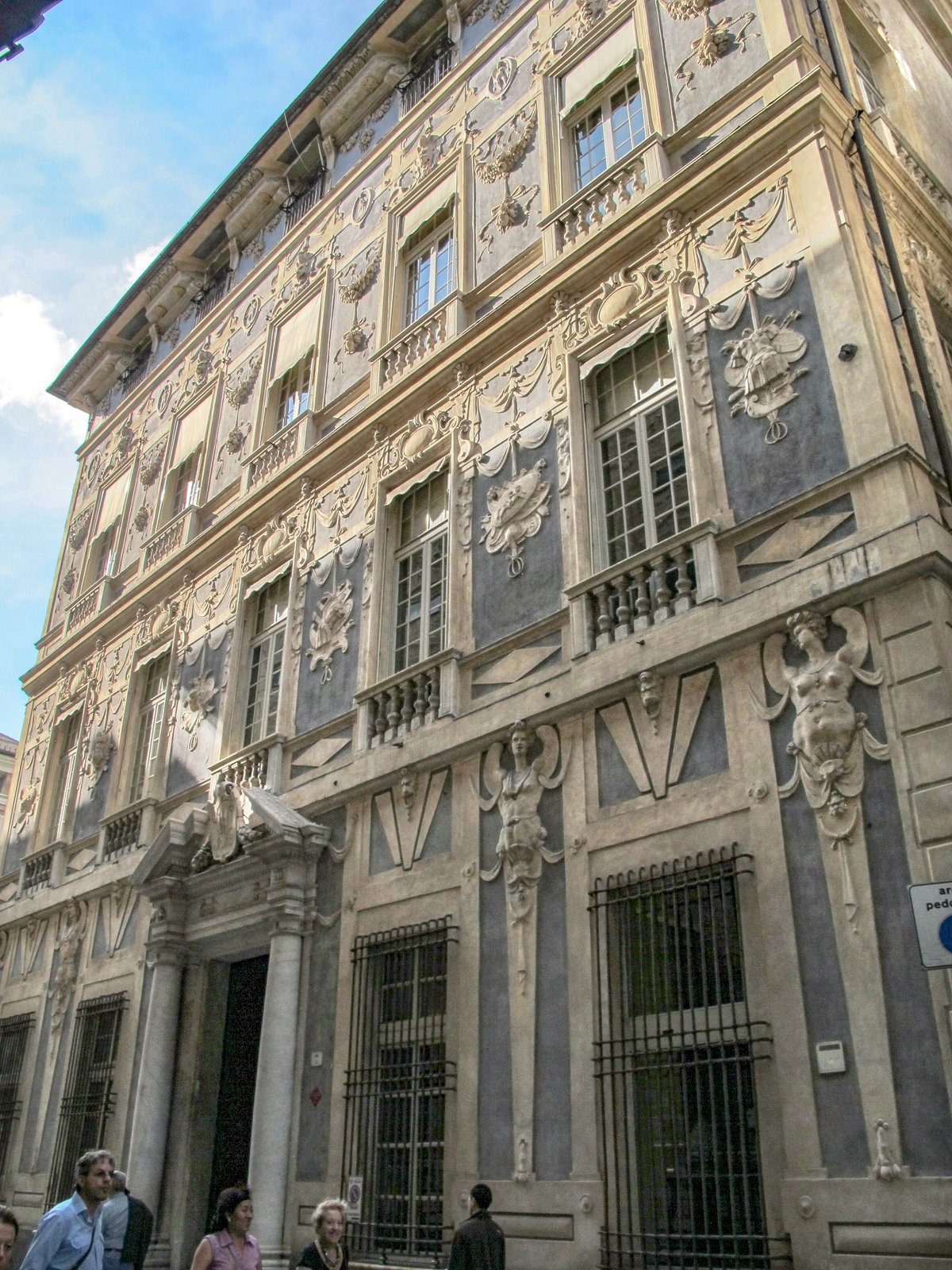
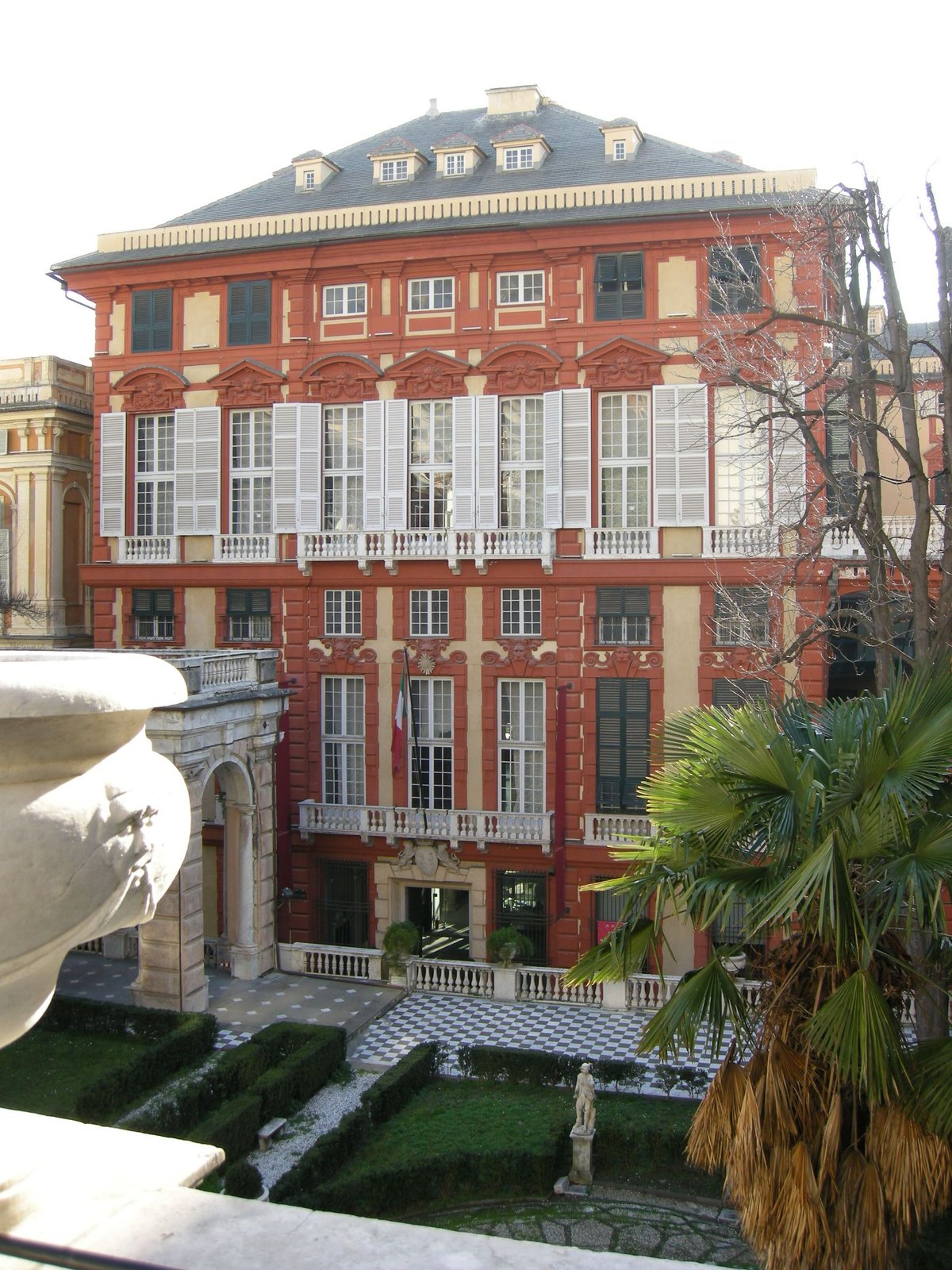
Built between 1559 and 1565 by Giovan Battista Castello and Bernardino Cantone, the palace features a facade with rich stucco decorations by Marcello Sparzo. This decoration, which includes winged female herms and trophies of arms, was deployed on a large scale covering the entire elevation. The building also contains an 18th-century nymphaeum designed by Domenico Parodi, which uses waters from Castelletto to connect the courtyard with a garden two levels higher.
The second piano nobile houses mythological-themed decorations commissioned by the Pallavicino family in the early 18th century. This level includes frescoes by Giacomo Antonio Boni and Domenico Parodi, as well as a salon decorated by Tommaso Aldrovandini featuring five canvases by Marcantonio Franceschini.
Sources: Wikipedia, OpenStreetMap, Wikidata, Wikimedia Commons
Written by Nicolo Ciampini
Discuss this with the author and others
No comments yet. Be the first to start the conversation.