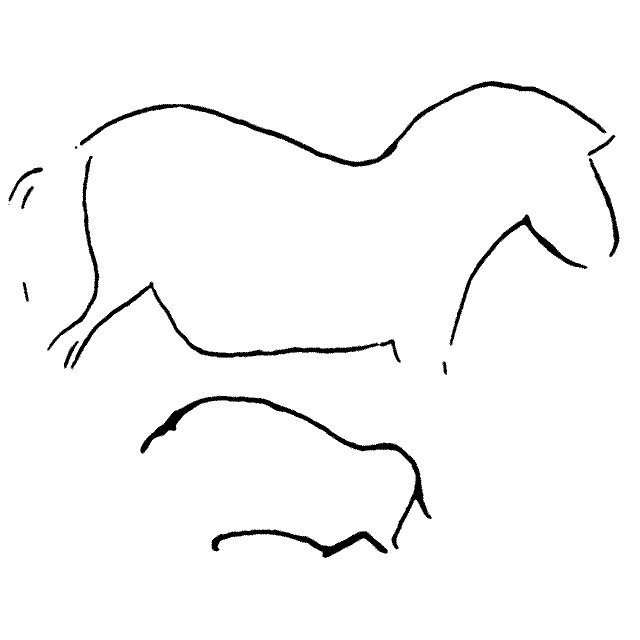

Deep within the Cueva de Hornos de la Peña, a cave located in <source_material>San Felices de Buelna, Spain</source_material>, lies a treasure trove of ancient rock art. <source_material>Dating back to the Auriñaciense period, over 30,000 years ago, this cave is included in the UNESCO World Heritage list.</source_material> The cave, nestled near the Tarriba neighborhood, was a place where Neanderthals and Cro-Magnons lived.<source_material>The oldest known rock paintings in the Cantabrian coast are found in this cave.
Representations of animals such as horses, bison, deer, and even a reno can be found in different chambers, all engraved with fingers or a burin.</source_material> Some engravings are characteristic of the Magdaleniense Superior.<source_material>In the part where the cave ends, there are human-shaped representations.</source_material> The cave has no illumination, so the artist must have used a source of light, likely a torch or fire, to create these striking images.<source_material>Visitors today can still marvel at these ancient engravings, a testament to the artistic and cultural heritage of prehistoric Spain.</source_material>.
Sources: Wikipedia, OpenStreetMap, Wikidata, Wikimedia Commons
Written by Nik Frost
Discuss this with the author and others
No comments yet. Be the first to start the conversation.