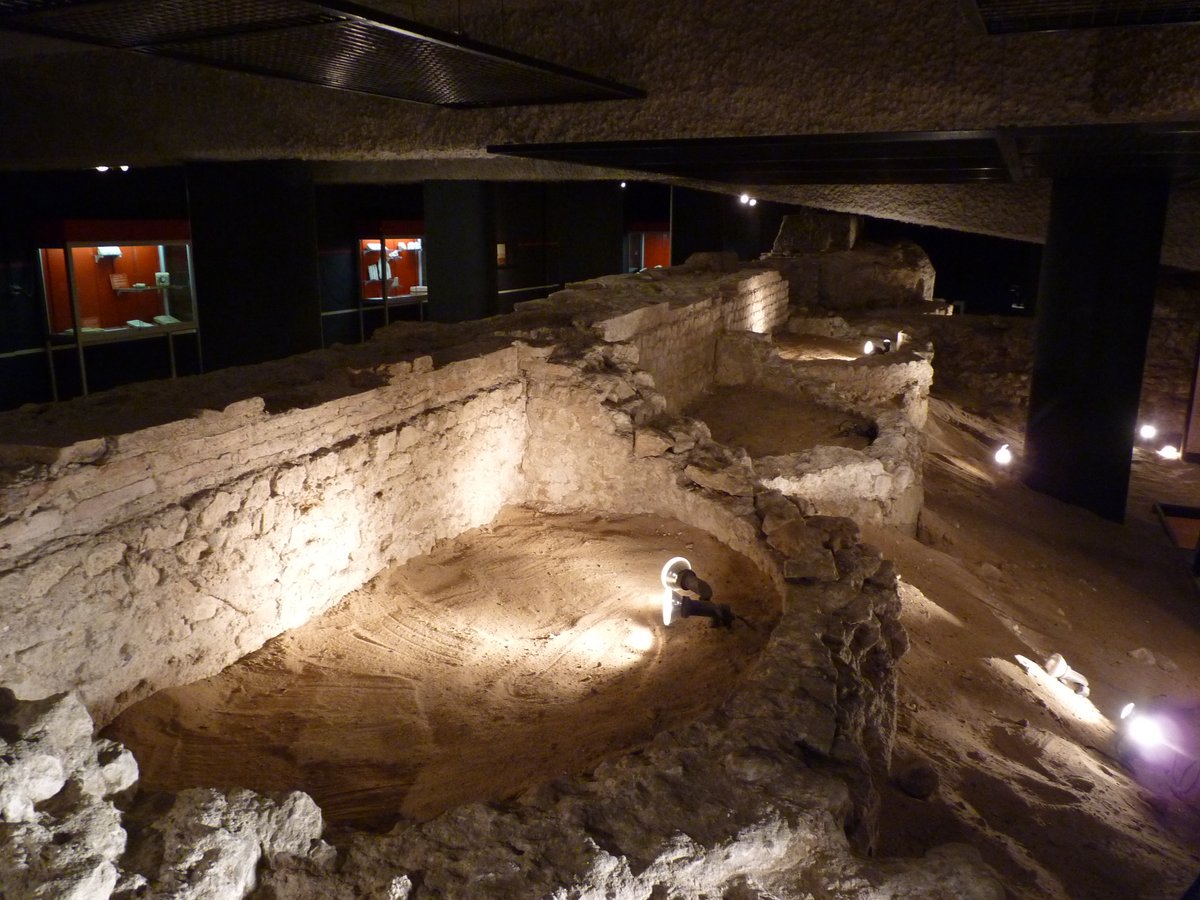

In the heart of Dax, archaeological remnants were unearthed in 1978 during the construction of housing. These remains date from the first centuries AD and were initially considered to be the foundations of a temple. Today, archaeologists interpret these remains as belonging to a civil basilica, a public meeting place where many activities of civic life took place, including the administration of justice. Few basilicas are known in the Roman world to this day.
The archaeological crypt was created beneath the building to preserve these testimonies of the ancient city. The site, known as the Gallo-Roman temple, was inscribed as a historical monument by decree in 1980.
The most important archaeological pieces of the museum are presented in the crypt. This site serves as a preserved witness to the city's ancient history, housing the remains of a structure that once served as a center for the public life of the community.
Sources: Wikipedia, OpenStreetMap, Wikidata, Wikimedia Commons
Written by Nicolo Ciampini
Discuss this with the author and others
No comments yet. Be the first to start the conversation.