
In September 1523, Imperial troops besieged the château de Bidache as a reprisal for a failed operation in Bayonne. Three hundred soldiers offered strong resistance, holding the fortress for three days until it was set on fire. The fire was so intense that most of the defenders perished in the flames, while a few others jumped from the walls to meet the enemy's pikes.
Claire de Gramont, the sole heiress of the House of Gramont, directed the reconstruction of the castle. By the 16th century, a rectangular building was established between the two courtyards, featuring a grand staircase, a stair tower, and outer fortifications extending to the southwest. The reconstruction was so impressive that a Gascon shepherd composed a quatrain wondering why Jesus did not choose the Château de Bidache as a birthplace.
During the 17th century, the architect Louis de Mihet, an engineer for the King in Bayonne, oversaw significant work influenced by the Louis XIII style. These works included the creation of gardens and terraces. The castle also hosted notable figures, including Catherine de Médicis and Charles IX in 1565, as well as Henri III de Navarre, the future Henri IV, in 1587.
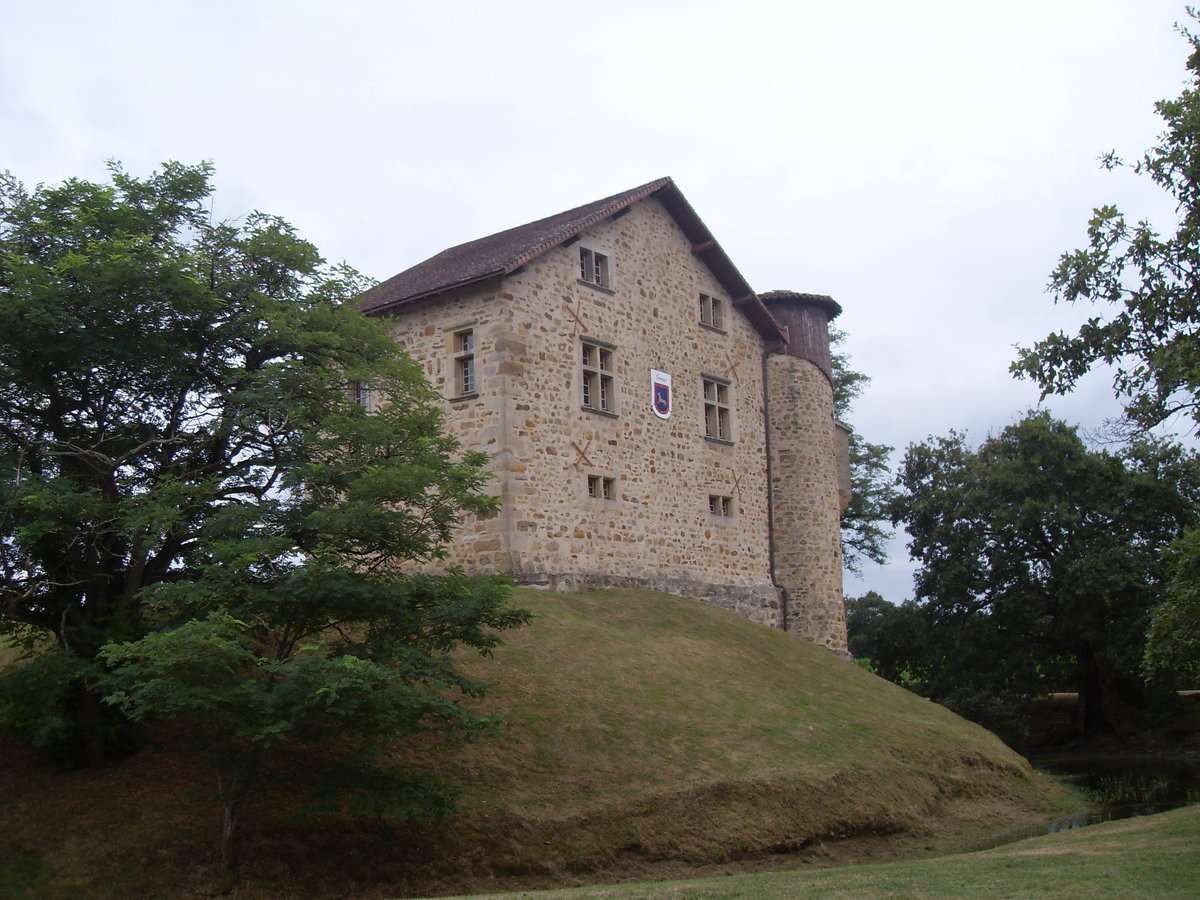
In 1793, the building was confiscated by the Nation and served as a military hospital for several months. It stood empty until the night of February 22-23, 1796, when a fire ravaged the structure. Today, three large round towers at the northwest and south remain as witnesses to the medieval castle destroyed in 1523.
Sources: Wikipedia, OpenStreetMap, Wikidata, Wikimedia Commons
Written by Nicolo Ciampini
Discuss this with the author and others
No comments yet. Be the first to start the conversation.