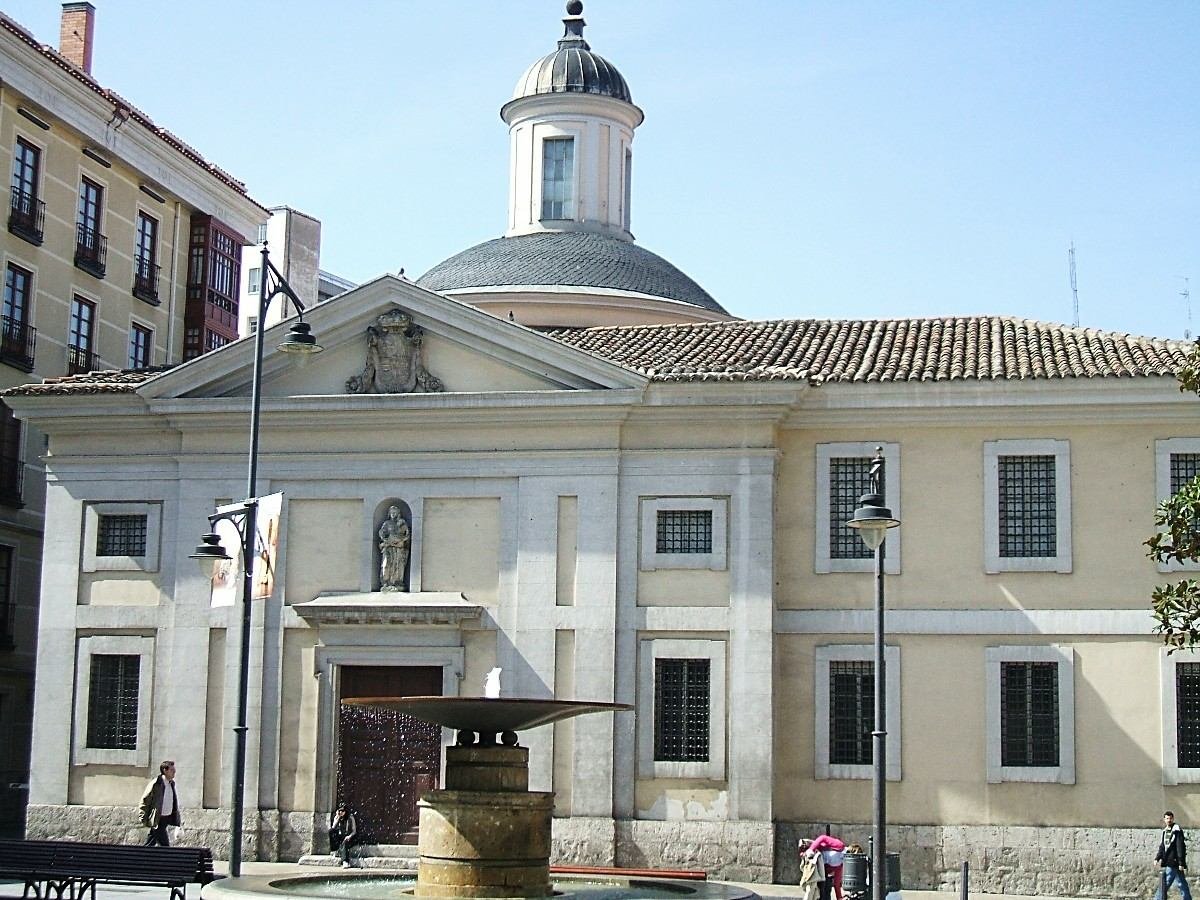

The Real Monasterio de San Joaquín y Santa Ana, a Neoclassical monastery built in the late 18th century in Valladolid, Spain, is a testament to architect Francesco Sabatini's design. The monastery houses a museum of sacred art showcasing Spanish Baroque sculptures from the 18th century, including works by Gregorio Fernández and Pedro de Mena. The monastery's church holds three juvenile paintings by Goya, the only known paintings by the artist preserved in the region of Castilla y León.
The actual community within the monastery is of nuns, belonging to the Order of Cistercian Monks of San Bernardo de Castilla, and it is also the seat of the Cofradía del Santo Entierro. In 1956, the monastery was declared a National Monument. In 2016, the monastery's museum premiered the cantata K. 477a Per la ricuperata salute di Ofelia, which had been lost for over two centuries, a collaboration between Wolfgang Amadeus Mozart and Antonio Salieri.
Sources: Wikipedia, OpenStreetMap, Wikidata, Wikimedia Commons
Written by Nik Frost
Discuss this with the author and others
No comments yet. Be the first to start the conversation.