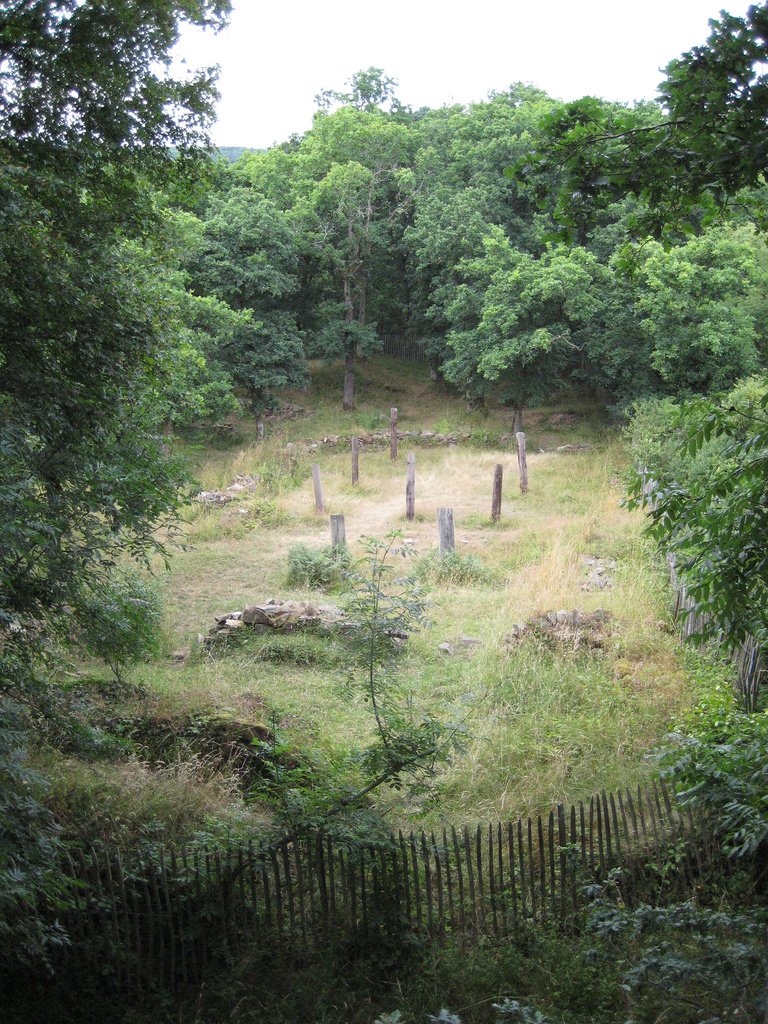

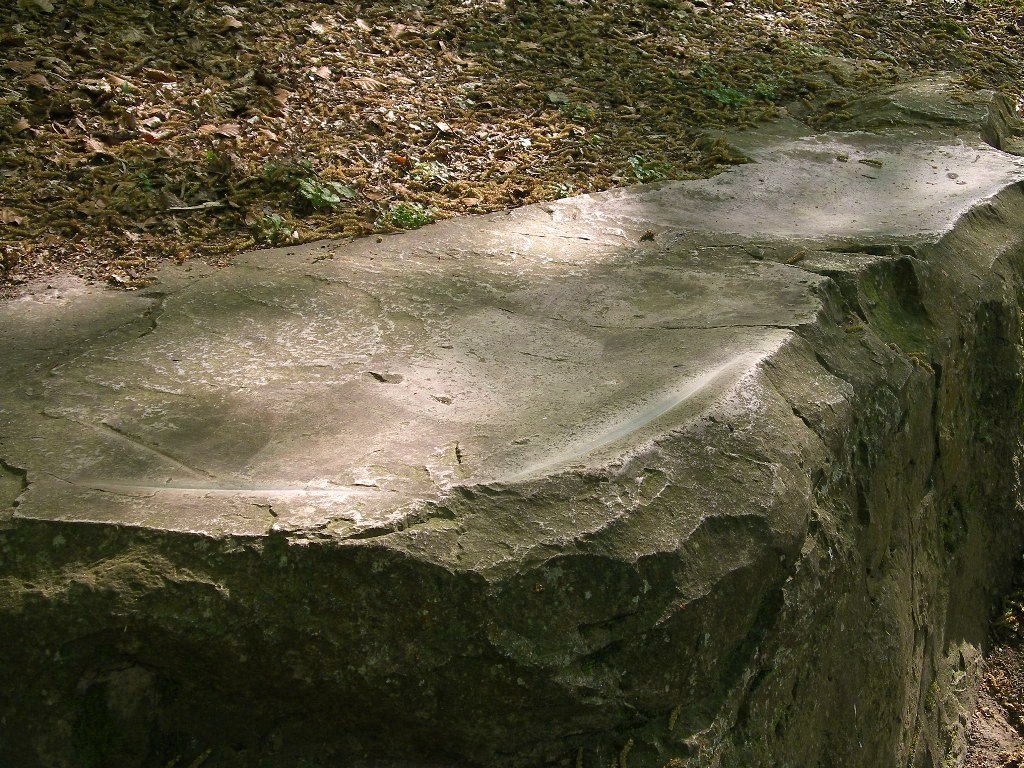
In the heart of the Grimbosq forest, near the countryside of Mutrécy, the Château d'Olivet stands as a notable example of a motte castrale. This earth and wood castle dates back to the first half of the 11th century and is located at the confluence of two streams, the Coupe-Gorge and the Grande Vallée. Positioned on a rocky spur overlooking the Orne, the site was strategically chosen to control the crossing of the river.
During the first half of the 11th century, the castle belonged to Erneis Taisson, who was involved in a bitter conflict with his brother, Raoul II Taisson, the lord of Mutrécy. The site served as a fortification comprising a central motte and two baileys. To the north sat a noble bailey containing stone foundations for a manor house, kitchen, and a chapel. To the south, a larger utility bailey housed a forge and likely a stable.
Archaeological excavations conducted between 1975 and 1978 revealed that the site was used for aristocratic life, yielding items such as arrowheads, gaming pieces, and children's rattles. Today, the site is preserved as a historical monument. Visitors can access the forest site via a parking lot near the RD 257 road, where consolidated dry stone walls and wooden structures mark the original layout of the seigneurial manor.
Sources: Wikipedia, OpenStreetMap, Wikidata, Wikimedia Commons
Written by Nicolo Ciampini
Discuss this with the author and others
No comments yet. Be the first to start the conversation.