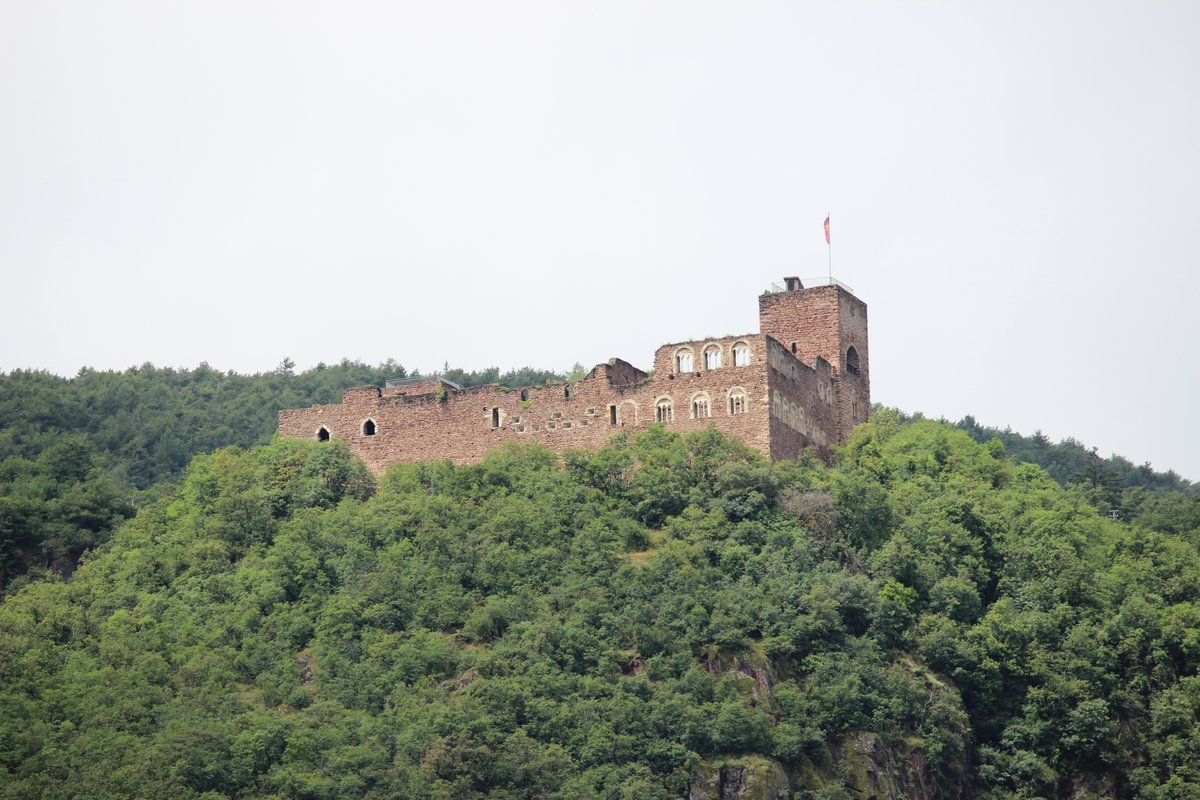

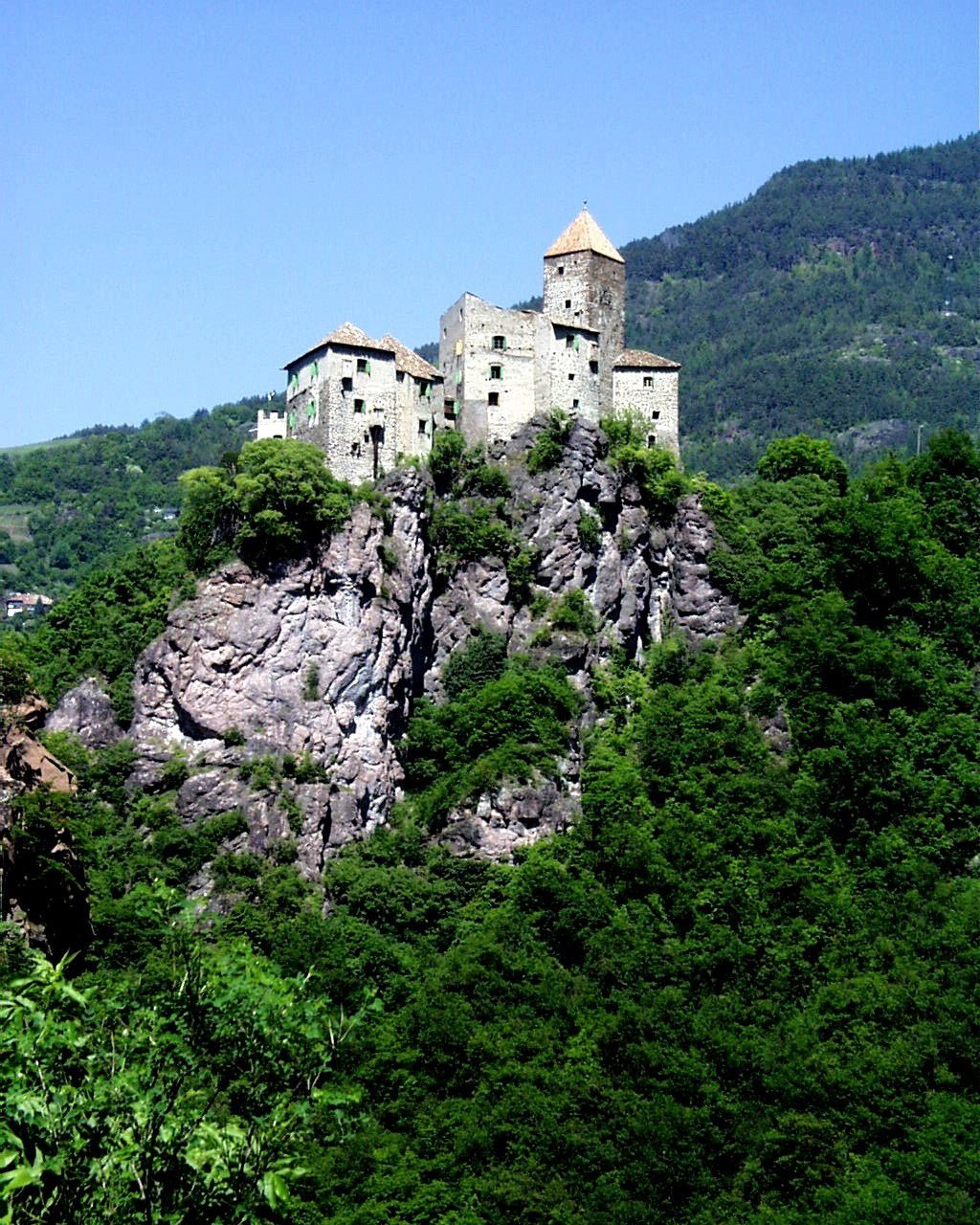
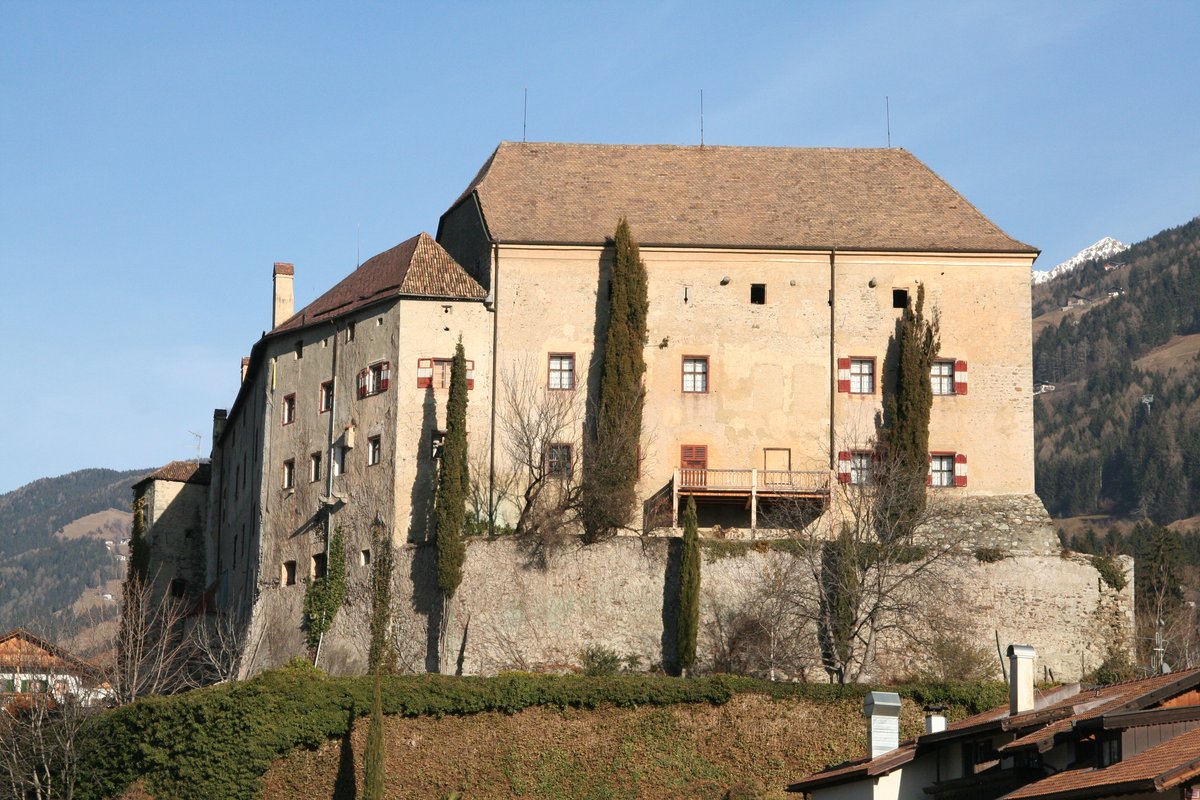
The ruins of Schloss Boymont are a high medieval castle located on a rocky ridge above the village of Missian. Constructed between 1220 and 1230 during a period of intense castle building in Tyrol, the structure was likely built by members of a side branch of the Counts of Eppan. By the 1400s, the castle passed into the hands of Ulrich Kässler, a favorite of Duke Friedrich, who took the name Käßler von Boymont. The site remained largely unchanged after a fire in 1425, preserving its late Romanesque appearance.
As a late Romanesque facility, Boymont was designed with a clear rectangular layout following late Staufer-era models. While it possessed defensive features, the castle was primarily intended for comfortable living rather than military control of the region. The large Romanesque residential building, or Palas, is located in the southeastern corner and features beautiful Triforien that break into the curtain wall. The main tower stands in the northeast, featuring a large, peculiar round-arched opening oriented toward the east.
Other notable architectural details include a smaller tower in the northwest and a castle chapel located on the first floor above the entrance. The remaining apse of the chapel faces east, a placement comparable to Schloss Bruck near Lienz. Following the fire of 1425, the residential building was not further expanded, allowing the original structure to remain remarkably intact for centuries.
Sources: Wikipedia, OpenStreetMap, Wikidata, Wikimedia Commons
Written by Nicolo Ciampini
Discuss this with the author and others
No comments yet. Be the first to start the conversation.