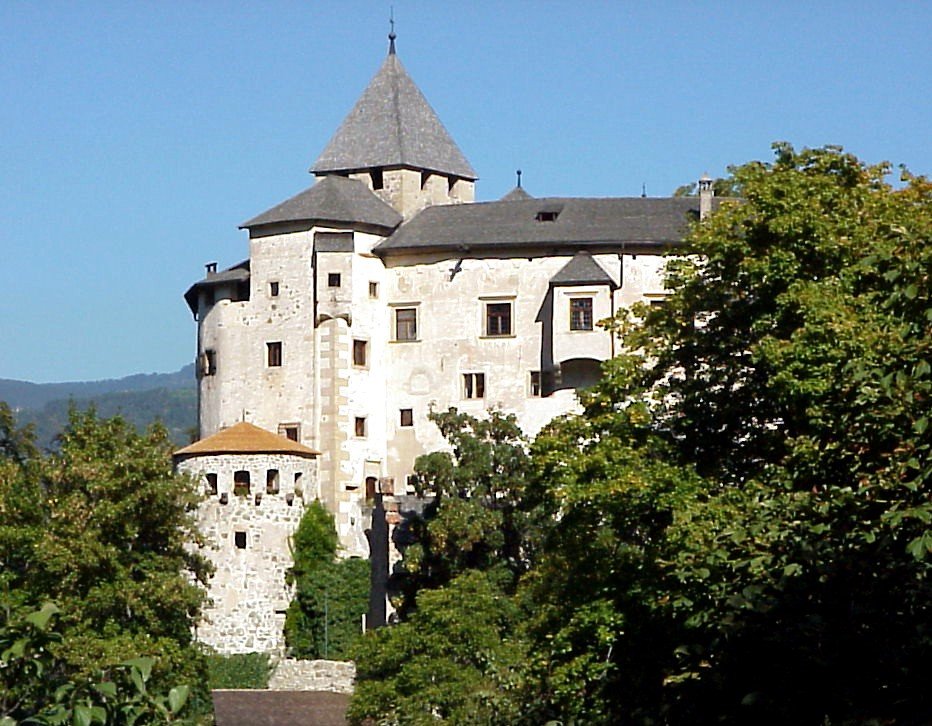

Prösels Castle, a Gothic château in South Tyrol, Italy, hides a dark secret underneath its pastel-coloured walls. Known as Castel Colonna, the castle has been a part of the landscape since 1200. Built by the lords of Völs, feudatories of the Bishopric of Brixen, the castle's central palace bears the marks of its Romanesque ancestor, with a surviving Romanesque archway still in place. Leonhard II of Völs, born in 1458, expanded the castle around the same time, adding a Gothic facade to the original structure.
Despite its grandeur, the castle's history is anything but impressive. In 1525, during the Peasants' War, the castle was briefly occupied by the rebellious farmers, who burned all the documents in the hope of destroying any proof of their debts and tithes. The uprising was squashed, and six leaders were executed. However, it was Leonhard II who would ultimately come to be remembered as one of the most notorious figures in the castle's history. He was responsible for the burning of nine local women, accused of witchcraft.
To deflect blame placed on him for the high infant mortality rate, Leonhard found nine women, had them tortured, and after they confessed, burned them at the stake for witchcraft. The woman confessed that they had stolen the babies and ridden on their brooms to the Schlern where they had eaten the babies with the devil. The many local legends about the so-called Schlernhexen (Schlern witches) date back to this time. Today, the castle stands proudly, with guided visits available during the summer months and during the Christmas holidays. Various cultural events are held at Prösels Castle, including concerts, exhibitions, and theatrical performances.
Sources: Wikipedia, OpenStreetMap, Wikidata, Wikimedia Commons
Written by Nicolo Ciampini
Discuss this with the author and others
No comments yet. Be the first to start the conversation.