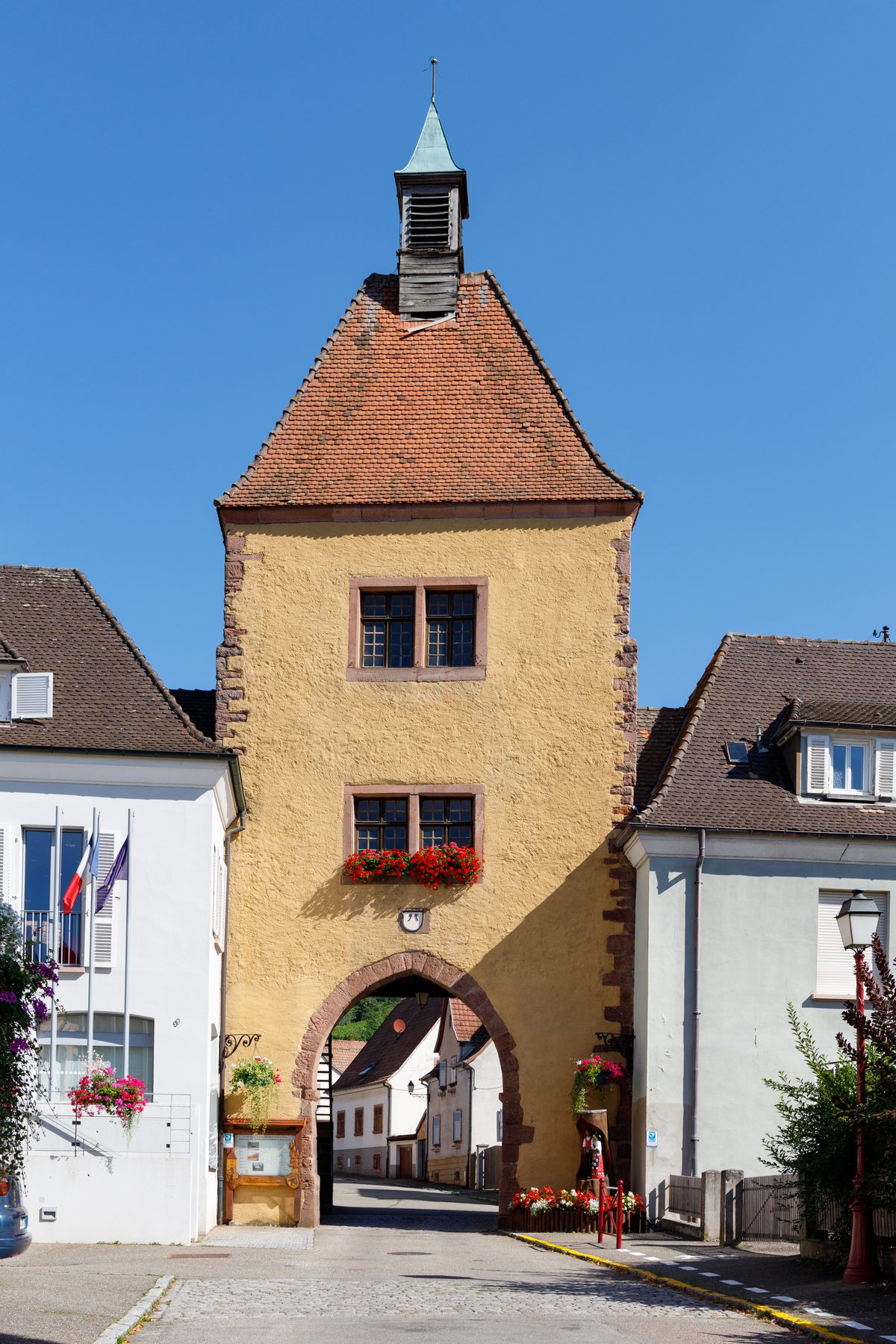

Nestled in northeastern France, the picturesque village of Wihr-au-Val reveals itself first through verdant pastures, mauve-tinted vineyards, and morning valley mists. The steep descent to this hamlet unveils its most unusual feature: the prominent, ancient stone gate, eerily sinking into the earth. It's mid-2022, and this gate, the best of its kind, serves as the last remnant of the medieval village's fortifications. Few may know it, but it's more than just architecture.
It begins the story of Wihr-au-Val. The present structure, a 19th-century creation, stands as the lone vestige of older walls and towers that were eroded or dismantled by farmers, quarries, and time. When discussing Wihr-au-Val's fortified village, we refer to both the standing walls and the undiscovered remains beneath. Although its birthdate remains unclear, a rough estimate places it around 1200, with a confirmed existence by 1279. Surviving a siege by a knight named Gisberga, the original village was an enclosure, fortified with a town wall enclosing its four sides by 1306.
The walls expanded in the following century to include four semi-circular towers placed strategically at the east, southeast, north, and west sides. Occupying around 2.2 hectares, the robust stone walls protected Wihr-au-Val from the valley and roads. The Ribeaupierre family, wealthy lords of the region, constructed Wihr's castle in the mid-13th century, which was later rebuilt at least twice. it fell into disrepair in the 18th century and no longer stands, though a small piece survives in the form of the ruined walls of the western tower.
The main entrance to the village remains the southern gate, also known as Untertor, which dates back to the 14th century. The Schauenburg, a grand multi-story building, served as the residence of the lords of Wihr, while the market square lay east of the entrance, protected by the Obertor, a northern gate built for defense. (. Destroyed on June 18, 1940, during the German retreat from the village, the southern gate now stands as only a stump, while the North gate no longer exists.
All of the fortifications bear no resemblance to their original forms, with the current walls polished and access restricted for visitors. Centuries passed, leaving the designs and appearances of the village and its gate a mystery. (. Thanks to archaeological excavations, we now know the construction techniques and designs used in the 14th-century Untertor, for example, which originally consisted of a simple gatehouse perched over a passage dug into the rock, later extended with a crenellated outer wall and two flanking towers.
The current gatehouse, built in the 19th century, bears little resemblance to the medieval original, but some inscriptions and coats of arms in the stone still survive.
Sources: Wikipedia, OpenStreetMap, Wikidata, Wikimedia Commons
Written by Nicolo Ciampini
Discuss this with the author and others
No comments yet. Be the first to start the conversation.