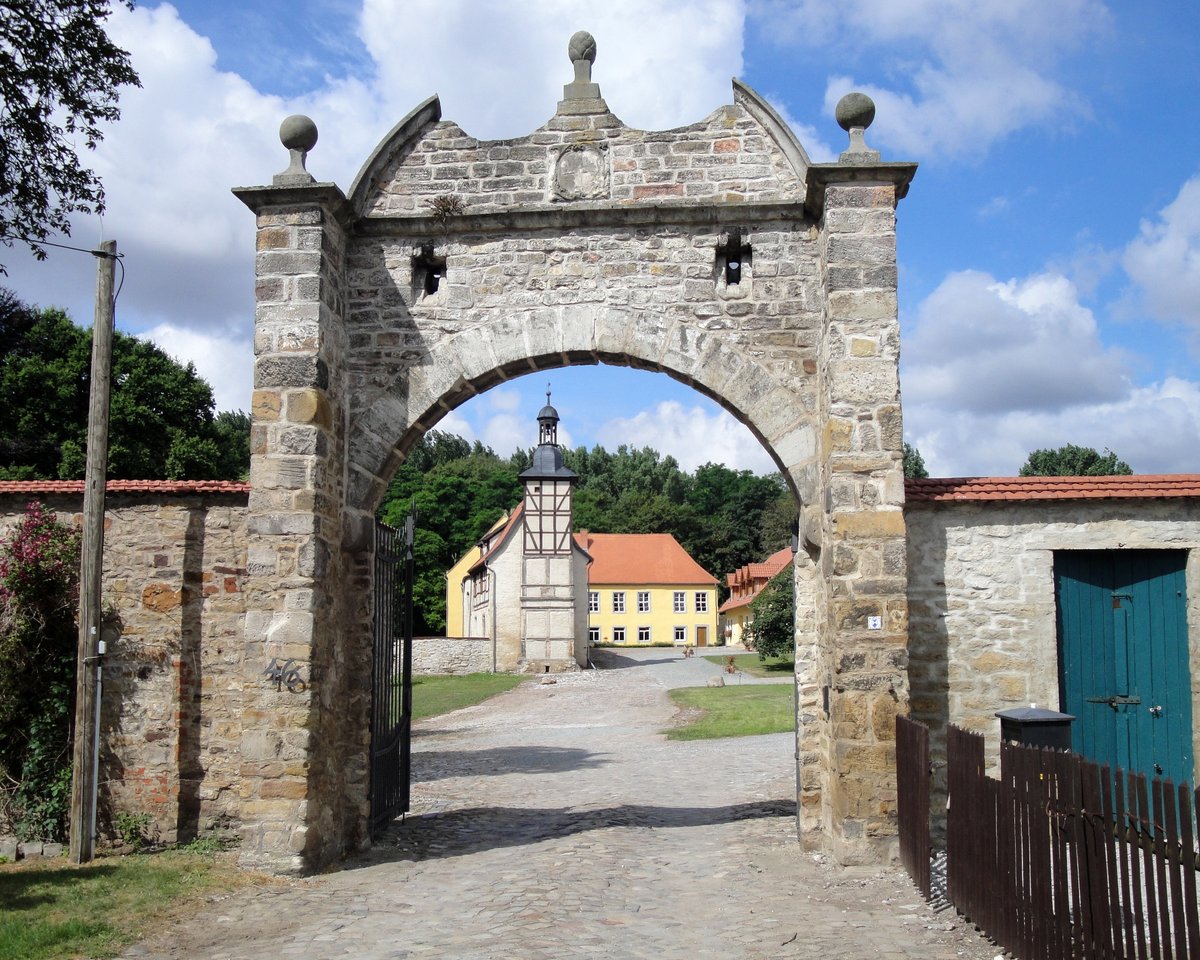
The Teutonic Order took possession of this land in 1272, though some records suggest 1285. They established a Komturei - a seat for their commander - in the village of Bergen. For centuries, the estate served as a monastic anchor, a fortified manor that remained in the Order's hands until 1806.
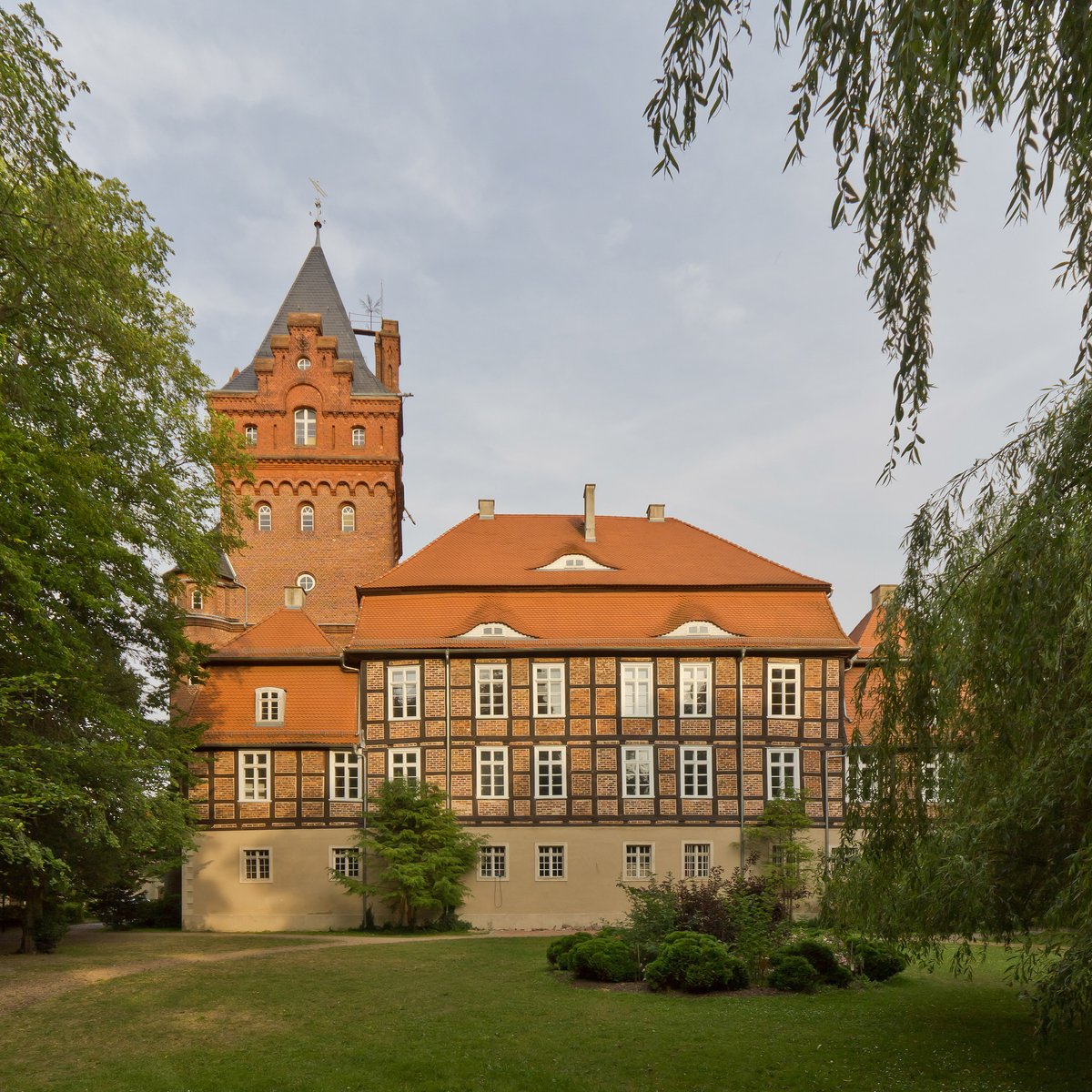
Time moved in layers here. The oldest part of the estate remains the Gutskapelle Bergen, a structure bridging the late Romanesque and early Gothic periods. To the east of this chapel sits a two-story building with a timber-framed upper floor. Hans von Lochow built this house as a residence for the Komtur, and it carries an inscription from 1586. Its most striking feature is a tower on the east side, which was originally an oriel window elevated above two stories of timber framing and topped with a small lantern.
The history of the house is a puzzle of overlapping dates. To the west of the chapel, an 18th-century Baroque residential building spreads out in two wings. Above a door in the southern wing, a plaque dated 1579 displays the coat of arms of Hans von Lossow, held by angels. Because the plaque predates the building it sits on, it likely was salvaged from a predecessor structure. Hans von Lossow himself lived here starting in 1570, and the estate saw occupation during the Thirty Years' War before returning to the Order.
War and industry eventually shifted the manor's purpose. By the turn of the 20th century, the sugar manufacturer Rabbethge became the owner, marking a transition from monastic life to industrial wealth. Today, the estate remains in private hands, surrounded by a wall.
Visitors today see a sprawling courtyard defined by diverse textures. While the barns and stables from around 1600 were lost in the late 20th century, the 19th-century economic buildings still line the north side. Dominating this northern horizon is a massive dovecote built in 1843.
Sources: Wikipedia, OpenStreetMap, Wikidata, Wikimedia Commons

Written by Aurora
Discuss this with the author and others
No comments yet. Be the first to start the conversation.