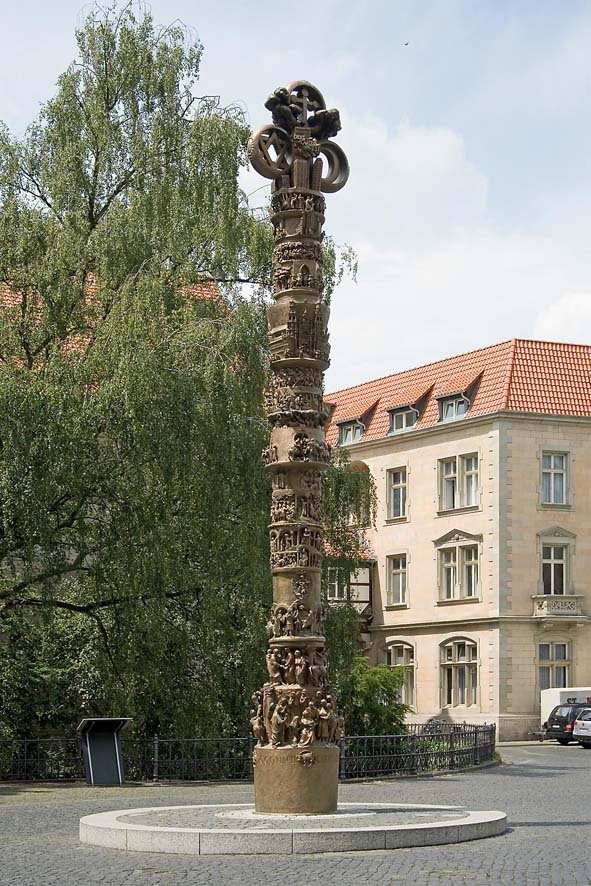
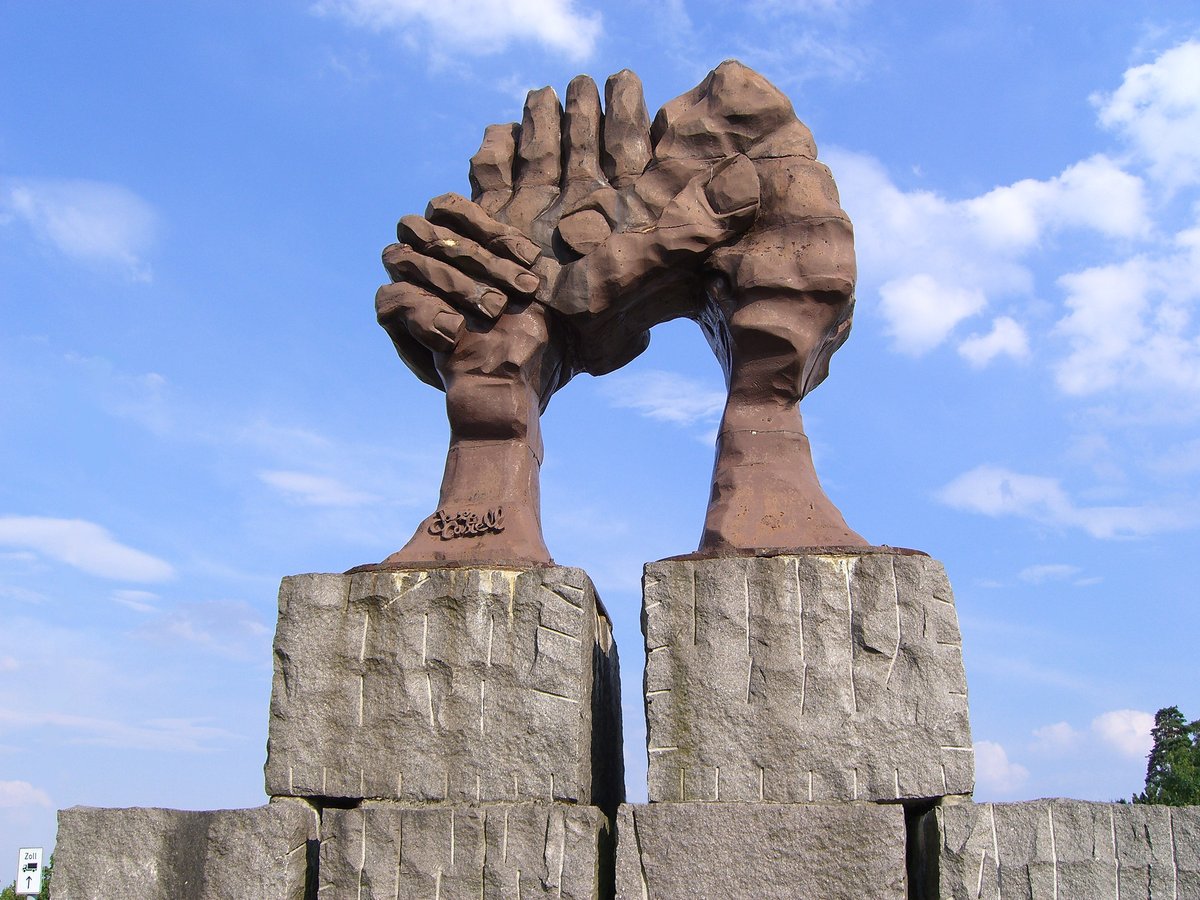
Above Ruhfäutchenplatz, 8.50 meters of bronze rise like a frozen melody. This sculpture, Jahre Christentum, marked the final large-scale work by Jürgen Weber. Unveiled in September 2006, it stands as a towering record of the Christian story from infancy until today.
Scenes flow across the metal surface to trace the development of Christianity. Visitors witness the birth, the crucifixion, and early persecution in Rome. The narrative marches toward Canossa, capturing the violence of the Crusades and the fall of Jerusalem. It echoes the intellectual shift of Martin Luther and his 95 Theses while honoring those who translated the New Testament. Shadows of the Nuremberg Laws haunt the metal, depicting internal conflicts of the twentieth century.
Modernity arrives with the 11, 2001 attacks on the World Trade Center. This specific section became a site of friction between Weber and the Richard-Borek-Stiftung. Because the contract limited artistic deviation without consent, the artist adjusted the imagery following a Braunschweig District Court judgment. It remains a story of creative vision meeting rigid funding requirements.
At the peak, history settles into allegorical peace. Symbols for Christianity, Islam, and Judaism rest within rings. These circles evoke the Ring Parable from Nathan the Wise by Lessing. In that drama, the search for truth finds its answer through a simple logic: the one deserving human love carries the true ring. For those knowing the records, the sculpture stands as a monument to legal compromise and specific financier wishes.
Sources: Wikipedia, OpenStreetMap, Wikidata, Wikimedia Commons
Written by Aurora
Discuss this with the author and others
No comments yet. Be the first to start the conversation.