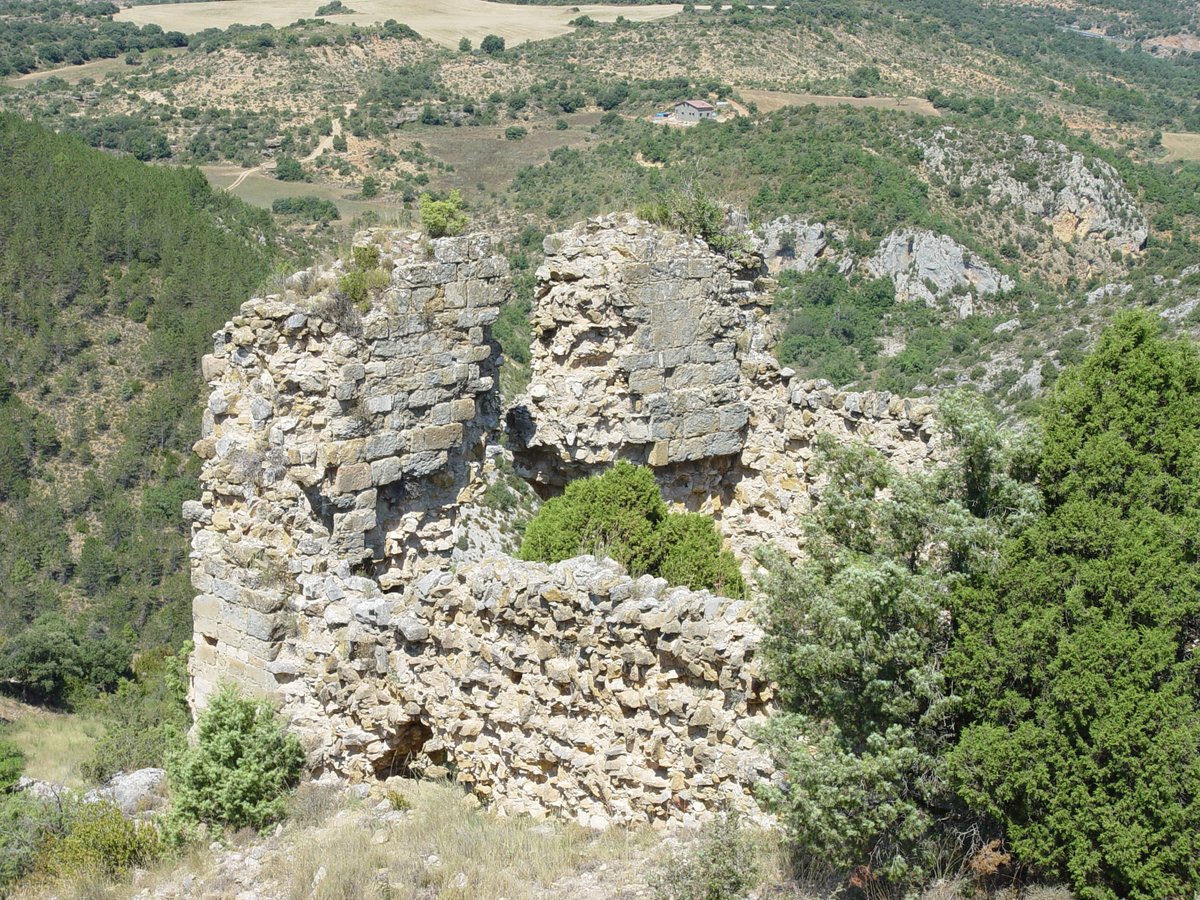

Perched atop the sun-scorched hills, the remnants of a 12th-century church take pride in their stoic resilience. Constructed in the aftermath of the vanished Falcés castle, the church followed in its footsteps, serving the population of a bygone municipality, Tolva. The church's single nave, aligned towards the east, was a remarkable feat for its era, boasting grand dimensions and intricate workmanship worthy of admiration. The western portada, a Romanesque marvel, found a new home in the House of Nuestra Señora del Puy in the 19th century.
It showcases five arches, decorated with cabecillas and a checkerboard above the arches. The corners bear figures, one depicting a woman confronted by a raging beast, a possible reference to the prophecy of Elijah regarding Jezebel's demise. The crudely hewn capitals display lions and a representation of a mouth devouring a woman. A crismon, a Latin cross with equal arms for the crossbar, is found above the portada, a symbol Juan Antonio Olañeta considers of great importance for the church.
Sources: Wikipedia, OpenStreetMap, Wikidata, Wikimedia Commons
Written by Nik Frost
Discuss this with the author and others
No comments yet. Be the first to start the conversation.