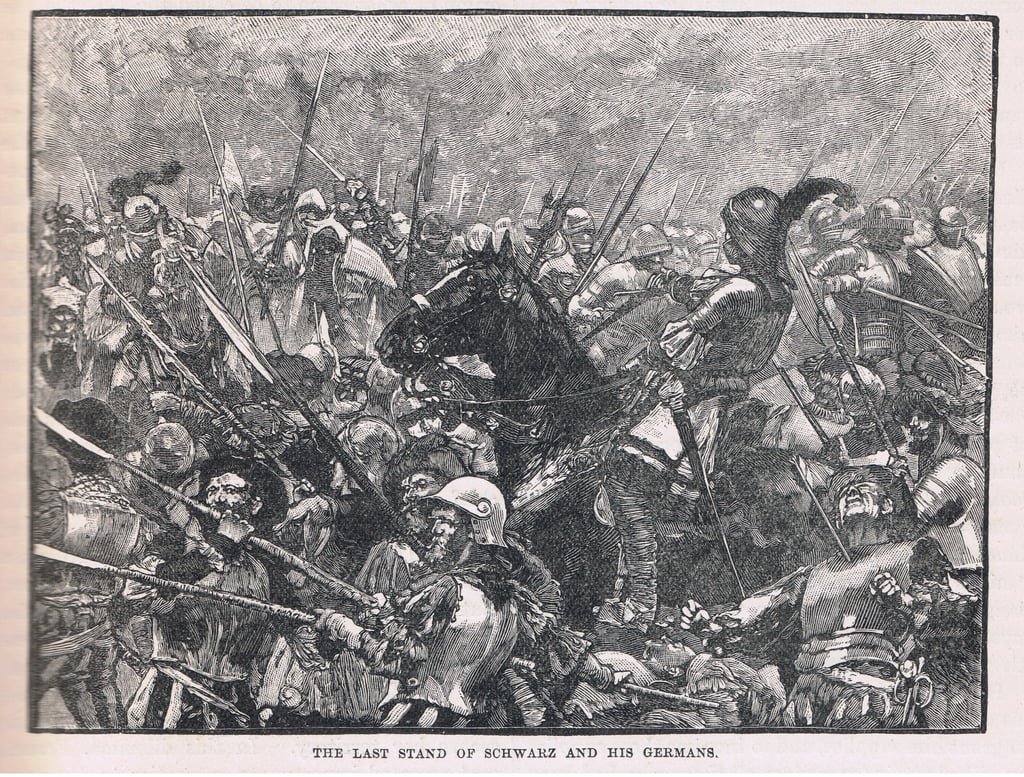

What happens when a fake king meets a real one? This is the end of a long, messy civil war, played out on a very specific brow of land in Nottinghamshire.
The Battle of Stoke Field in 1487 was a decisive engagement in an attempt by leading Ricardian Yorkists to unseat King Henry VII in favour of the pretender Lambert Simnel. While history often focuses on Bosworth, this was the last major engagement between contenders for the throne whose claims derived from descent from the houses of Lancaster and York. Simnel was an impostor, but he was crowned as King Edward VI in Dublin in May 1487.
For the Earl of Lincoln, the rebellion was about revenge and reparation. Having a claim to the throne from the late Richard III, Lincoln gathered an army of some 8,000 men - a mix of Irish mercenaries and rebel lords - and marched them across the country. By the time they reached the River Trent, King Henry had received substantial reinforcements and commanded an army that was far better armed and equipped than the Yorkists.
On 16 June 1487, the two sides met on a brow of Rampire Hill. Because of the terrain, the forces were forced into close, attritional combat. The result was a crushing victory for Henry; almost all the leading Yorkists were killed in the battle. It may have even had heavier casualties than Bosworth, possibly because of the terrain.
Today, it is a quiet historic battlefield. You can stand where the vanguard met the rebels and imagine the ill-portents and strange lights in the sky that the soldiers saw before the fight began.
Sources: Wikipedia, OpenStreetMap, Wikidata, Wikimedia Commons
Written by Nicolo Ciampini
Discuss this with the author and others
No comments yet. Be the first to start the conversation.