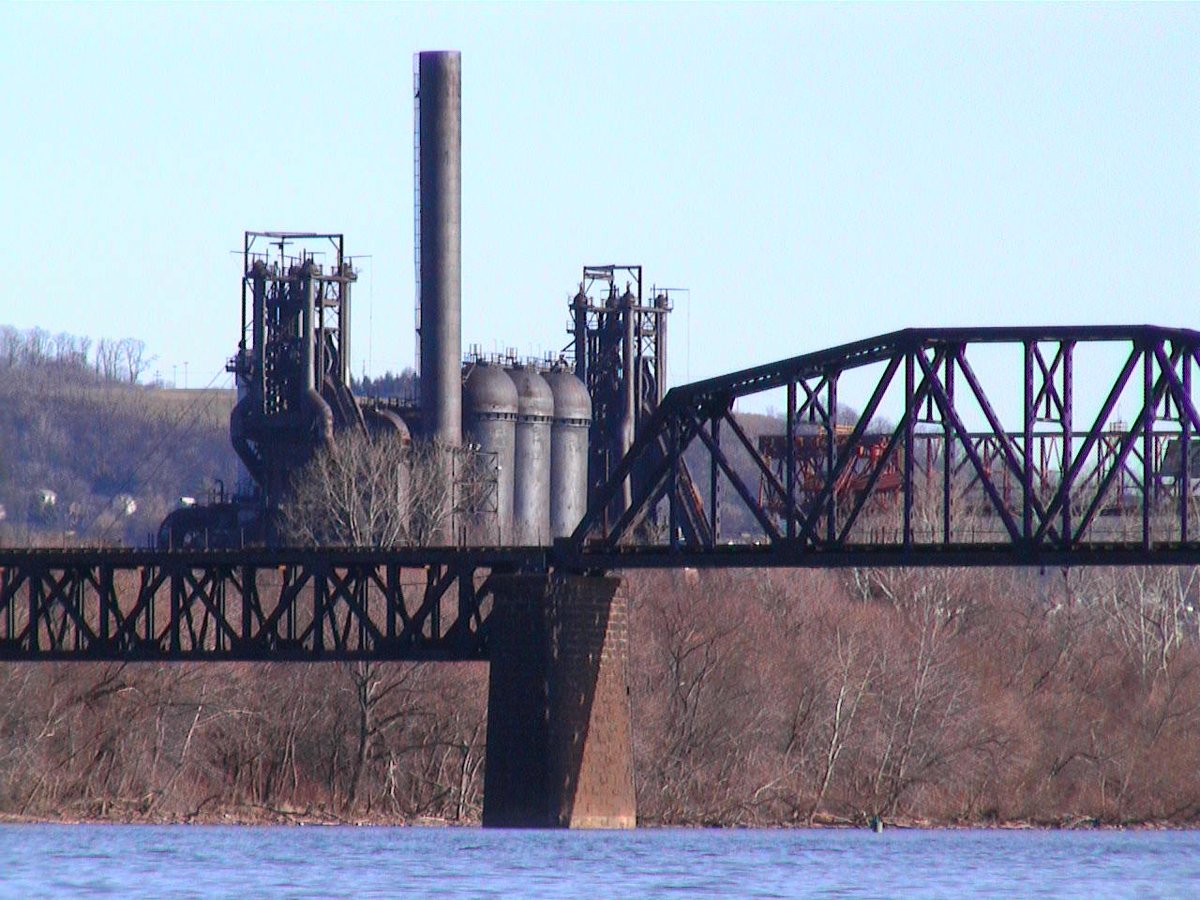

They are among the only pre-World War II 20th century blast furnaces to survive. When the site shut down in 1978, these structures remained as part of the historical landscape.
Under the names of Andrew Carnegie and later U.S. Steel, the site produced 1,000 to 1,250 tons of iron per day. They were the workhorses of the Homestead Works and were designated a National Historic Landmark in 2006.
The site is not readily accessible as it is enclosed by railroad tracks but the Rivers of Steel Heritage Corporation keeps the history alive with tours and programs from May through October. Visitors can see the hot metal bridge and the furnaces.
There is a big project to turn the area into a mix of offices and housing along with a museum. They even have plans to turn the old hot metal rail bridge into a road bridge to connect the site to a retail area across the water.
Sources: Wikipedia, OpenStreetMap, Wikidata, Wikimedia Commons
Written by Friendly Jane
Discuss this with the author and others
No comments yet. Be the first to start the conversation.