
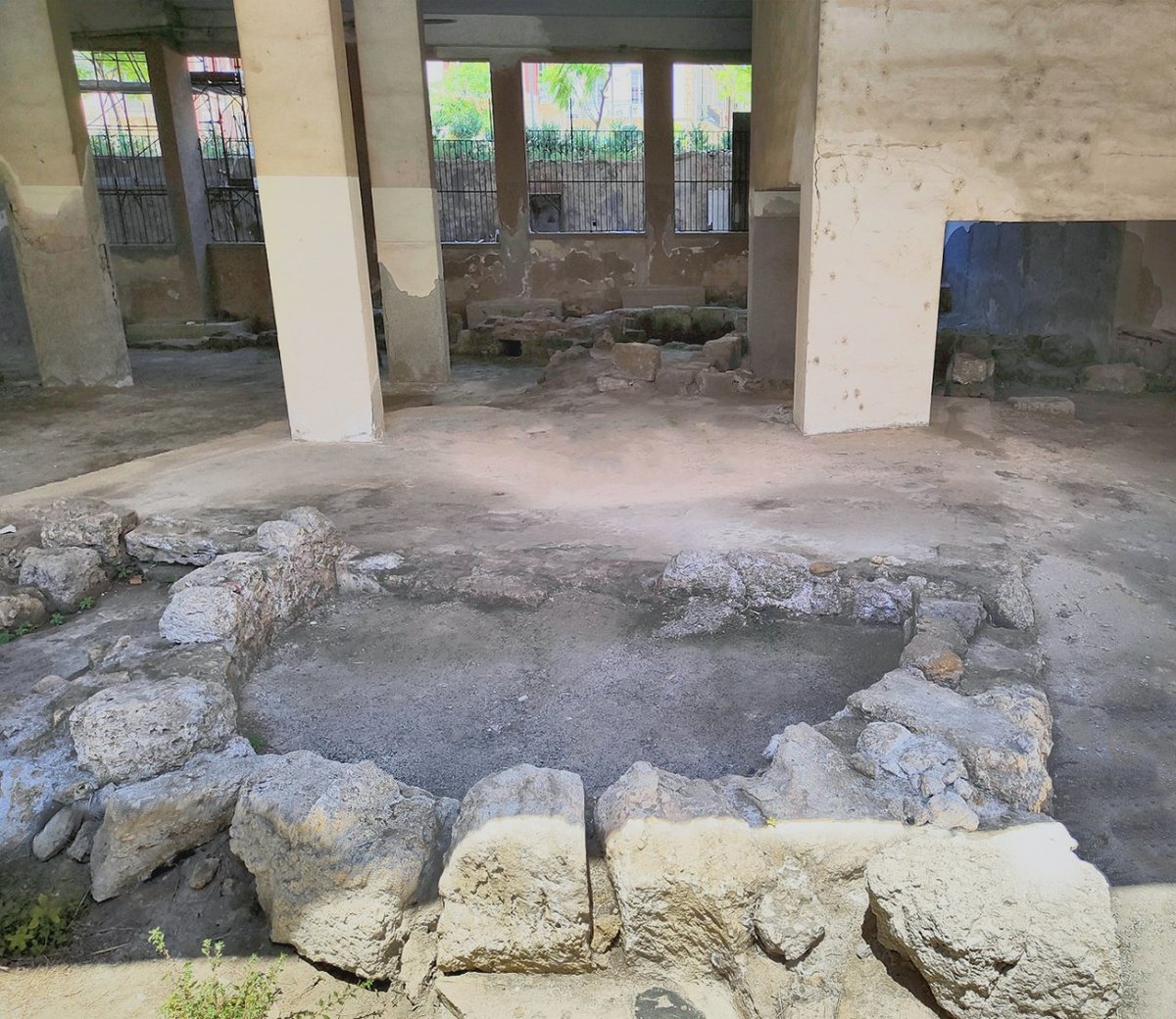
The Artemision, also known as the Temple of Artemis or the Ionic Temple, is located near Via Minerva, a side street of Piazza del Duomo in the highest point of the island of Ortigia. In the basement of the palace, archaeological remains have revealed a primitive temple in the Ionic style. The base measures 59 by 25 meters and dates back to the second half of the 6th century BC. It is one of the rare examples of this order preserved in the West.
It is thought that the Artemision was dedicated to the goddess Artemis, the Greek protector of Syracuse. The goddess is linked to the myth of Arethusa, the nymph transformed into a freshwater spring that remains a symbol of the city today. The temple is believed to have been built during the period of the Gamoroi, the descendants of the first Greek colonists from Corinth, who ruled the city as a landowning class before being expelled by the local native people.
Research by Luigi Bernabò Brea suggests that the temple was never completed. This may be related to the expulsion of the Gamoroi around 500 BC or the defeat suffered by Syracuse from Hippocrates of Gela. Upon coming to power, Gelone abandoned the project of the Ionic temple, preferring to start work on the Doric Temple of Athena, which stands today as the Duomo di Syracuse. Surviving fragments include a large capital and the lower part of a column, which features a non-fluted band intended to hold low reliefs, similar to great temples in Asia Minor.
Sources: Wikipedia, OpenStreetMap, Wikidata, Wikimedia Commons
Written by Nicolo Ciampini
Discuss this with the author and others
No comments yet. Be the first to start the conversation.