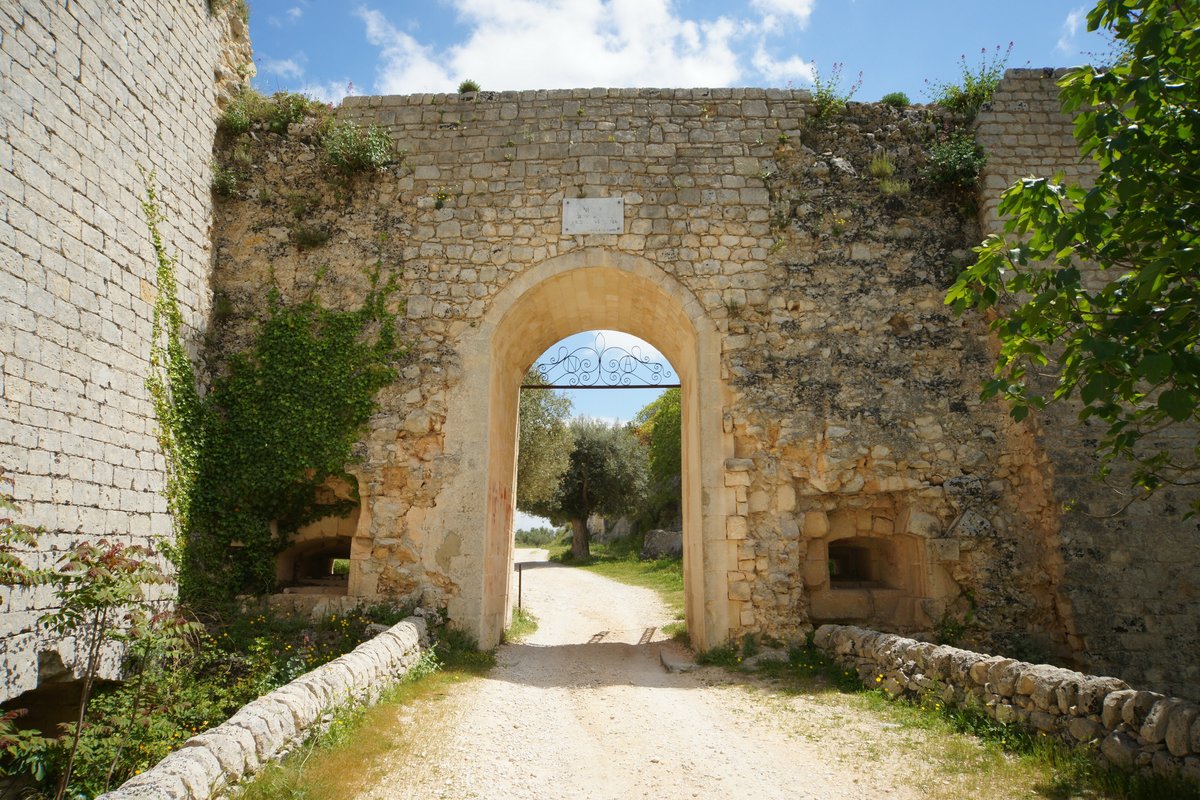

Netum, or Neetum, was a significant ancient town in the south of Sicily, near the sources of the little river Asinarus (modern Falconara), and about 34 km southwest of Syracuse. Its current site is at the località of Noto Antica (formerly Noto Vecchio), in the modern comune of Noto. Inhabited by the Sicels, it was subject to Syracuse; in a 263 BCE treaty between the Roman Republic and King Hieron II of Syracuse, Netum was one of the cities left in subjection to that monarch.
The ancient town continued to be inhabited and was also granting the rights of a foederata civitas to its inhabitants during Cicero's time. Ptolemy is the last ancient writer that mentions the name, but there is no doubt that it continued to exist throughout the Middle Ages; and under the Norman kings, it rose to be a place of great importance and the capital of the southern province of Sicily, to which it gave the name of Val di Noto. However, it suffered repeatedly from earthquakes, which caused harm and led some inhabitants to emigrate to a site nearer the sea where they founded the modern city of Noto, in 1703.
Some remains of the ancient amphitheater and a building called a gymnasium are still visible at Noto Antica, along with a Greek inscription dating back to Hieron II.
Sources: Wikipedia, OpenStreetMap, Wikidata, Wikimedia Commons
Written by Nicolo Ciampini
Discuss this with the author and others
No comments yet. Be the first to start the conversation.