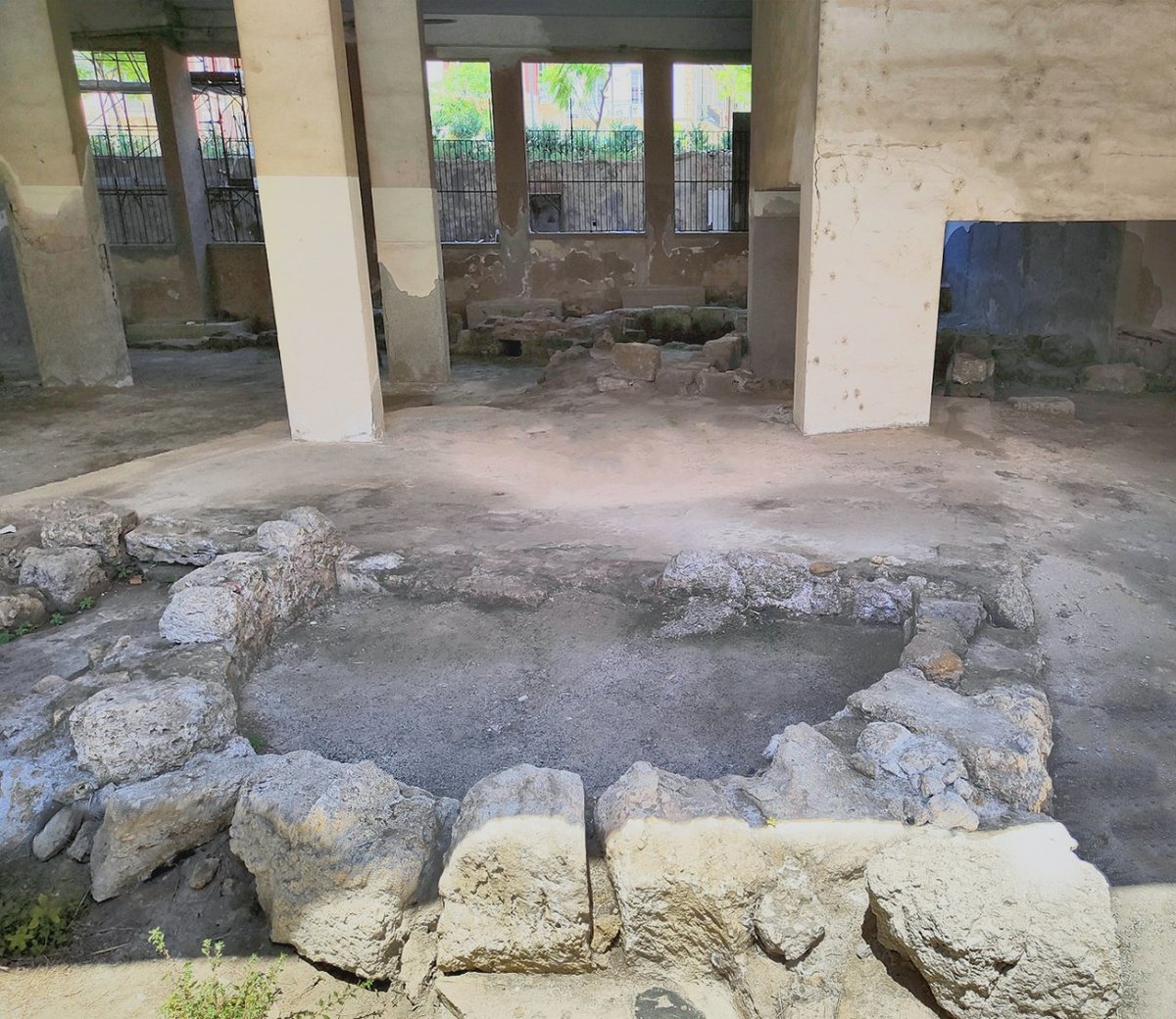

The Terme di Dafne, also known as Bagni di Dafne, were a bathhouse complex in Syracuse dating to the 4th century. While initially identified as a public building, archaeologist Giuseppe Cultrera hypothesized a private function due to its modest size. It is considered a structure of the Roman era with subsequent renovations of the Byzantine period.
Archaeologist Giuseppe Cultrera identified the site in 1934, uncovering a layout of specialized spaces. The northern part of the complex includes an apodyterion, a semicircular frigidarium, a tepidarium, and a calidarium. There is also a semicircular basin on the southern side and a square platform connected to a lime kiln called P.
The site is commonly identified with the baths mentioned by Theophanes in which the Byzantine emperor Constantine II was assassinated. In 1872, a small hoard of treasure was found nearby, including a solid gold ring. According to scholar Bryce Dale Lyon, this ring may have belonged directly to Constantine II, or perhaps to a member of his court who hid it in fear during the riots that followed his death.
If you visit today, you might find it hard to see the grandeur. Heavy construction in the 1960s left the ruins somewhat obscured. It is a quiet reminder that some secrets are buried under layers of construction and time.
Sources: Wikipedia, OpenStreetMap, Wikidata, Wikimedia Commons
Written by Nicolo Ciampini
Discuss this with the author and others
No comments yet. Be the first to start the conversation.