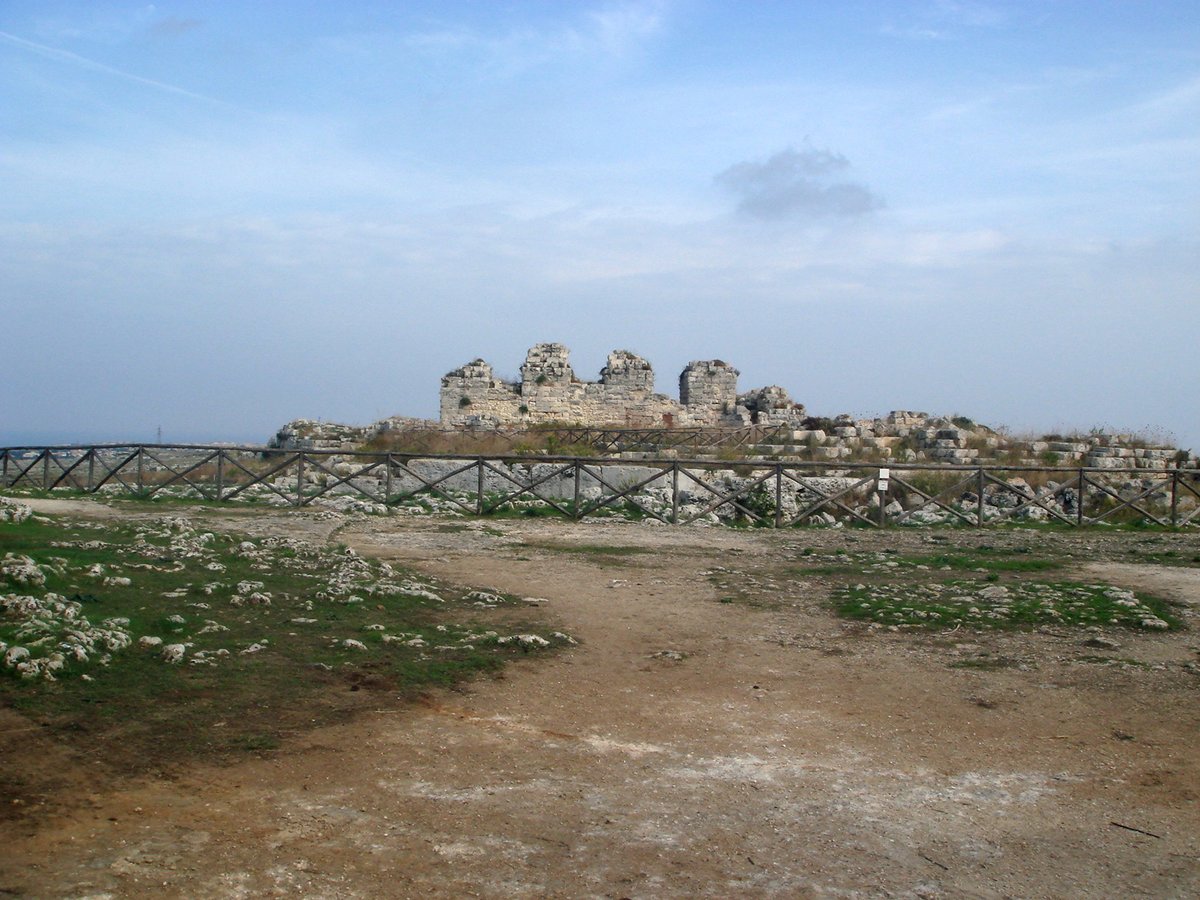

Perched high on the Epipolae hill, Euryalus Fortress was the key point in the fortifications of the ancient Greek city of Syracuse, a strategic bulwark against enemy advance. Constructed by Dionysius I in the late 4th century BC, it stayed in use for more than three millennia, each time becoming a geopolitical battlefield. It defied siege with a tree-killing stink of sulphur, a design so innovative it withstood centuries of new warfare, protecting the city from the Carthaginians and Romans before serving as a backdrop to the Battle of the Ionic Sea during the Second World War.
Its staggering ditch systems lured invaders into an ambush, while its rectangular central structure offered troop movements in secrecy via tunnels decorated with missiles from the giant stone-throwing catapults. Today, in the Syracuse Archaeological Museum, visitors can see what once lay hidden in Euryalus Fortress. From the sword to the helmet, these treasures echo the story of a place that stood the test of time.
Sources: Wikipedia, OpenStreetMap, Wikidata, Wikimedia Commons
Written by Nicolo Ciampini
Discuss this with the author and others
No comments yet. Be the first to start the conversation.