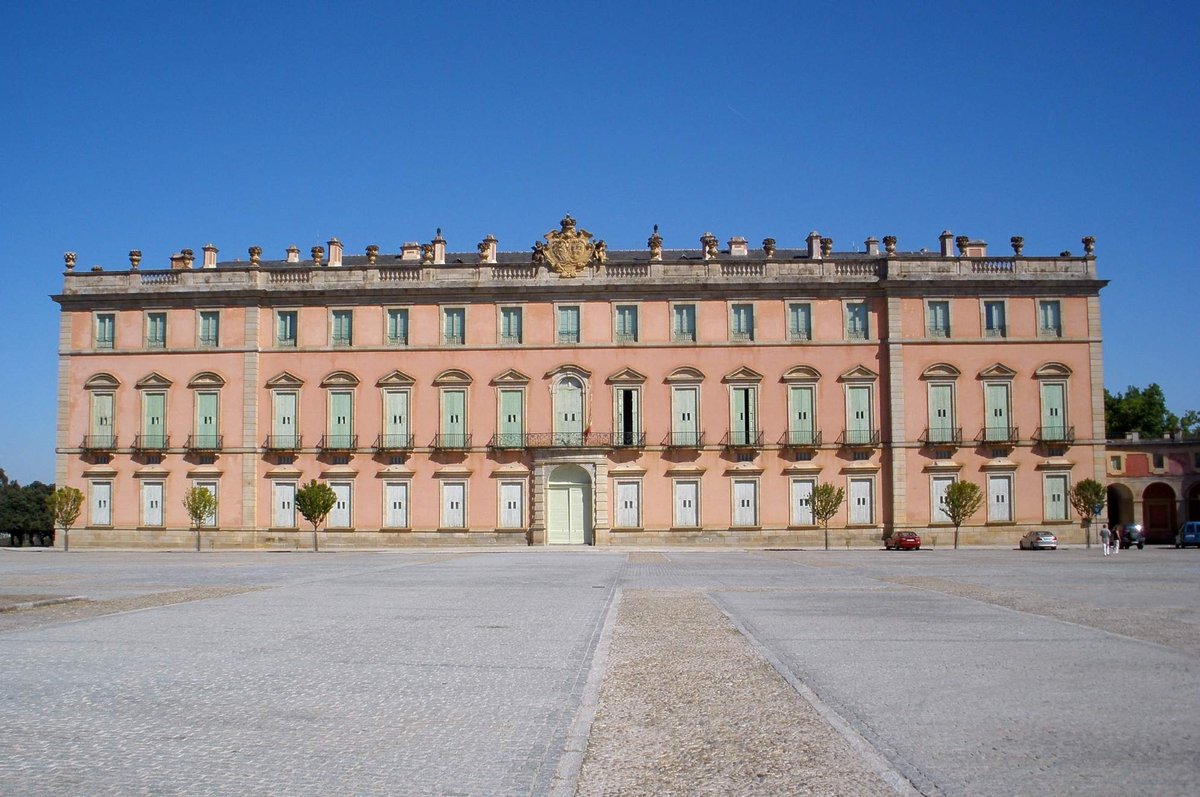

In 1746, Queen Elisabeth Farnese was widowed, and her step-son, King Ferdinand VI, agreed to construct a palace at Riofrío to ensure she would remain away from the court. The building was designed in the Italian style by architect Virgilio Rabaglio, echoing the queen's birth in the Duchy of Parma. It was designed with a central square and three stories, often being likened to the Royal Palace of Madrid.
Though built for the queen, Ferdinand VI died childless in 1759 before the works were completed. He was succeeded by his step-son, Charles III, who recognized Elisabeth as regent until his own arrival in Spain. During this time, she resided at the Royal Palace of Aranjuez and died there in 1766, having never lived at Riofrío. The property was intended for her youngest son, Infante Luis, but he never used it.
After being abandoned, the palace was completed as a hunting lodge and used by royalty for hunting in the nearby forest. It later served as a residence for Maria Josepha Amalia of Saxony to avoid court disapproval of her marriage, and for Francis, king consort of Queen Isabella II, who used it to avoid his wife. Later, King Alfonso XII resided there while mourning his wife, Queen Maria de las Mercedes.
Today, the palace is managed by Patrimonio Nacional and is surrounded by a 625-hectare forest home to fallow deer. While it features a grand staircase and a chapel with a collection of paintings and tapestries, it now houses a museum dedicated to the history of hunting.
Sources: Wikipedia, OpenStreetMap, Wikidata, Wikimedia Commons
Written by Nicolo Ciampini
Discuss this with the author and others
No comments yet. Be the first to start the conversation.