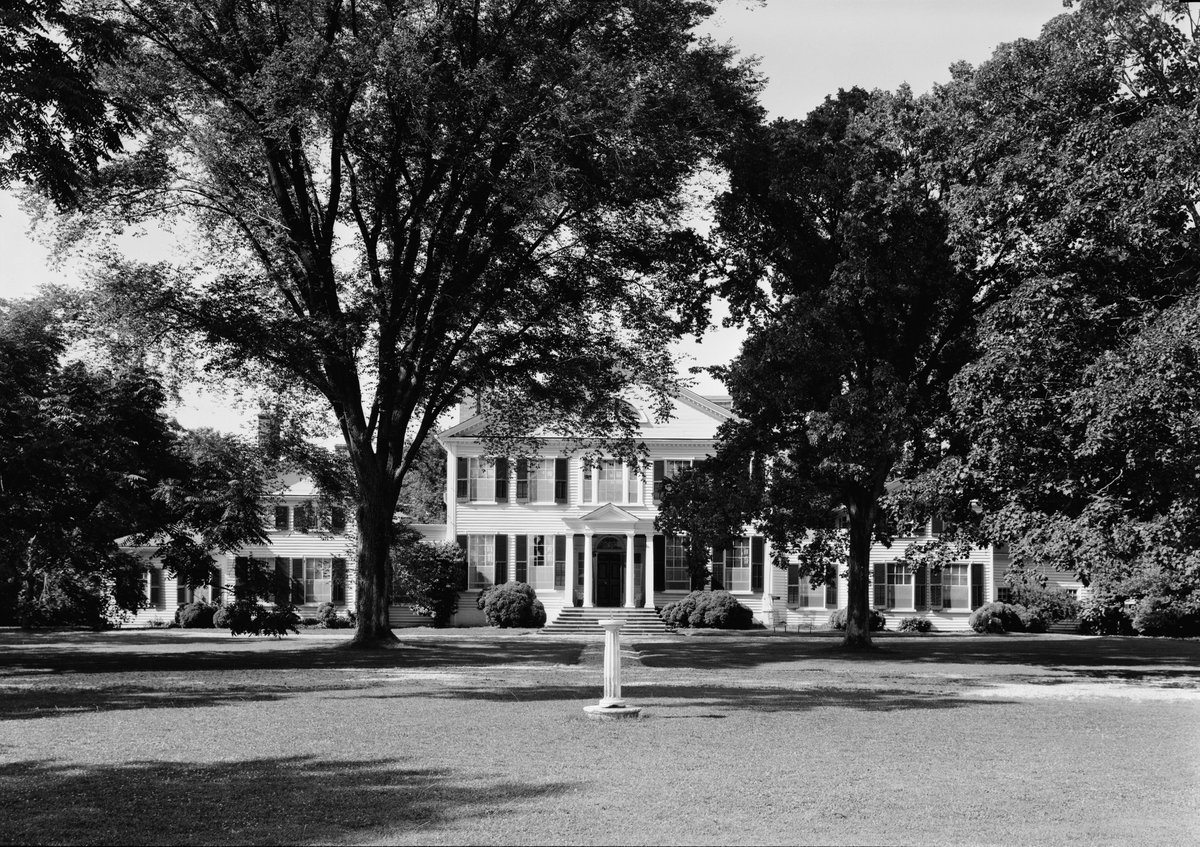
Wye House is a high-quality wooden-frame mansion built between 1781 and 1784. It serves as a textbook example of the transition from Georgian to Federal architecture. It is credited to builder Robert Key.
The property was founded in the 1650s by Edward Lloyd. By the time his great-great-grandson built this main house, the plantation was a massive operation. At its peak, the owners enslaved more than 1,000 people to work over 42,000 acres of land. Frederick Douglass was one of those people, arriving here as a child and later documenting the brutal conditions in his autobiography.
Modern archaeology has started to pull back the curtain on the site's secrets. In 2011, excavations of a greenhouse built by enslaved African people revealed African charms hidden near the furnace and entrance. These charms were intended to ward off bad spirits, a practical addition to a life of forced labor.
Today, the property is still held by the 11th generation of the Lloyd descendants. Interestingly, the nearby hamlets of Unionville and Copperville are home to many descendants of those who were enslaved here. It is a compact geographic irony where the heirs of the enslavers and the enslaved live within a very short distance of one another.
Sources: Wikipedia, OpenStreetMap, Wikidata, Wikimedia Commons

Written by Kyle McLonely
Discuss this with the author and others
No comments yet. Be the first to start the conversation.