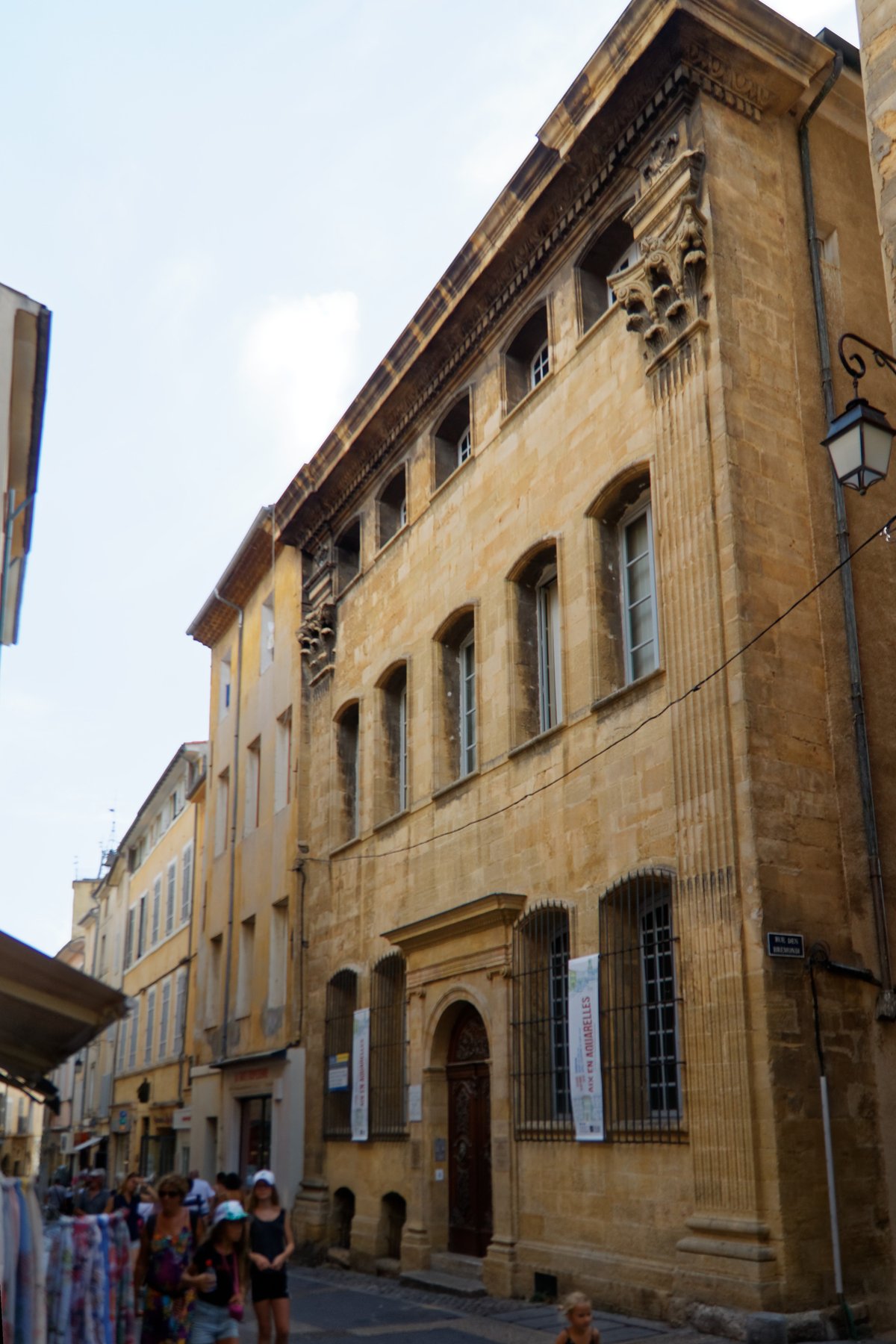

The Hôtel d'Estienne-de-Saint-Jean, located at 17 Rue Gaston-de-Saporta in Aix-en-Provence, was originally built around 1671, perhaps by Pierre Puget. Its initial name originates from François d'Estienne, Seigneur of Montfuron and Saint-Jean-de-la-Salle, who was its original occupant.
However, the hotel's construction was marked by a complex legal dispute. In 1660, Claire Passart, the later owner of the hotel, bought part of a contiguous house, the Murot house, owned by Éléonore Murot. Due to heavy rain, the Murot house was in danger of collapsing, potentially damaging both houses. Passart's purchase inadvertently sparked a legal dispute that was eventually inherited by Charles d'Estienne de Saint-Jean.
In 1664, the Martigny family, heirs to the Fortune of the d'Estienne de Saint-Jean, became the property owners of the hotel. Pierre Puget was commissioned to realize the hotel by Joseph de Martigny, a part of the Martigny family.
The hotel eventually became the property of the city of Aix in 1922 through a legacy from Marie d'Estienne de Saint-Jean, and in 1933, the Musée du Vieil-Aix opened its doors within the hotel. The hotel was classified as a historical monument in 1937. The elaborately designed staircase, the wrought-iron railing in the style of Louis XIV, a charming boudoir on the ground floor, and other notable features remain today.
Sources: Wikipedia, OpenStreetMap, Wikidata, Wikimedia Commons
Written by Nicolo Ciampini
Discuss this with the author and others
No comments yet. Be the first to start the conversation.