A tailor in old Deutz hung small cages of songbirds outside his window to supplement a meager wage. Across the way, a tax collector at Siegburger Straße 24 found the melody an intrusion on his sleep. He sued the tailor to silence the music, but the tailor won the case by pointing out that many families in Cologne - including the judge - kept birds of their own.
Retaliation followed. The tax collector hung a live goat in a large birdcage outside his own window. He intentionally underfed the animal so its bleating would echo across the street. The local neighbors began to mock the tailor, calling him Schneidermeckmeckmeck. The goat lived for only fourteen days before it died, but the insult remained. The tax collector eventually commissioned a stone goat to be placed above his front door. The tailor's family eventually moved away, unable to endure the local mockery.
Yet the story finds its resolution in a quiet romance. The tailor's daughter, Gertrud, and the tax collector's son, Fritz, fell in love after the court case. Long after the tax collector had passed, Gertrud returned to Cologne to buy the house with the stone goat. She eventually met Fritz by chance and they married.
By 1795, the house was known as the house with the goat picture. In the Middle Ages, local custom even required a tailor's apprentice to kiss the stone goat and raise it three times under a hat upon passing their exam. A house flag was even created to celebrate a goat that supposedly weighed more than ninety-nine tailors on a scale.
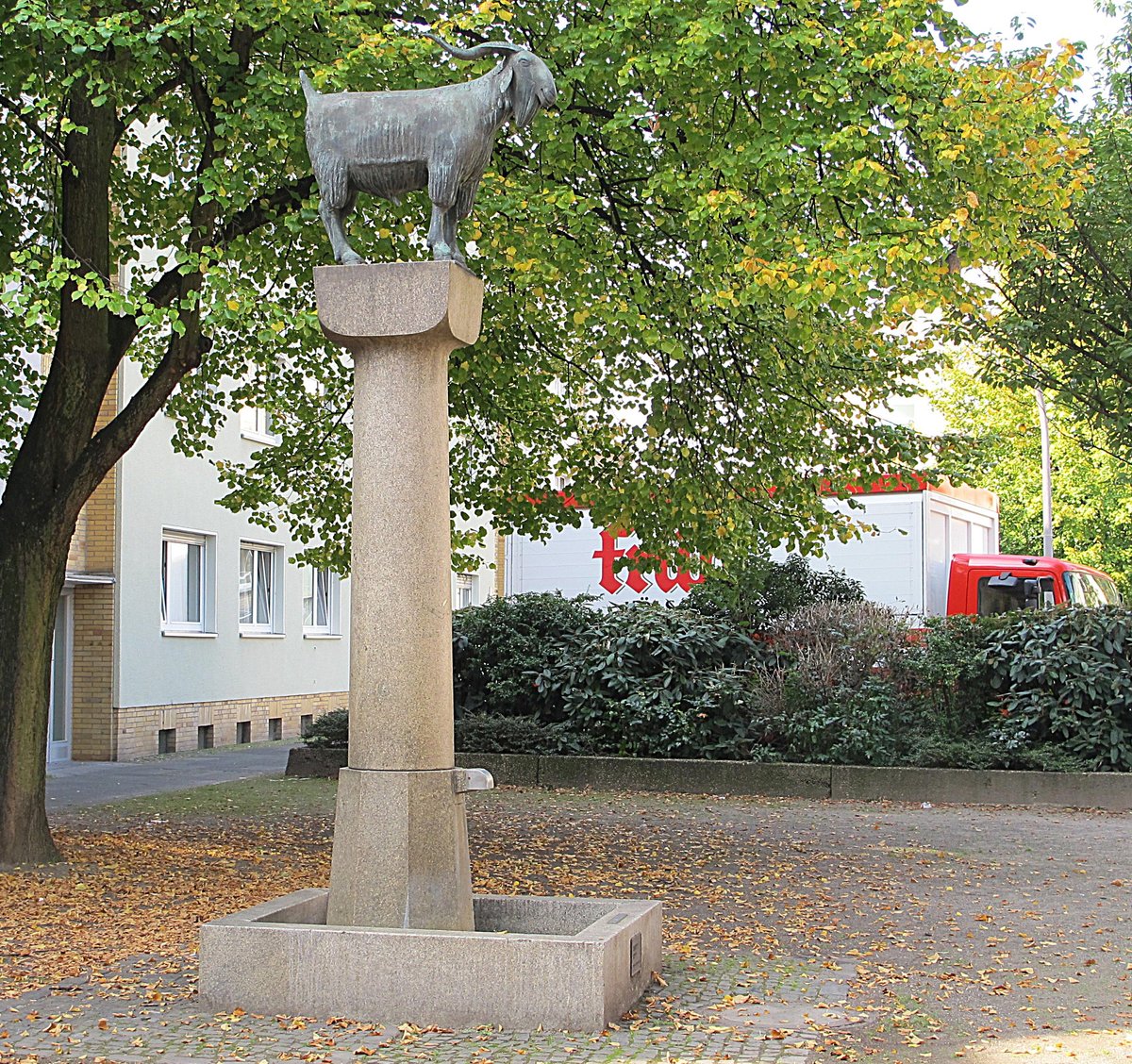
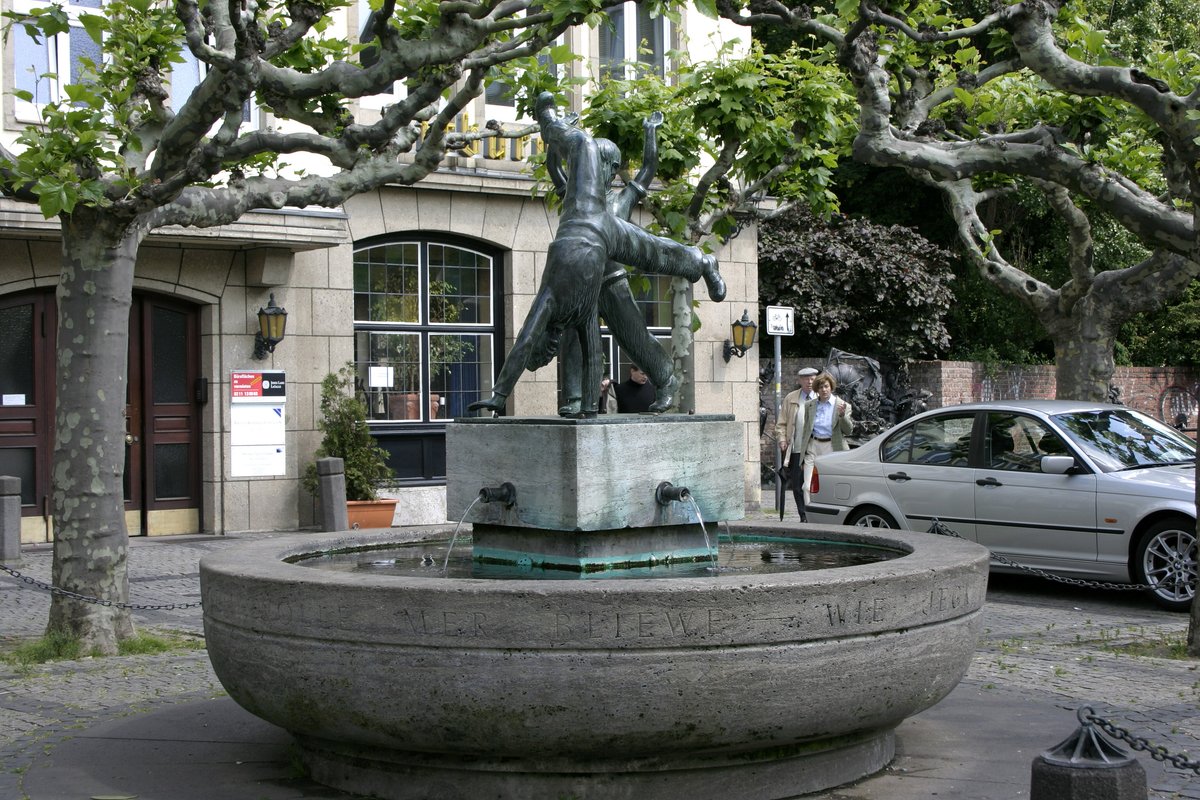
The original house at Siegburger Straße 24 was demolished in 1935/36 to widen the approach to the Deutzer Brücke. As compensation, the city of Cologne promised the people of Deutz a new monument. This sculpture was commissioned for the 500th anniversary of the Deutzer St.-Sebastian-Schützenbrüderschaft.
Sculptor Gerhard Marcks created the bronze goat to capture the essence of a typical goat in a simplified form. It stands on a 2.50-meter-high column with a Romanesque cube capital. A simple rectangular fountain sits at the base of the monument. Today, the Düxer Bock remains the unofficial mascot of the district, appearing in the names and logos of local clubs and initiatives throughout the neighborhood.
Sources: Wikipedia, OpenStreetMap, Wikidata, Wikimedia Commons
Written by Aurora
Discuss this with the author and others
No comments yet. Be the first to start the conversation.