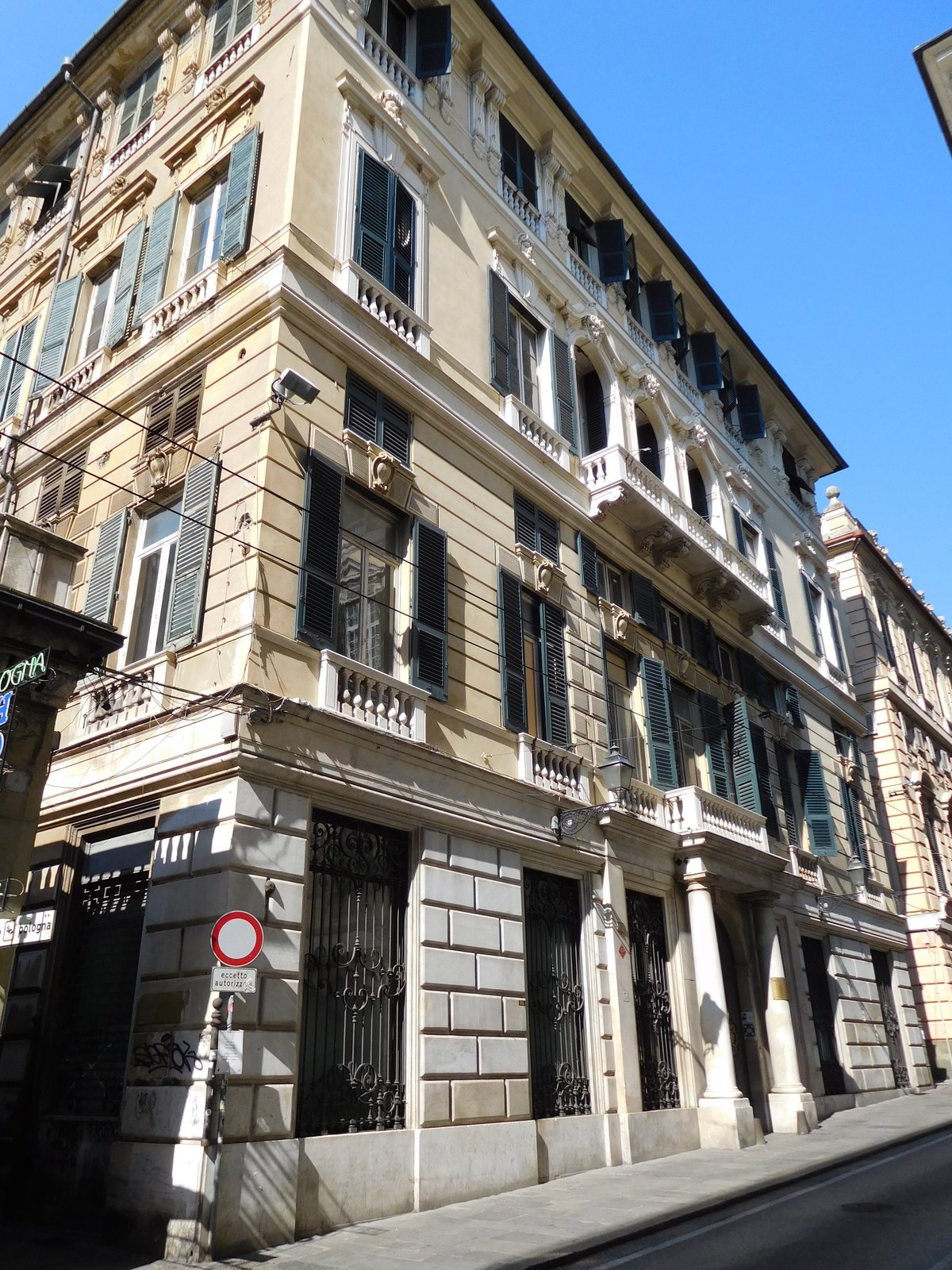

Originally known as the Palazzo Francesco Maria Balbi Piovera, located at Via Balbi 6 in Genoa, it was a home for the Balbi family back then. It saw life under Francesco Maria Balbi from 1657 to 1665, but it became more synonymous with his nephew, Costantino Balbi. The palazzo found its place on the UNESCO World Heritage list on July 13, 2006, since one of the 42 palaces in the Rolli di Genova.
During the first half of the 19th century, the palazzo underwent some radical changes. The accession happened under Marcello Luigi Durazzo's ownership, a secretary to the Accademia Ligustica di Belle Arti, who commissioned artists like Michele Canzio, Francesco Baratta, and Giuseppe Gaggini to restore and decorate the palazzo. A drastic overhaul occurred during Edilio Raggio's reign, who demolished parts of the building, including a church constructed in 1650, to make way for an imposing staircase with rampant arches and cross-vaults. The fresco artist Luigi Gainotti adorned one of the reception rooms with an ode to Genoa's merchant activity, while Cesare Viazzi in 1883 was tasked with decorating the walls and the vault of the staircase, producing a cycle of seven works honoring the Sabard dynasty using the tempera technique.
Today, the Palazzo Balbi Piovera serves as the seat of the Faculty of Letters of the University of Genoa.
Sources: Wikipedia, OpenStreetMap, Wikidata, Wikimedia Commons
Written by Nicolo Ciampini
Discuss this with the author and others
No comments yet. Be the first to start the conversation.