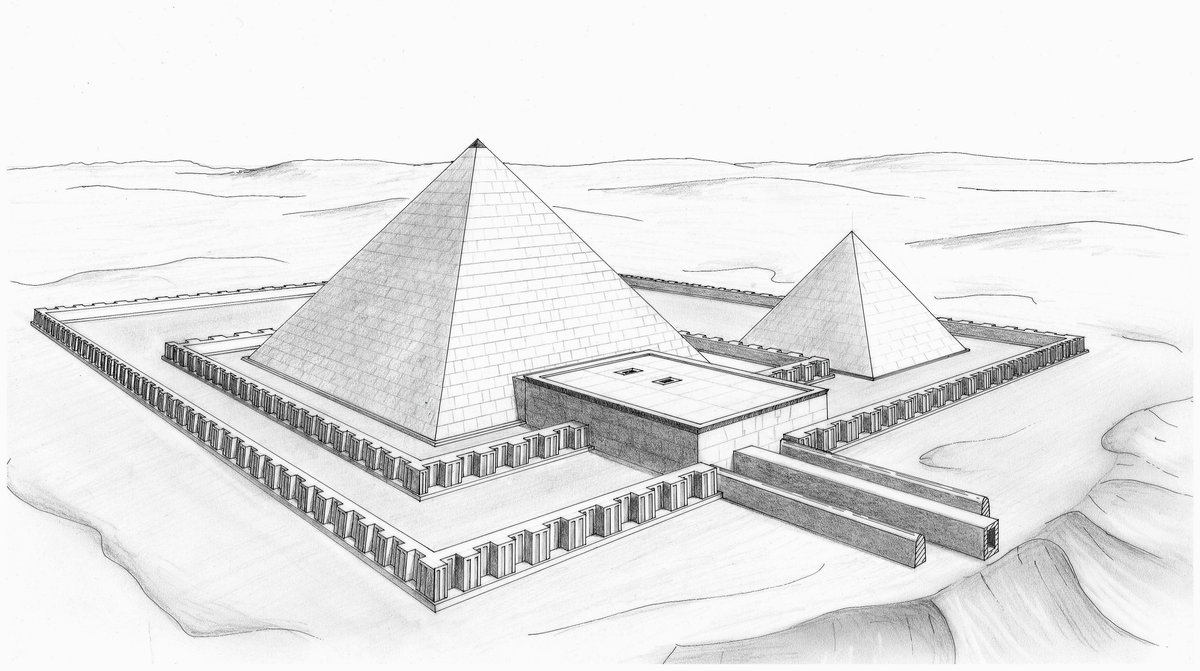

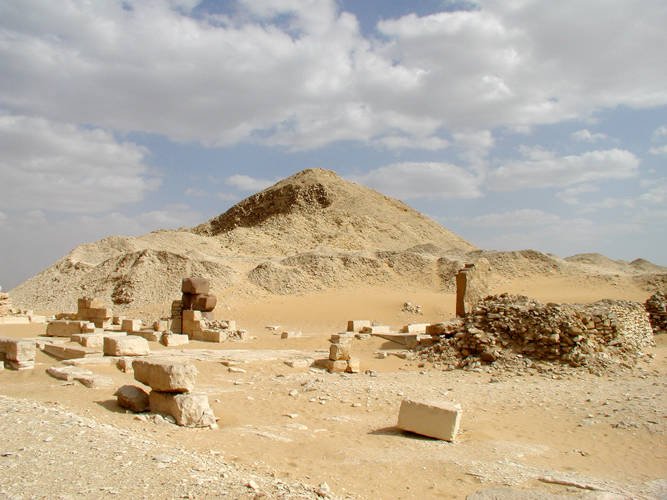
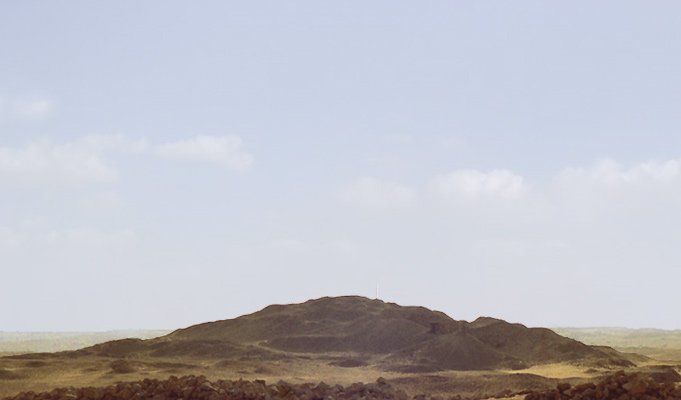
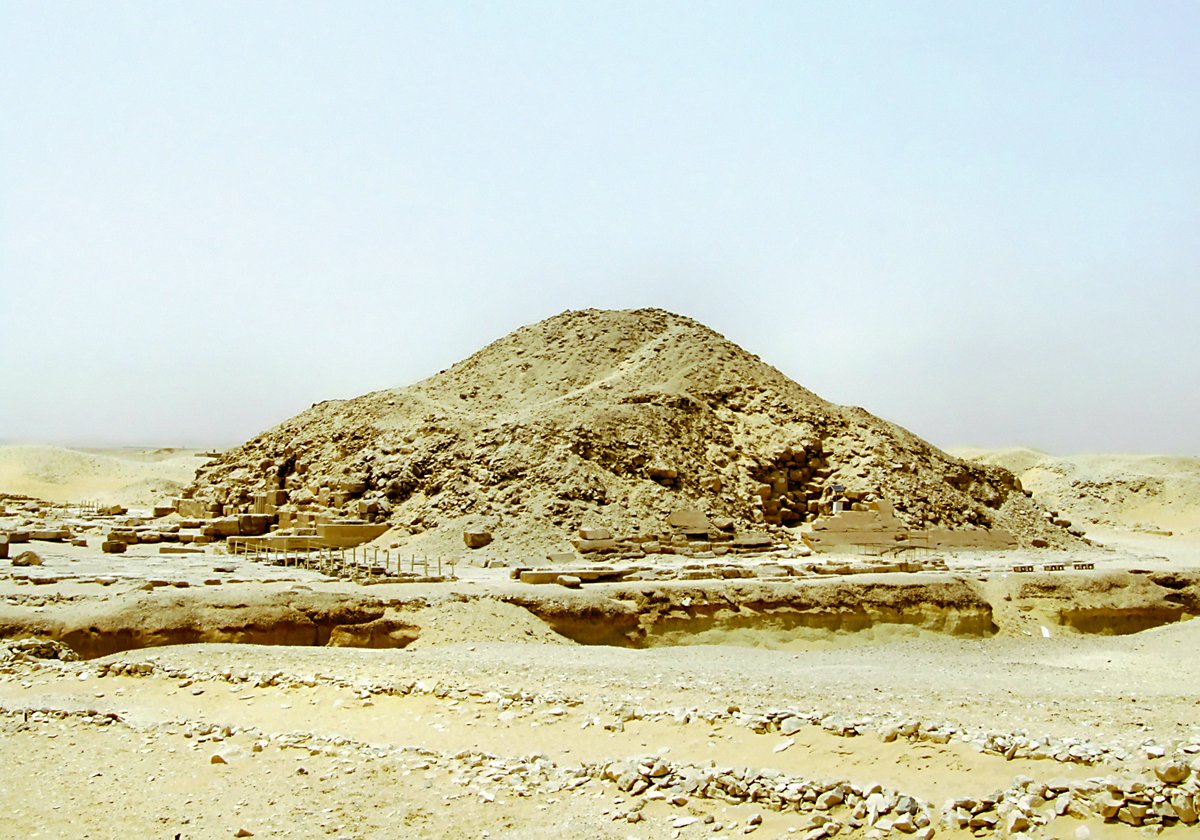
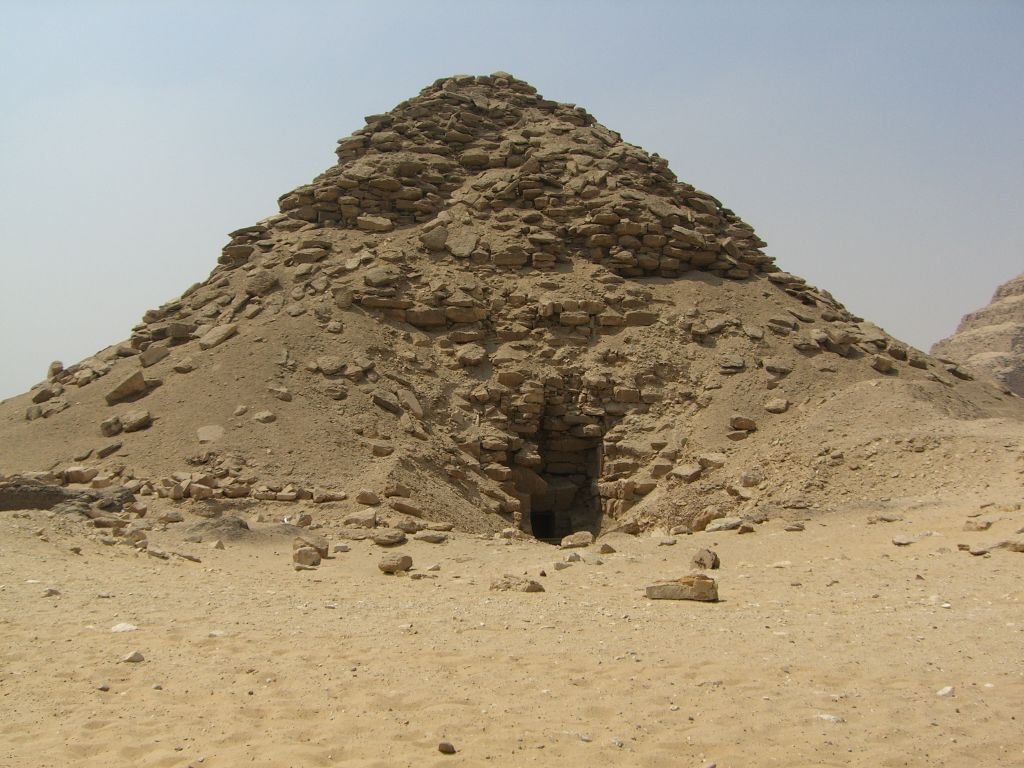
In the heart of South Saqqara, the pyramid of Khendjer, a relic of the 13th Dynasty, stands quiet and shrouded by the sands of time. This was the resting place of Khendjer, who ruled Egypt c. 1760 BC during the Second Intermediate Period. Constructed with a mudbrick core and a limestone outer casing, the pyramid originally stood around 37 metres (121 ft) high. Today, it is now completely ruined and rises only about one meter above the desert sand due to the disintegration of its core after being quarried by stone robbers.
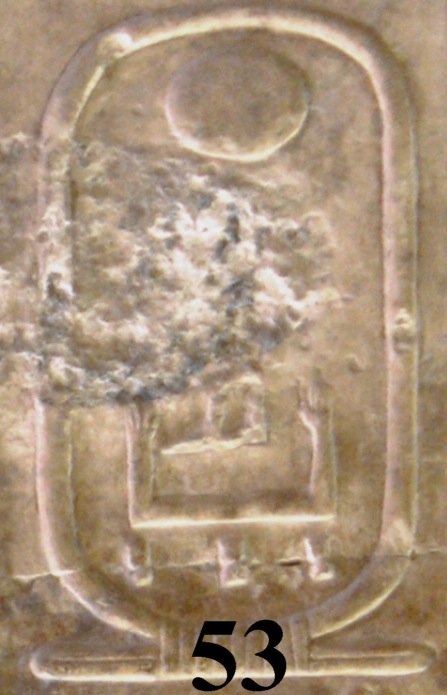
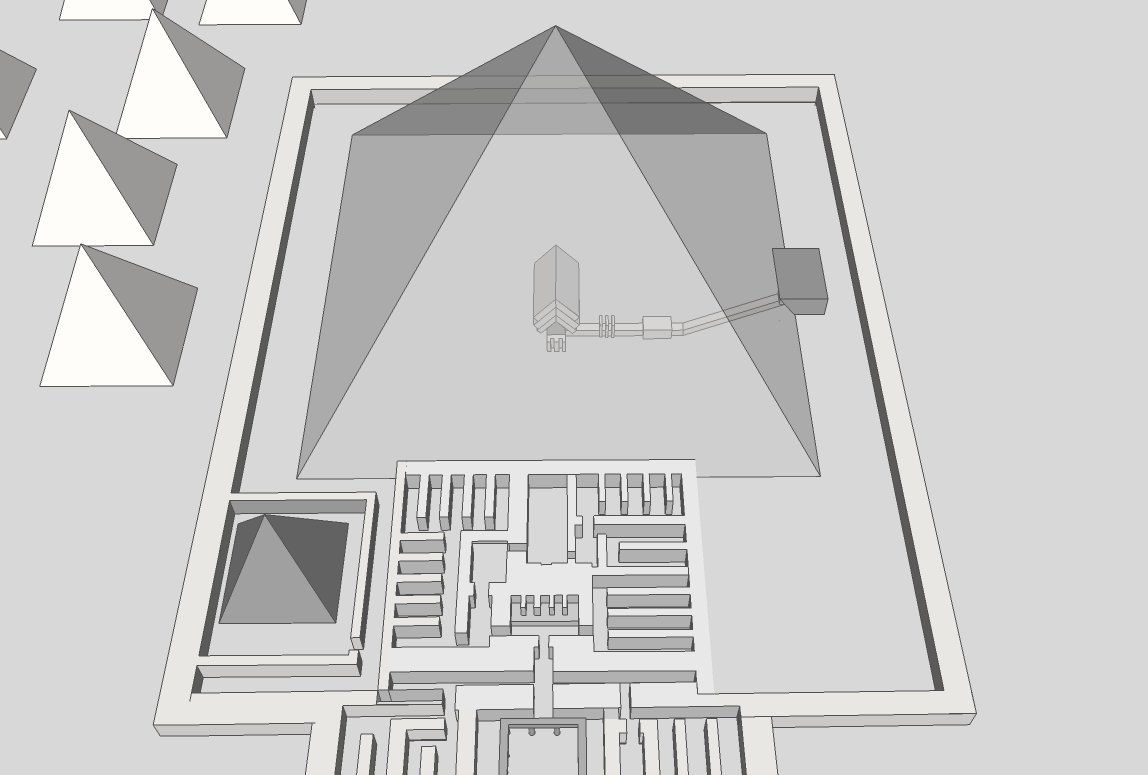
Discovered in 1929 by archaeologist Gustave Jéquier, the ruins yielded fragments of reliefs and columns. Among them was a fragmented black granite pyramidion found on the east side of the complex, inscribed with the prenomen 'Userkare'. The entrance to the substructures is located at the base of the southern end of the pyramid west side. A stairway with 13 steps leads to a chamber housing a large granite portcullis, similar to those found in the Mazghuna pyramids, which was originally destined to block the way to the burial chamber but was never put into place.
Beyond the portcullis chamber, a further stairway with 39 steps continues down to a closed double-leaf wooden door. The second portcullis chamber, antechamber, and corridor were constructed in the corner of a large trench. The burial chamber, made of a colossal monolithic quartzite block weighing 150 tons, was placed in the trench before the pyramid construction started. Two large quartzite beams weighing 60 tons formed its roof, and the mechanism for closing the vault consisted of sand-filled shafts on which rested the props of the northern ceiling slab.
Sources: Wikipedia, OpenStreetMap, Wikidata, Wikimedia Commons
Written by Mutabor
Discuss this with the author and others
No comments yet. Be the first to start the conversation.