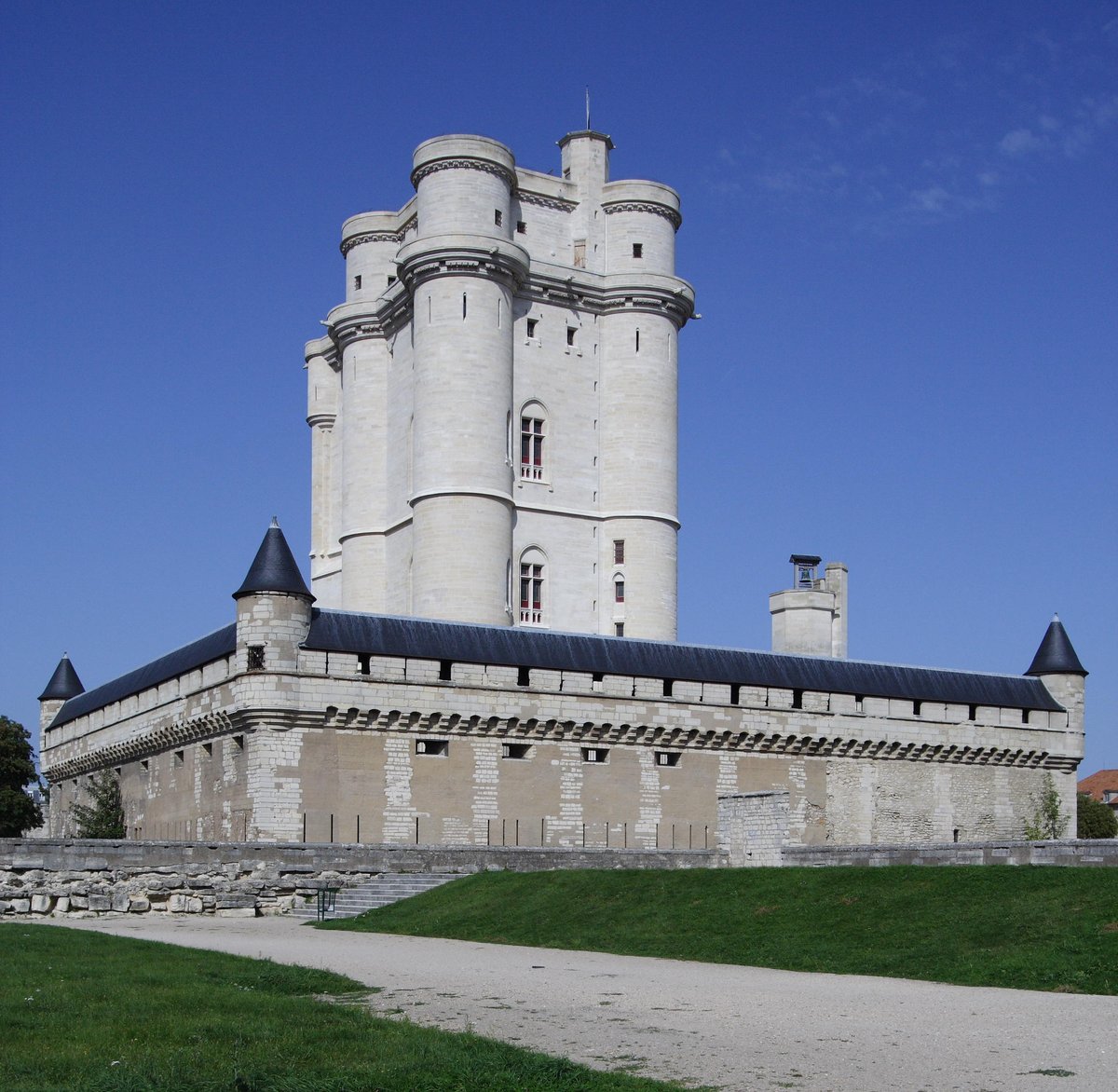
The Château de Vincennes (French pronunciation: [ʃɑto d(ə) vɛ̃sɛn]) is a medieval fortress and former royal residence located on the edge of Paris, next to the town of Vincennes, and within the Bois de Vincennes. This impressive stone structure was constructed between 1361 and 1369 under the rule of Charles V (not Louis VII). It has served as a residence for French kings over four centuries, with its strategic location offering advantages for hunting, access to transportation networks, and a convenient location close to Paris. However, throughout its history, it has also been a witness to bloody battles, political intrigue, and religious devotion, earning its reputation as a fortress both feared and revered.
The final castle structure, including the keep, was completed between 1361 and 1369 under the rule of Charles V. The keep, a tall central tower, is the tallest in Europe. The Chapel of Vincennes, begun in 1379 and now complete, is an exceptional example of Flamboyant Gothic architecture.
The Château de Vincennes was the site where the Holy Crown of Thorns was kept, and it is said that it was here that Louis IX made a fervent pilgrimage to pray and ask for guidance from the Virgin Mary. He received a vision of the Virgin Mary while praying in the chapel, which led him to embark on the Crusades. The vision continued to be reported by others visiting the château.
In 1420, the Treaty of Troyes granted the château and the Île-de-France to the English. The château remained under English control until it was recaptured by Charles VII in 1436. Since then, it has been used by various French kings until it fell into disuse in the 17th century.
The Château de Vincennes, with its long and tumultuous history, stands as a testament to the capabilities and the ambitions of its monarchs, the supernatural legends that they inspired, and the strategic location that made it all possible. Today, it remains a popular tourist destination, drawing visitors from around the world to experience its grandeur and its mysterious past.
Sources: Wikipedia, OpenStreetMap, Wikidata, Wikimedia Commons
Written by Nicolo Ciampini
Discuss this with the author and others
No comments yet. Be the first to start the conversation.