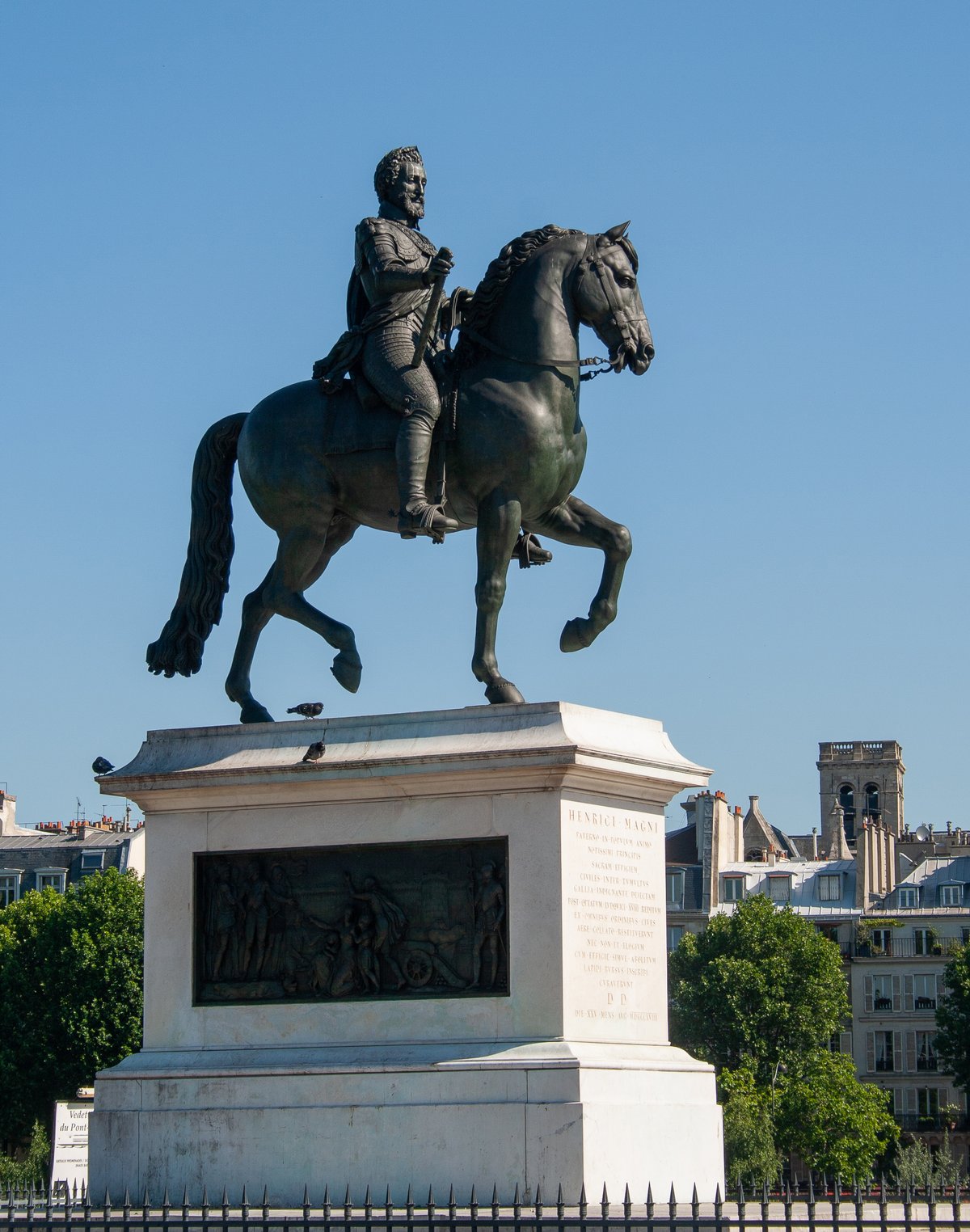

Four chained slaves occupy the corners of the pedestal of the equestrian statue of Henry IV, bound by bands around their arms and chained to the hips of harpies. According to the drawings of Ludovico Cigoli, a Medici court artist, these slaves were depicted with European features and posed with "Michaelangelsque contortions". The pedestal also features scenes of battle and seated youths bearing swags.
Marie de Médicis was the primary person who wanted the creation of the statue. She used courtiers, including Calvaliere Camillo Guidi, to keep tabs on the statue's progress and monitor issues like a lack of labor or money. The project faced delays when the original artist, Giambologna, died in 1608, leaving Pietro Tacca to take over. The statue also faced delays due to bad weather during casting and spent nearly a year stalled in a seaport before arriving in Paris.
While the king was assassinated before the statue was finished, it was finally placed on the Pont Neuf in 1614. During the French Revolution in 1792, the statue was torn down because it held symbolic virtues for the people. The bronze was melted down for cannons, but the four slaves on the pedestal and three pieces of the king and horse were saved and now reside in the Louvre.
Sources: Wikipedia, OpenStreetMap, Wikidata, Wikimedia Commons

Written by Nicolo Ciampini
Discuss this with the author and others
No comments yet. Be the first to start the conversation.