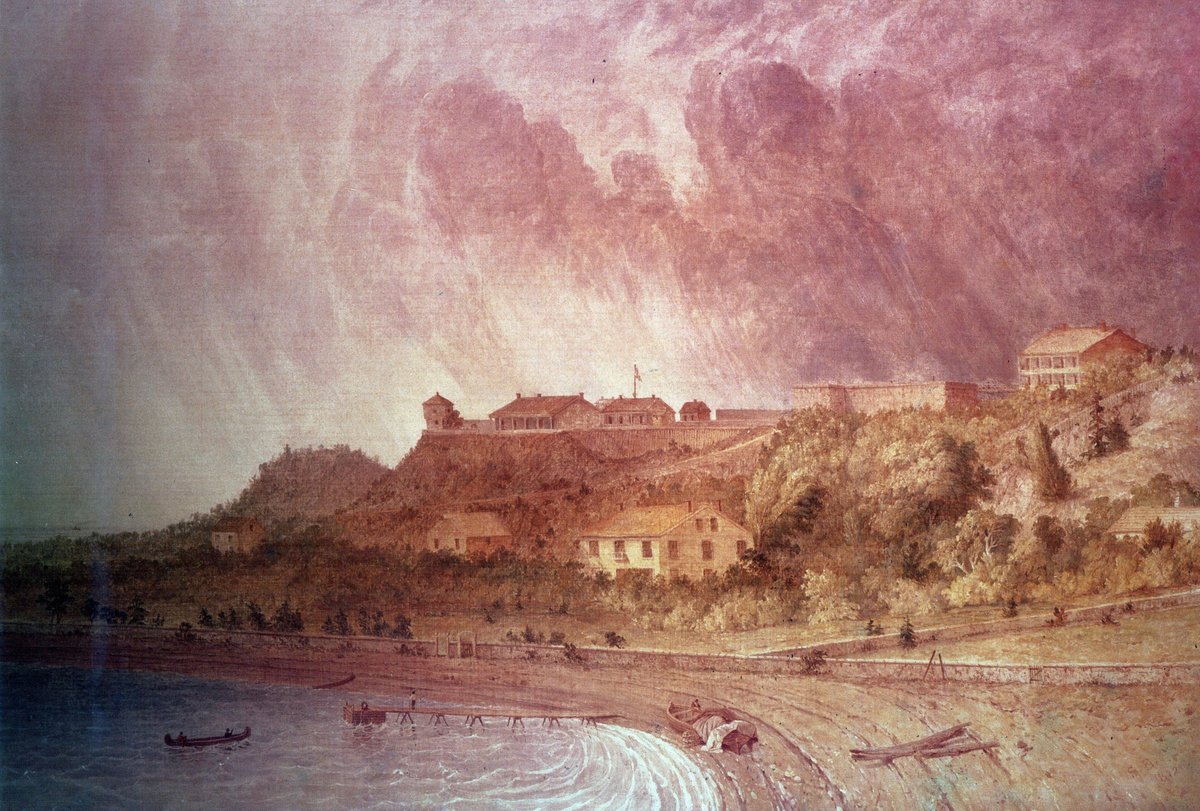
Fort Mackinac served as a military outpost from the late 18th century to the late 19th century. The British built the fort during the American Revolutionary War to control the strategic Straits of Mackinac between Lake Michigan and Lake Huron. After the Treaty of Paris in 1763, the British occupied a French fort but built a new limestone fort on the 150-foot bluffs of Mackinac Island in 1780/1781. The British held the outpost throughout the American Revolutionary War, not officially relinquishing it until the Jay Treaty was ratified in 1796.
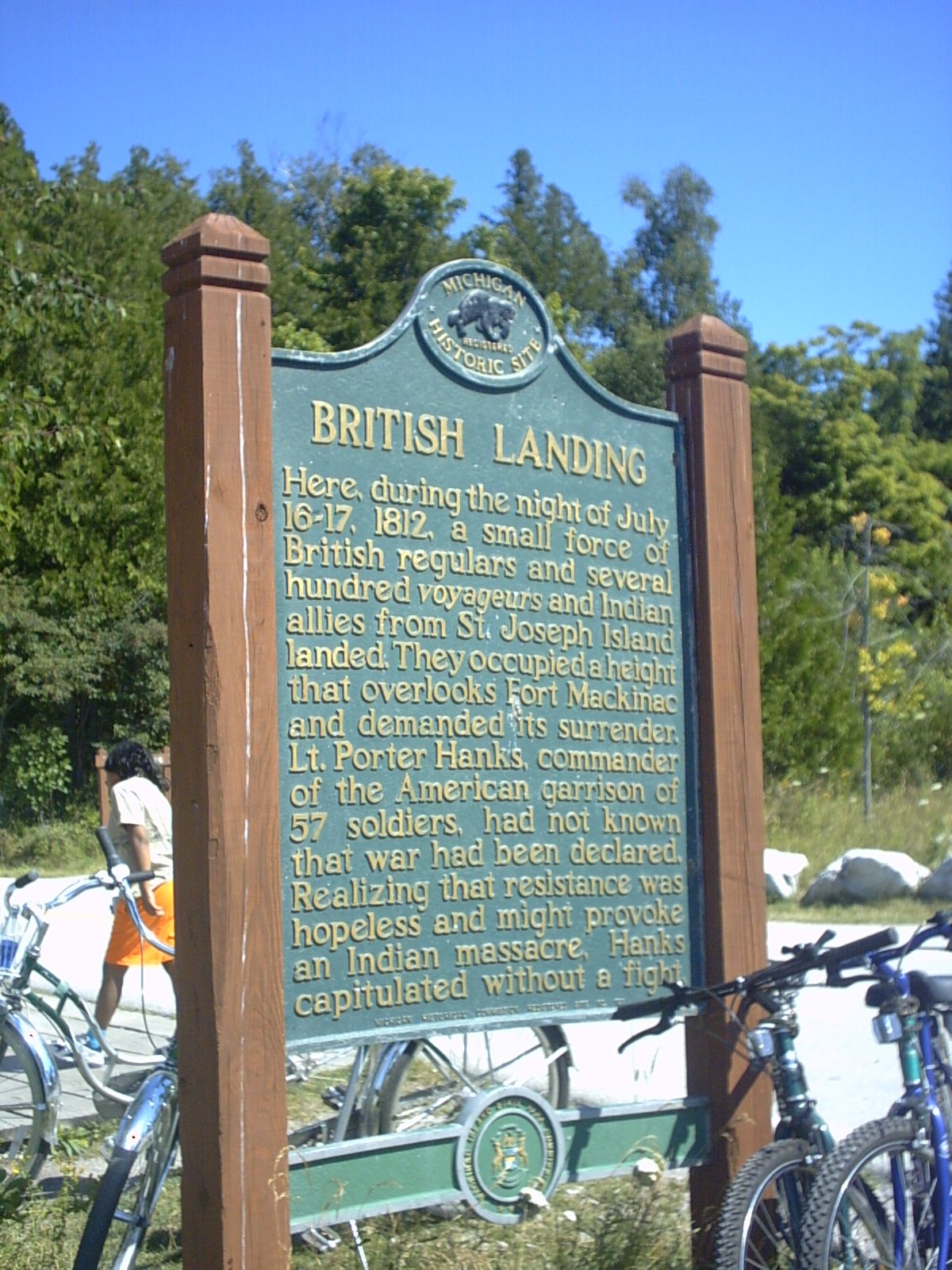
In June 1812, British Major-General Isaac Brock sent a canoe party to confirm a state of war existed. This party returned with orders to attack Fort Mackinac. On the morning of July 17, 1812, a combined British and Native American force of seventy war canoes and ten bateaux under Captain Charles Roberts attacked the fort. A minimal United States garrison of approximately sixty men under Lieutenant Porter Hanks was taken by surprise. Fearing a massacre of his men, Hanks accepted a surrender without a fight. The British paroled the American forces and required the island inhabitants to swear an oath of allegiance to the United Kingdom.
Shortly after the capture, the British captured two American vessels, the Erie and Friends Good Will, as prizes of war when they tied up at the pier. To prevent a re-capture, the British under Colonel Robert McDouall built Fort George on the highest point of the island. In 1814, a squadron of five United States ships arrived with 700 soldiers under Colonel Croghan. The Americans shelled Fort George for two days, but a dense fog forced them back for a week. Major Andrew Holmes eventually led American forces to the fort, but they were defeated. After the War of 1812, American forces reoccupied the fort in 1815 and renamed Fort George to Fort Holmes. The fort closed in 1895 and was later adapted as a museum.
Lieutenant Hanks faced a harsh aftermath following the 1812 surrender. Upon arriving at the American military post in Detroit, his superiors charged him with cowardice. Before his court martial could begin, a British cannonball ripped through the room where he was standing, cutting him in half and killing the officer next to him.
Sources: Wikipedia, OpenStreetMap, Wikidata, Wikimedia Commons

Written by No Other
Discuss this with the author and others
No comments yet. Be the first to start the conversation.