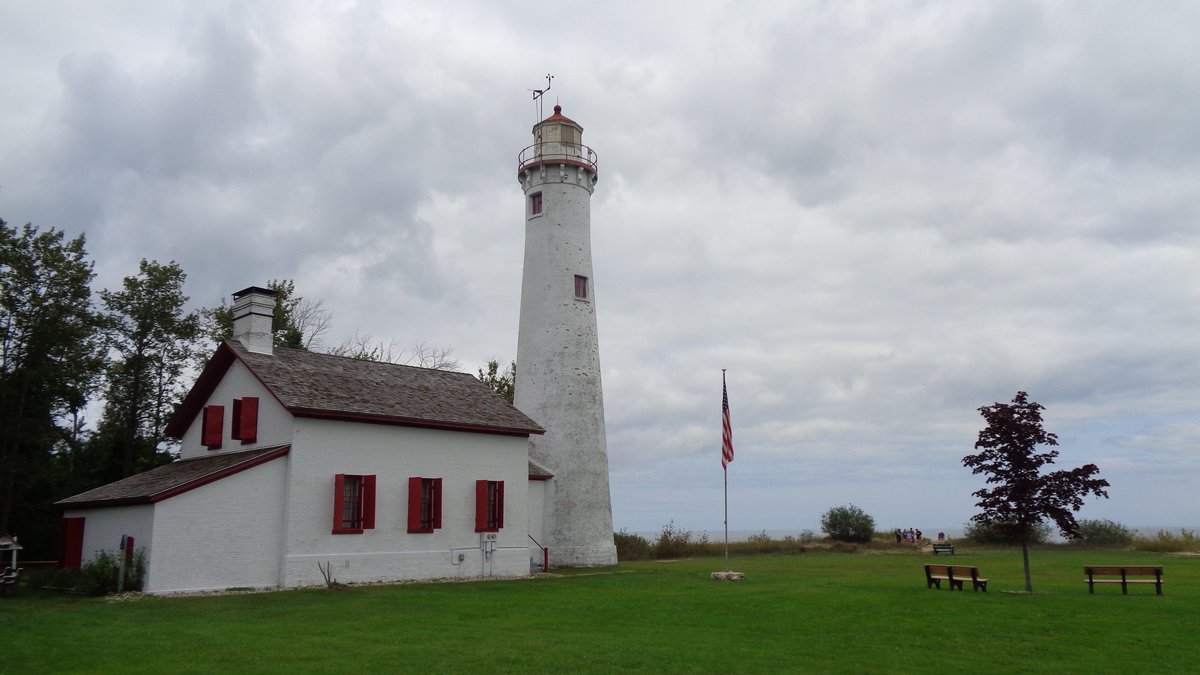
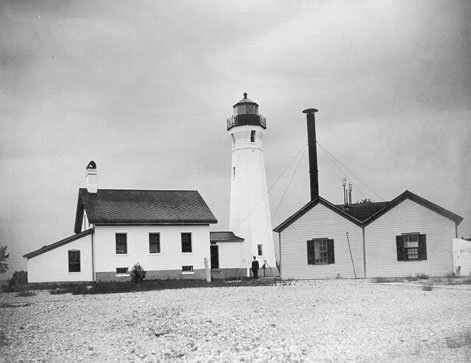
Back in the mid-1800s, Congress finally admitted that the body count of sailors hitting rocks was getting embarrassing. To rectify this incompetence, they authorized 70 new lights across the western Great Lakes over a thirty year period. One high priority target was a 1.5 mile reef lurking off Sturgeon Point. To stop ships from becoming part of the scenery, the United States Lighthouse Board deployed a brick masonry tower on an ashlar limestone foundation in 1869.
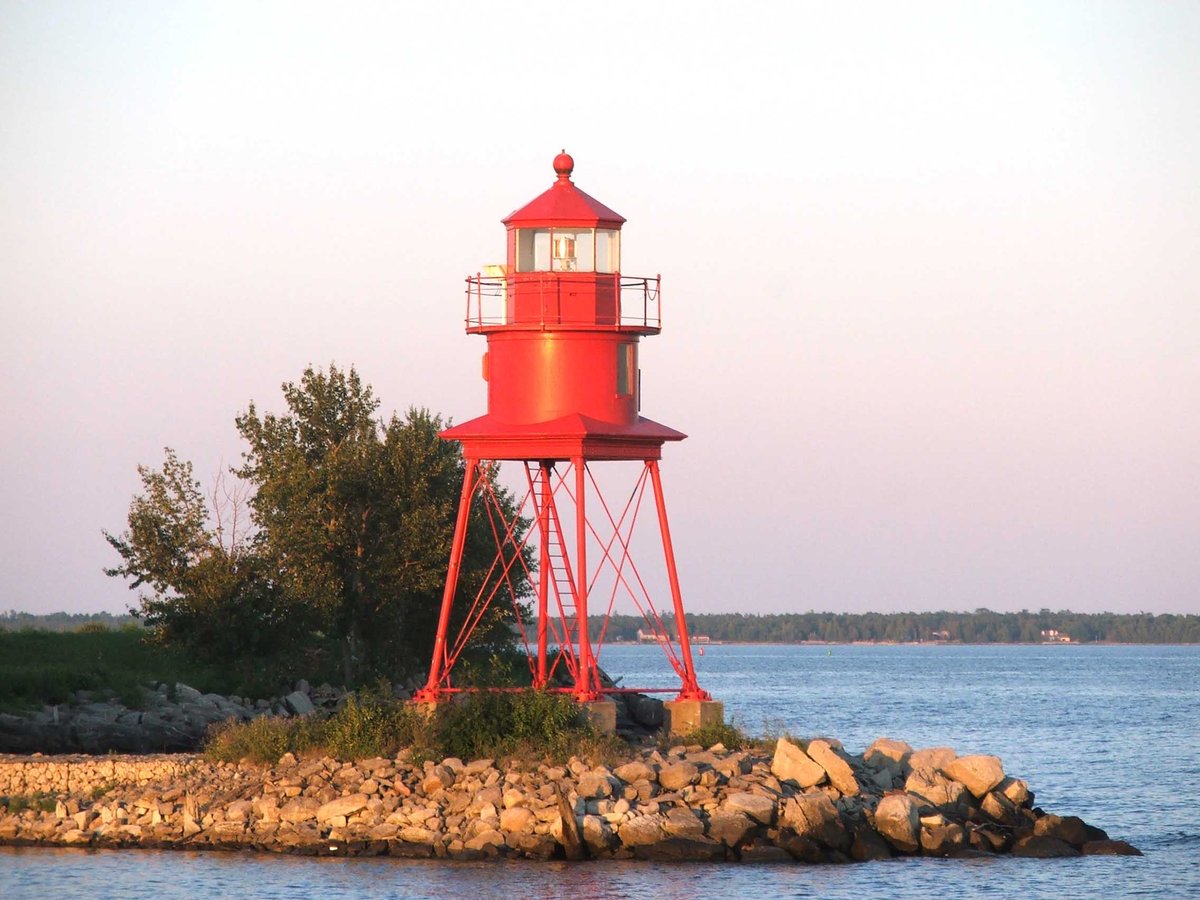
The structure sports a Cape Cod aesthetic that looks like a tourist mistake for the harsh conditions of Lake Huron. It stands at 70 feet 9 inches tall and performed its duties so well that the Board decided to clone it for Poverty Island Light in 1874. You could call these two structures architectural siblings because they share the same DNA and face the same hostile water.
Inside the guts of the machine, the original sixth-order Fresnel lens was eventually swapped for a 3½-order lens from Oswego, New York. This piece of hardware was elite, with only a dozen units existing in the entire country. While some paperwork remains confused about whether the model is a third-order or a 3½-order, the Great Lakes Lighthouse Keeper Association settled the debate in 2012.
Currently, the area is a total ghost town. The Coast Guard automated the facility in 1939 and evacuated the personnel by 1941. They demolished the fog horn building and the watch tower, but the keeper's quarters remains standing. The foundation of the old life-saving station and an 1869 brick outhouse are still visible. It is a silent sector now, but that reef is still waiting for a target.
Sources: Wikipedia, OpenStreetMap, Wikidata, Wikimedia Commons
Written by Kyle McLonely
Discuss this with the author and others
No comments yet. Be the first to start the conversation.