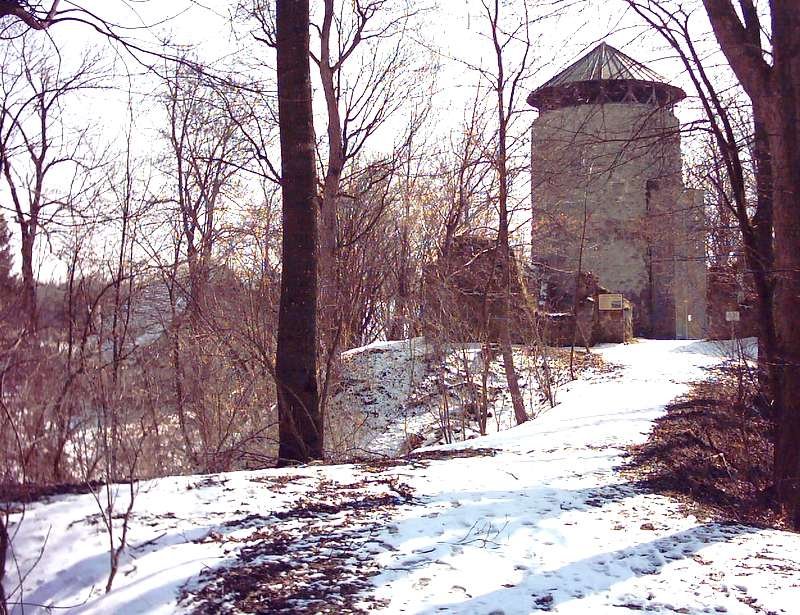
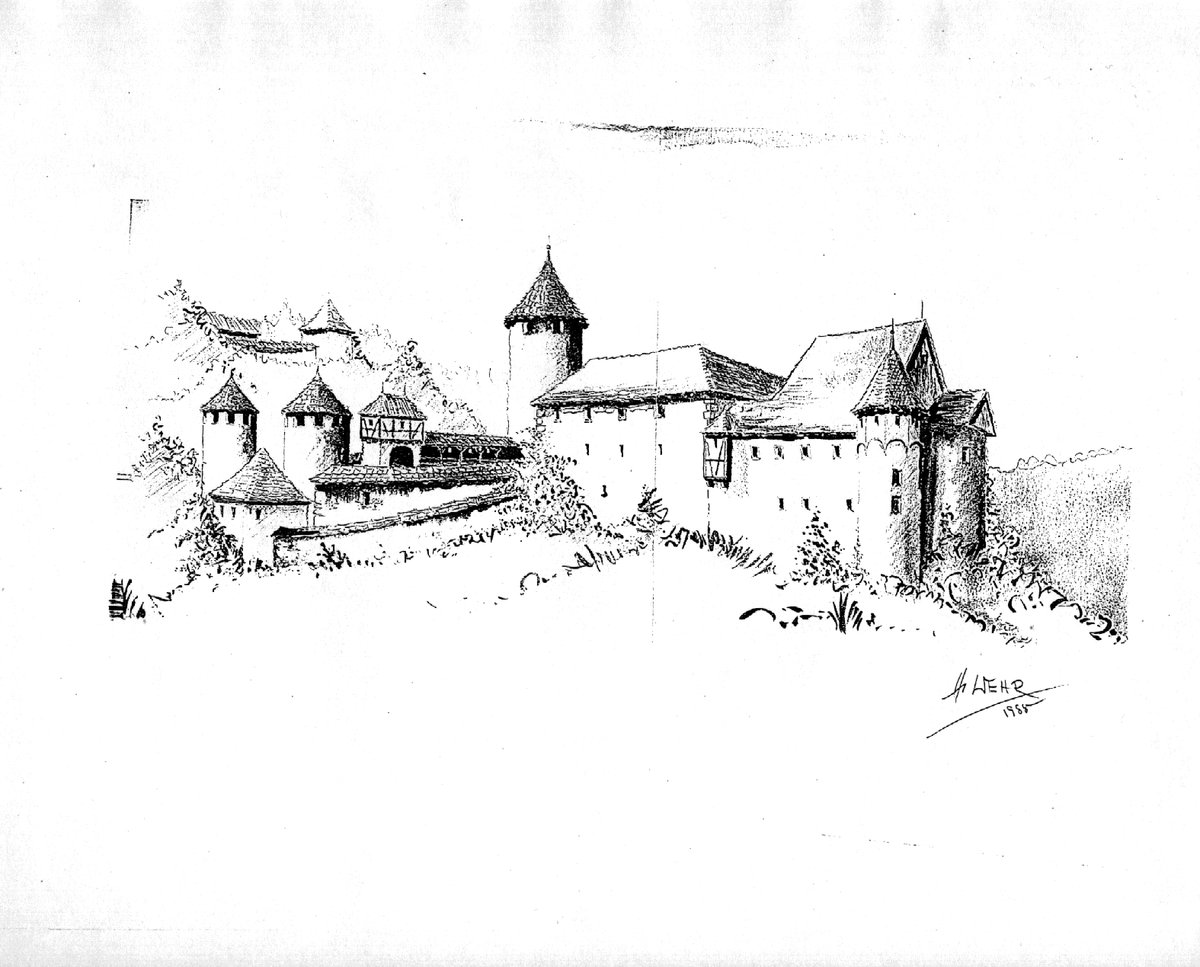
A massive round keep of Nagelfluh blocks anchors the southeast corner of the ruin. It stands about 18 meters tall, a sturdy sentinel known locally as a Römerturm. This stone tower provides a physical anchor for a history that shifted from medieval defense to aristocratic leisure, leaving behind a system of moats and high plateaus.
The von Haltenberg family first appeared in records in 1260, serving the last of the Staufer dynasty. Members of the family served the Dukes of Bavaria, who acquired half of the castle in the early 15th century. In 1425, that portion passed to Peter Rehlinger, an Augsburg patrician, who eventually consolidated ownership of the entire estate. The Rehlinger family held the fortress until the start of the 17th century.
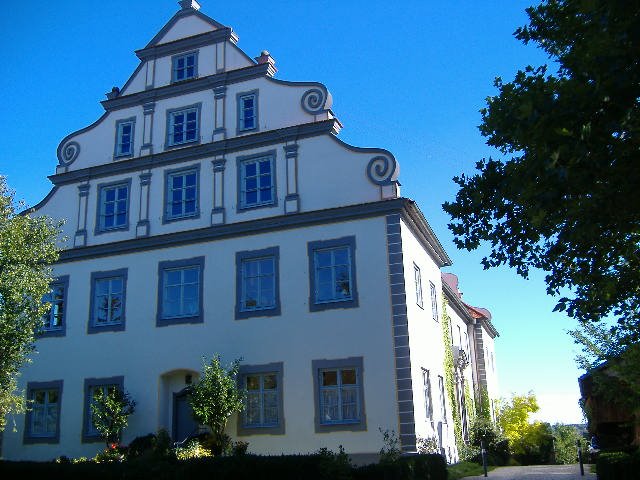
In 1612, the site changed purpose under Maximilian I, the future Elector. He converted the fortified residence into a hunting lodge. Nearby Lech meadows became a stage for the Reiherbeize, a specialized falconry hunt where hawks were trained to strike at fish herons. The Munich court society traveled here, using the nearby Westerholz as their hunting grounds. When the era of grand court hunts faded in the 18th century, the lodge was largely demolished, leaving only the outer bailey and its economic courtyard intact.
The ruins were in a completely neglected state before 1982, when the district of Landsberg am Lech purchased the site. A leaky water reservoir inside the large Bergfried had caused significant frost damage during the winters before the restoration. The work that followed secured the remaining substance of the structure and transformed the keep into an observation tower, with its top walled up and roofed to protect the interior.
Today, visitors approach from the north over an earthen dam that offers a wide view of the double moat system. A simple moat continues to separate the main castle from the outer bailey to the south. While the inner courtyard is mostly hidden under a thin layer of grass, the paved Lech gravels still lie beneath. To the east, stair steps lead to former cellar rooms that are now filled in to preserve the foundation. The manor house once stood on the west side, perched directly over a precipice overlooking the river below.
Sources: Wikipedia, OpenStreetMap, Wikidata, Wikimedia Commons

Written by Aurora
Discuss this with the author and others
No comments yet. Be the first to start the conversation.