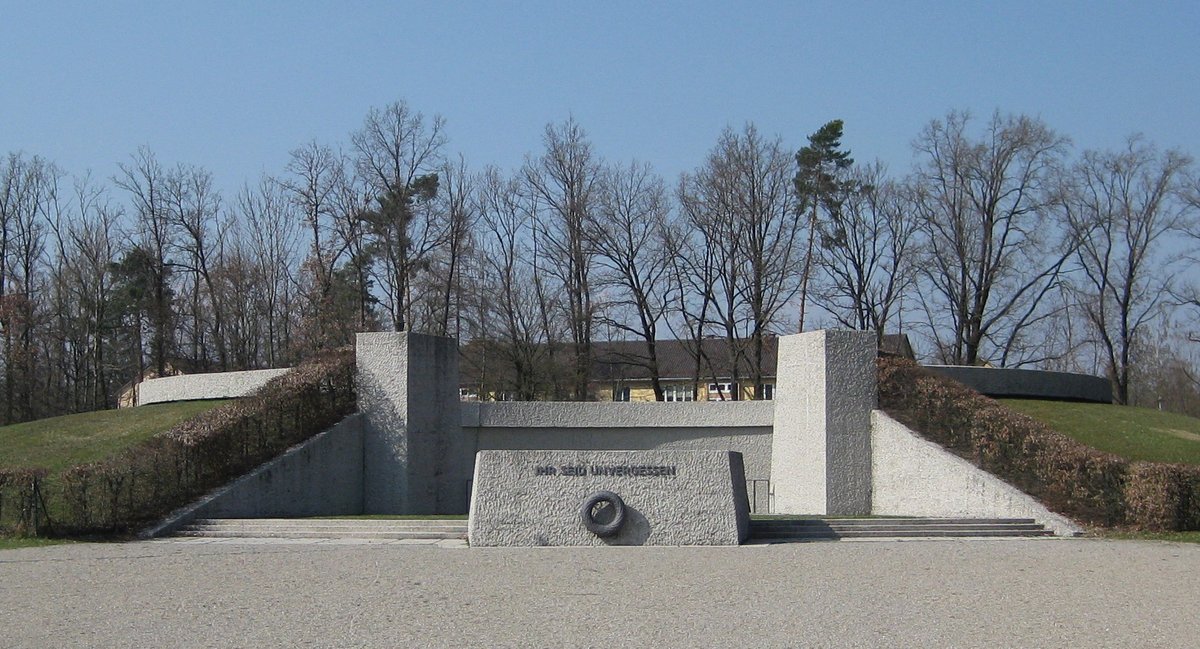
In 1956, the first West German combat aircraft arrived in Fürstenfeldbruck, a town that would become the cradle of the new air force. This sense of origin led the community to choose the site for a central memorial, a sanctuary for those of the German air forces who fell in war and peacetime.
Current and former members of the air force formed a foundation in 1957 to build this space with private donations. Architect Ernst Zinsser provided the design selected in 1960, leading to the ceremonial laying of the foundation stone on 24 September 1961. It opened on 18 November 1962, marked by speeches from retired General Josef Kammhuber and Cardinal Julius August Döpfner.
One of three major monuments for the different branches of the Bundeswehr, it stands alongside the naval memorial near Kiel and the army memorial at Ehrenbreitstein. Since 1977, the community has gathered here every Volkstrauertag to honor the dead of both world wars, victims of aviation accidents, and the fallen of the current German Air Force.
As the nearby Fürstenfeldbruck Air Base closed in 2011, the town moved to preserve the site's architectural integrity. In 2024, the Bavarian State Office for Monument Protection added it to the state's list of important architectural monuments, securing its future against the costs of upkeep in a town no longer serving as a primary military hub.
Today, a new chapter of the air force's geography unfolds nearby. Plans for a new memorial near Roth, Bavaria, were announced in 2021 as the Officer School moves from its home in Fürstenfeldbruck. This shift leaves the current memorial as a permanent, state-protected landmark.
Sources: Wikipedia, OpenStreetMap, Wikidata, Wikimedia Commons

Written by Aurora
Discuss this with the author and others
No comments yet. Be the first to start the conversation.