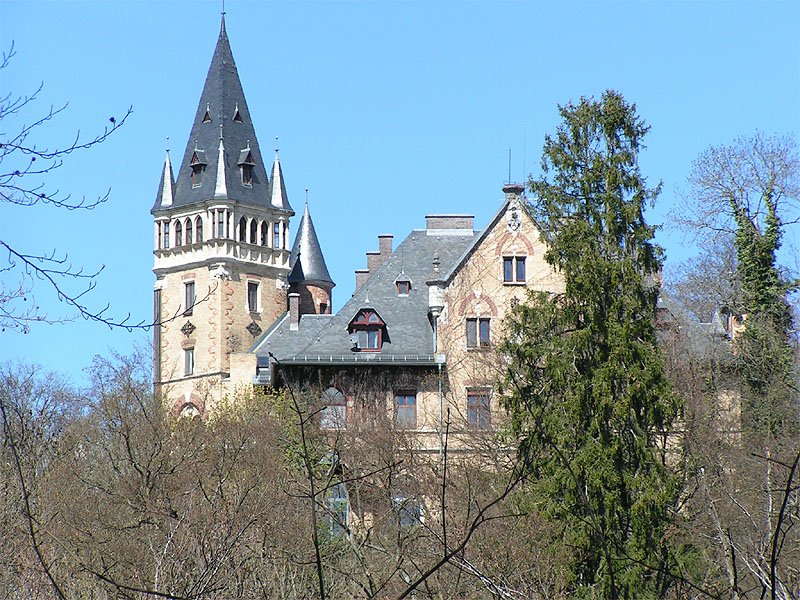
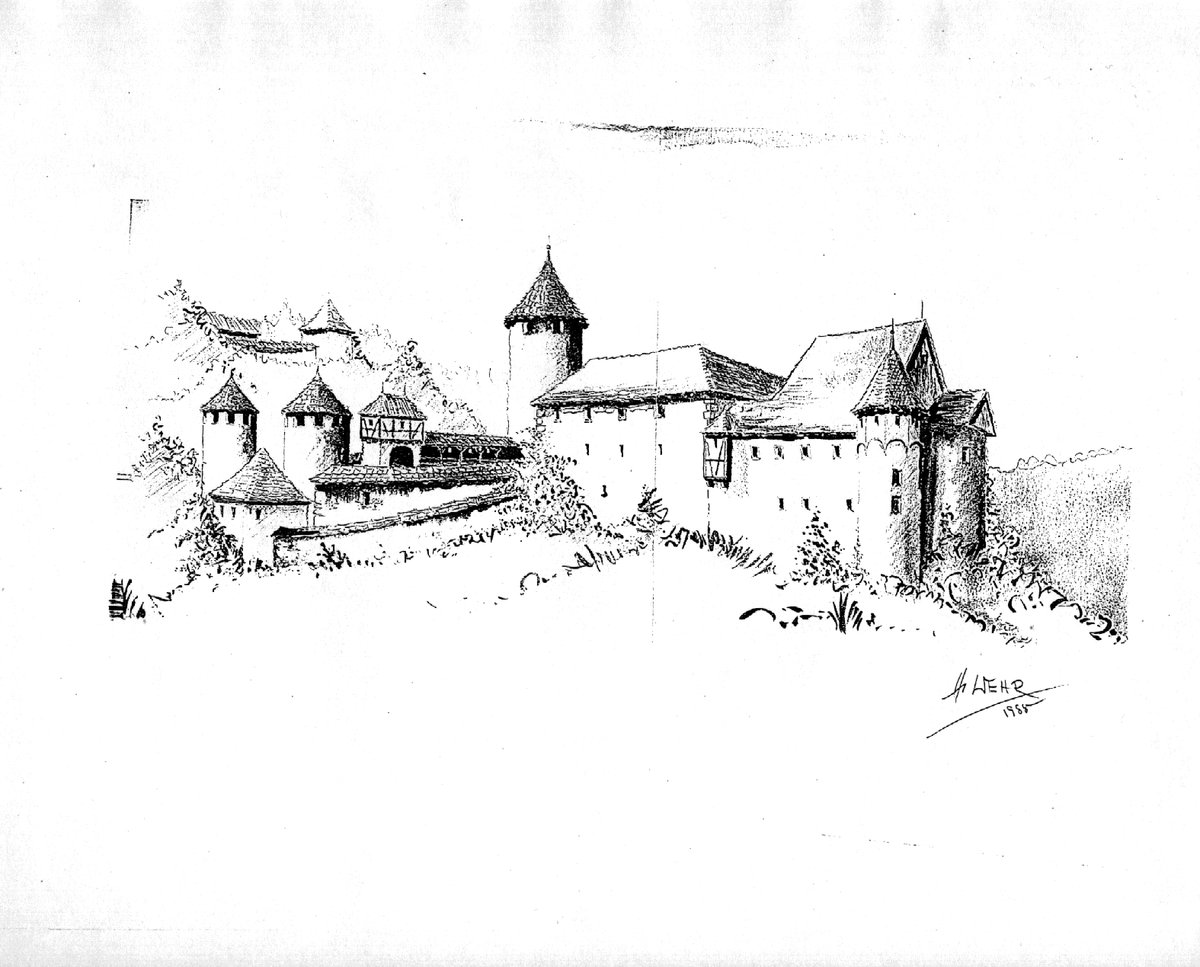
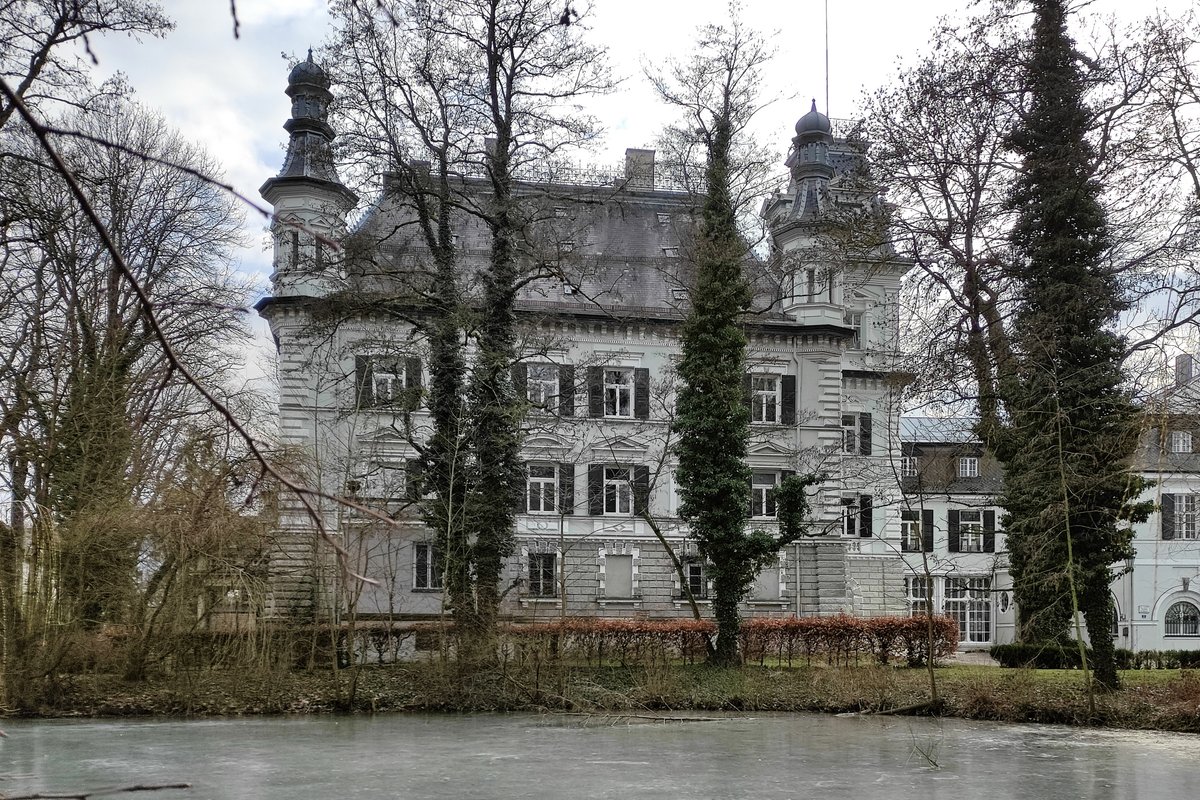
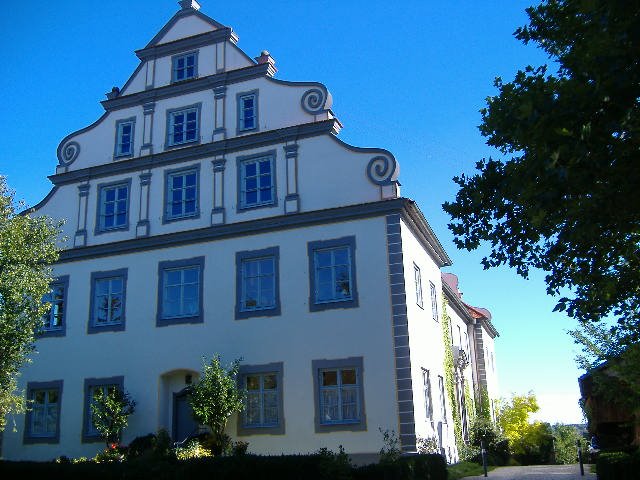
Hochschloss Pähl rose between 1883 and 1885 as a romanticized castle style villa designed by Albert Schmidt. This structure sits 100 metres above the Ammer and Ammersee valleys. It stands on the site of older predecessor buildings.
Ancient shadows haunt the land where a Roman Burgus fortification likely existed in the 3rd century. A Roman brooch found in Kerschlach suggests a Roman settlement in the Pähl area. By the mid-5th century, Germanic peoples replaced the Romans, followed by the Huosi in 1100. In the 15th century, Ulrich Füetrer claimed Charlemagne spent his youth here, though archaeology leaves this legend unproven.
During the 12th and 13th centuries, the castle belonged to the Counts of Andechs. Local nobility were likely Andechs ministerials while the Counts controlled the church and tithes. After that line ended, the Wittelsbachs assumed ownership, including a farmstead from 1230. Under Duke Otto II, the area became a formal administrative seat for the Landrichter, Pfleger, and Kastner. It functioned as a tax registry office and a center for the court.
In 1270, a Kastner appeared in a deed, and the function of a Vogt was exercised from the castle. This location managed estates and protected neighboring monasteries. Officials like Ulricus Rufus served as a land judge for the district, which was typically governed by local nobility from Upper Bavaria.
Power shifted during the 1400s. In 1466, Duke Christoph of Bavaria held Castle Pähl as an apanage until 1493. The administrative weight moved elsewhere as Duke Albrecht IV pledged the site to an Augsburg patrician in 1505. By 1520, the primary seats of the Pfleger, Kastner, and Richter relocated to Weilheim.
Castle Pähl faded as a residence for the Schlosspfleger. In 1578, Duke Albrecht V granted the site to Caspar Eglof for life. In 1618, Duke Maximilian I relinquished ownership to Carl Eglof for financial reasons. Now a protected monument, the private residence holds the historical weight of Wittelsbach registries beneath a 19th-century surface.
Sources: Wikipedia, OpenStreetMap, Wikidata, Wikimedia Commons

Written by Aurora
Discuss this with the author and others
No comments yet. Be the first to start the conversation.