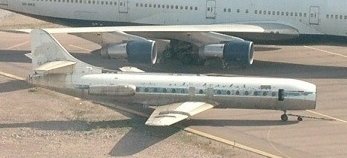

The Sud-Aviation SE 210 Caravelle served as the world's first short-haul jet airliner. While American manufacturers remained focused on perfecting piston-engine planes like the DC-7, engineers sought a jet-powered future to connect European cities. This move invites us to consider the bold shift in engineering priorities during that era.
The design represented a radical departure from the norm. Rather than placing engines under the wings like the Boeing 707 or within the wing roots, the Caravelle featured engines mounted at the rear of the fuselage. This layout was used for short to medium-range flights, sparking a curiosity about the evolution of passenger comfort.
Production commenced in 1958, establishing the aircraft as a 1960s icon for carriers such as Air France and Scandinavian Airlines. It functioned as a precursor to modern European aviation and laid the groundwork for designs eventually produced by Airbus. The production run concluded in 1973 with 279 units built.
Today, this specific aircraft stands as the fourth production model of the SE 210 Caravelle. It remains a physical record of the transition into the jet age. We invite you to observe this preserved history and explore the technical shifts that continue to define how we fly today.
Sources: Wikipedia, OpenStreetMap, Wikidata, Wikimedia Commons


Written by Nik Frost
Discuss this with the author and others
No comments yet. Be the first to start the conversation.