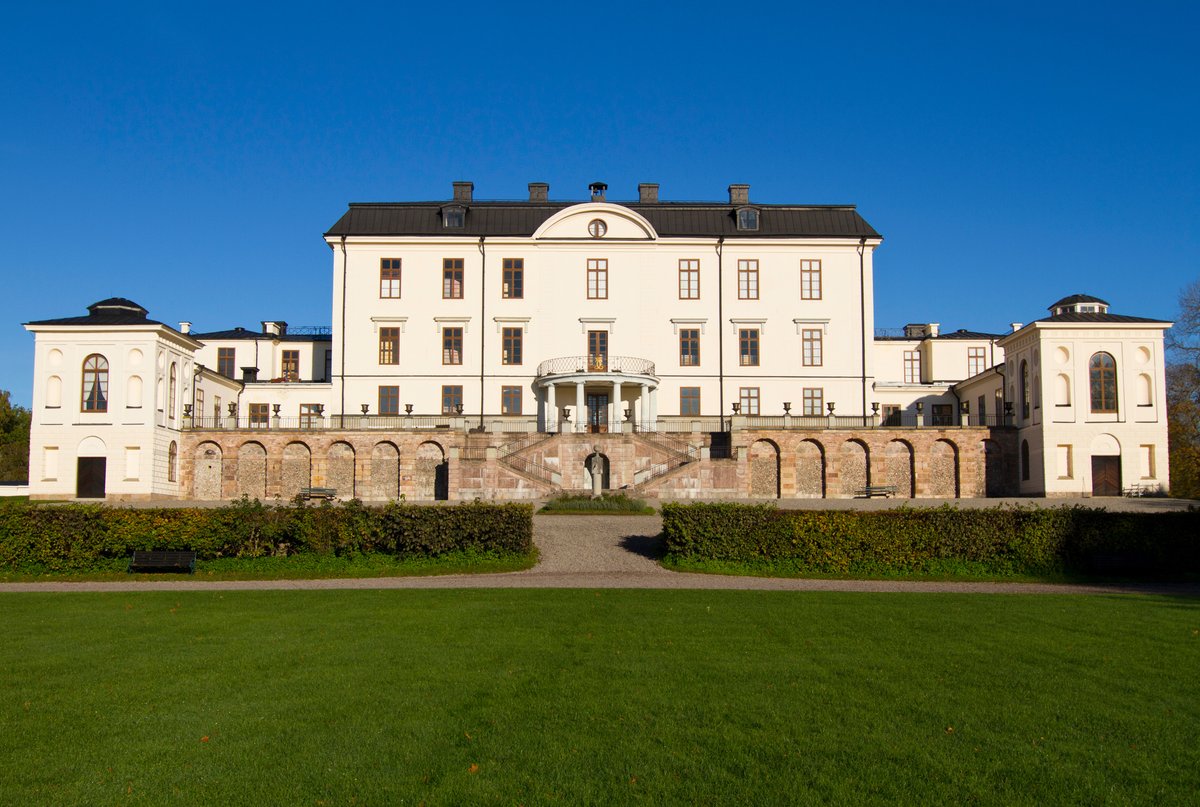

Rosersberg Palace, located on the shores of Lake Mälaren near Stockholm, was built in the 1630s by the Oxenstierna family, who named it after their mother, hailing from the prestigious Tre Rosor family. The palace's architecture, a harmonious blend of Renaissance and Baroque styles, showcases the exquisite taste of the Three Roses lineage.
The origins of Rosersberg Palace lie in its creator, Gabriel Bengtsson Oxenstierna, who commissioned the construction of the palace in the Renaissance style. However, by the late 17th century, the Renaissance style was outmoded, leading to a dramatic modernization to the Baroque style at the hands of architect Nicodemus Tessin the Younger.
After a series of ownership changes, Rosersberg Palace eventually became a royal residence in 1762, elevated to this status when the state bestowed it upon Duke Charles, the younger brother of Gustav III. Upon becoming King Charles XIII, this Duke continued his residence there and commissioned Jean Eric Rehn, the architect responsible for the extensive modernization in the late 17th century, to further refine the palace to the Baroque style.
The palace boasts impressive examples of the late Gustavian style, characterized by a more serious and romantic tone, also known as the Charles XIII Empire style. This era saw the creation of several notable interiors, including the Orange and Red drawing rooms, and the Hogland Room.
The palace retained importance for future royals, including Charles XIV John and Queen Desideria, the first Bernadotte rulers, who found solace and relaxation at Rosersberg. Today, the rooms and collections are maintained remarkably well, providing a fascinating glimpse into the early 19th-century interior design of the palace.
After the passing of Desideria in 1860, the palace was acquired by the Swedish infantry, eventually being occupied by the Swedish Infantry Gunnery School in the 1870s. In more recent times, Rosersberg Hotel and Conference holds a café and accommodates visitors on its sprawling grounds.
Sources: Wikipedia, OpenStreetMap, Wikidata, Wikimedia Commons
Written by Nik Frost
Discuss this with the author and others
No comments yet. Be the first to start the conversation.