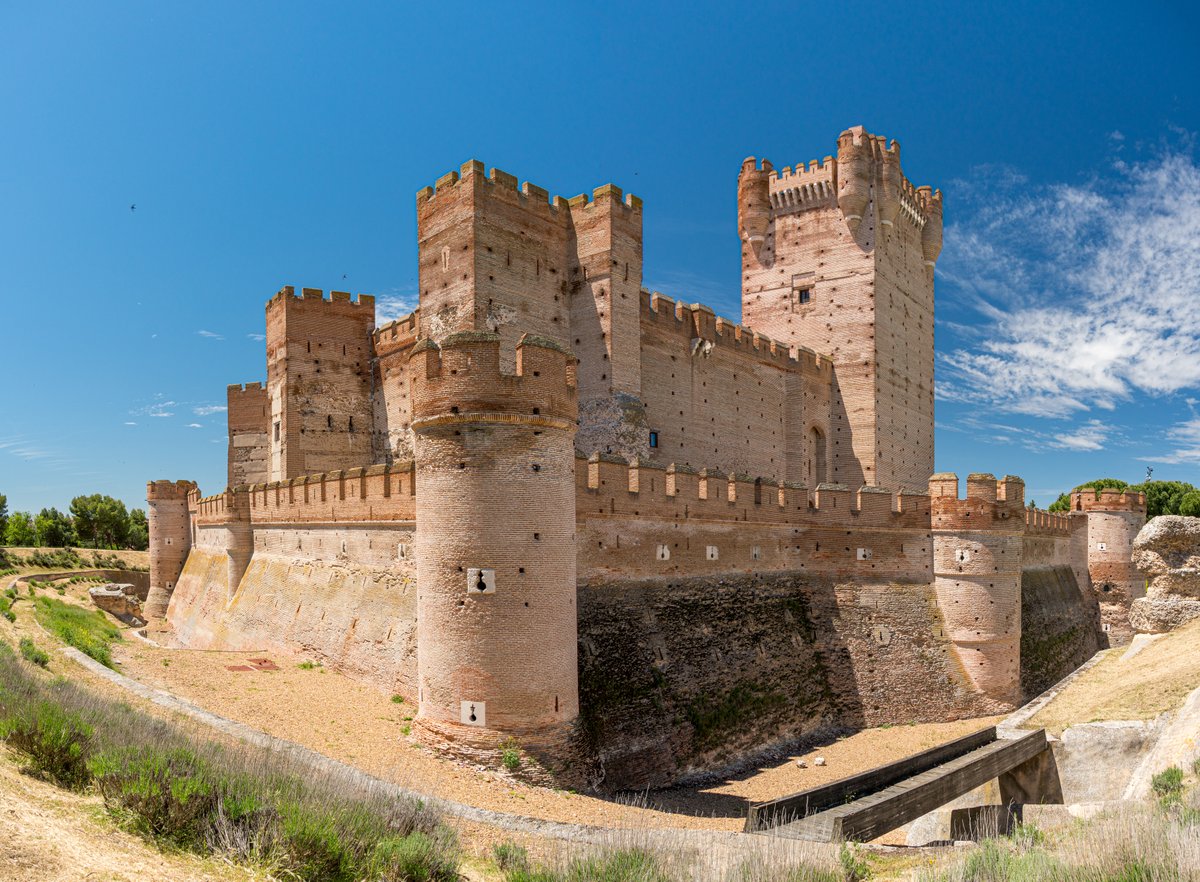

Imagine being locked in a 40 metre high keep. For Cesare Borgia, it was a prominent prison that he eventually escaped by climbing down a rope. The castle, known as the Castillo de la Mota, sits on an elevated hill in the town of Medina del Campo, dominating the surrounding land from its high vantage point.
The fortress has a long history of changing hands between the rival kings of Castile and Aragon. It eventually came into the hands of the Castilian monarchy after 1445. In 1475, the crown of Castile reclaimed the castle and built an artillery bastion at the entrance, decorating it with the heraldic symbols of Ferdinand and Isabella.
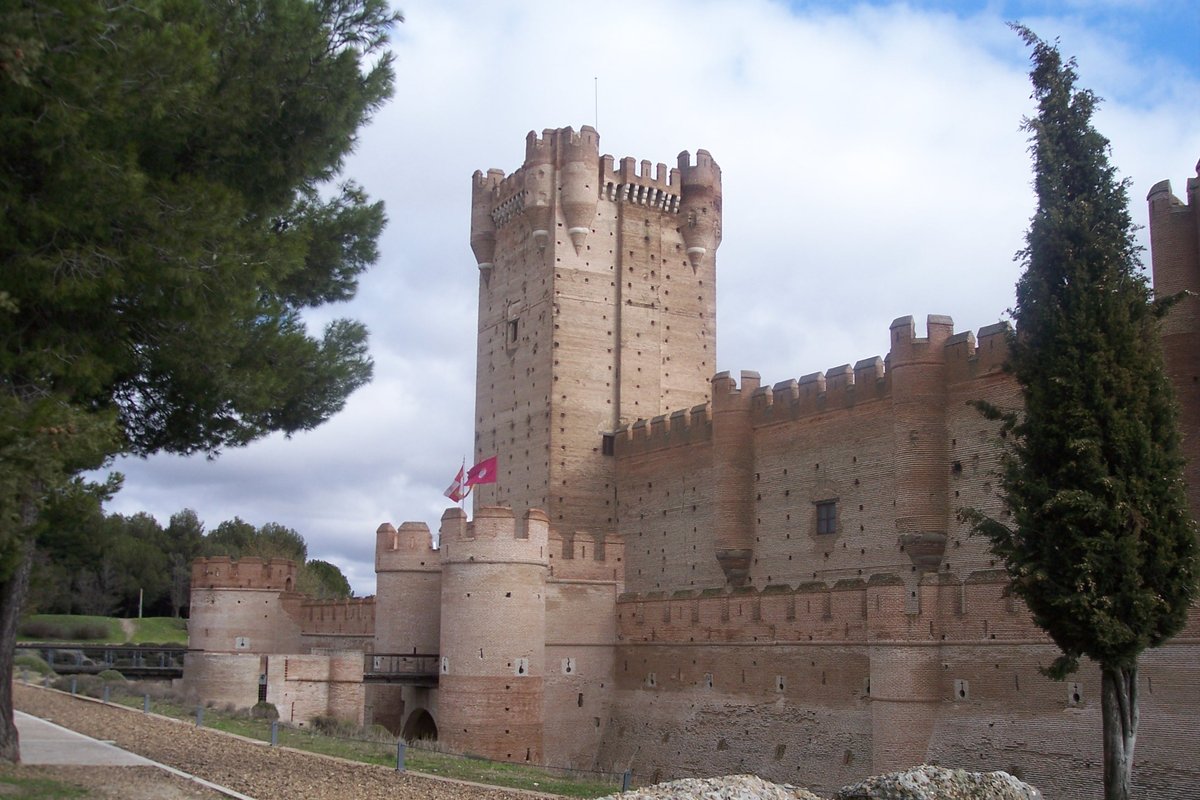
The architecture relies on local red brick and heavy defense. It features a massive outer barbican and an inner castle with a trapezoidal plan, four towers, and a square keep. It was originally accessible over a drawbridge and has been protected by the state since 1904.
Today, the castle remains a site of cultural interest. It serves as a reminder of centuries of conflict, from the Middle Ages to the 20th century, when it was used as a headquarters for the Sección Femenina during the Franco regime. It remains a massive red brick presence on the town skyline.
Sources: Wikipedia, OpenStreetMap, Wikidata, Wikimedia Commons
Written by Nicolo Ciampini
Discuss this with the author and others
No comments yet. Be the first to start the conversation.