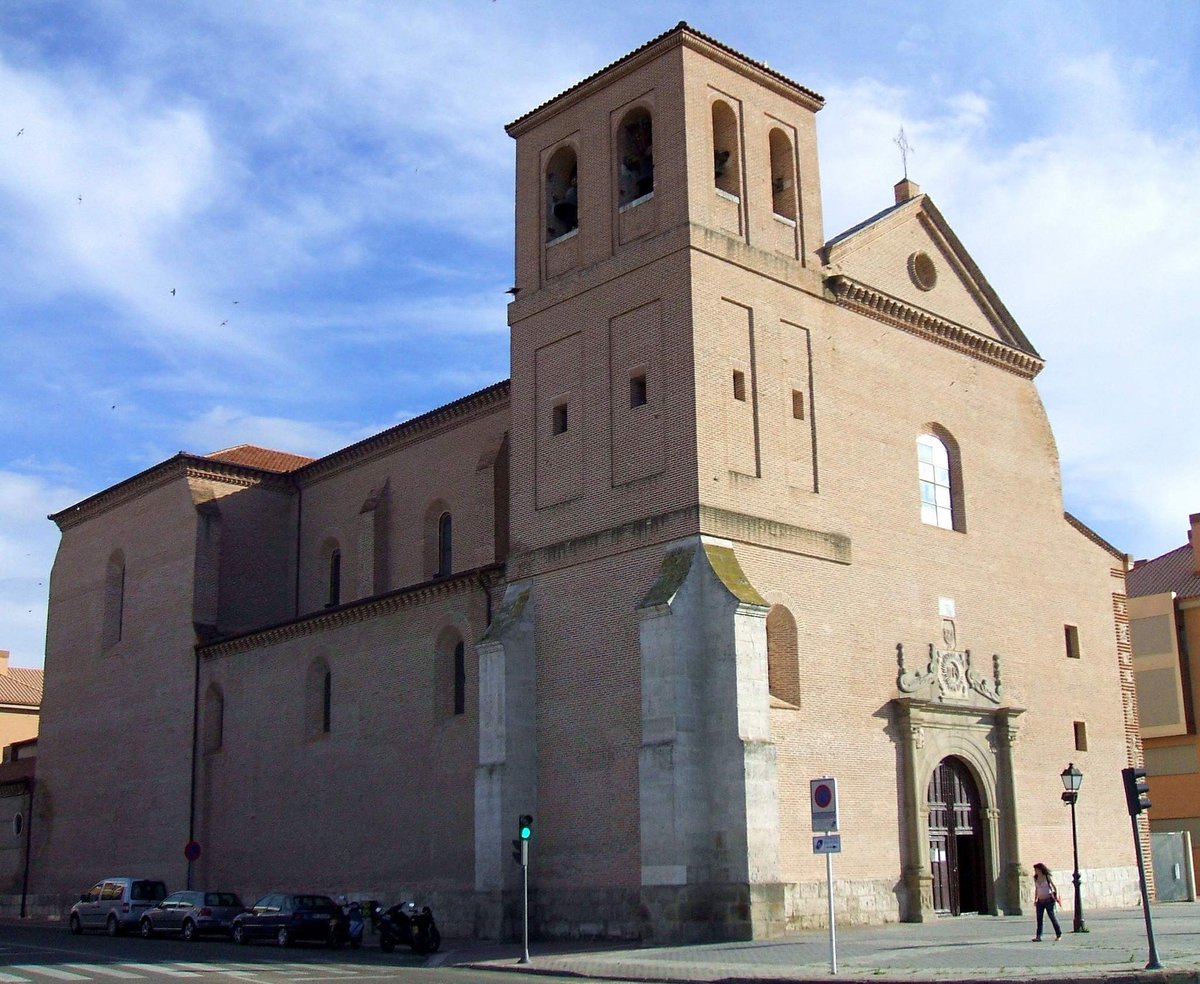

The Iglesia de Santiago El Real in Medina del Campo, Spain, stands as a grand testament to the power of transformation, although its beauty is undeniably striking. But its story isn't about its architecture – it's about the man who built it and the transformation he underwent. For centuries, Medina del Campo was home to the Jesuit order, who played a significant role in shaping the town's religious and cultural landscape. Supported by a local merchant named Rodrigo de Dueñas, the Jesuits arrived in the town, with the first stone of their church (as Iglesia de San Pedro y San Pablo) being laid in July 1553 by San Francisco de Borja.
However, their stay was not without controversy. In 1767, King Carlos III ordered the suppression of the Jesuit order in Spain and its colonies. The reason was clear: he had grown disillusioned with the order's influence and sought to assert his own power. The order was expelled from Medina del Campo, leaving behind the church they had built. Carlos III, however, was not done with the church. As a penance for his role in the Jesuits' expulsion, he decided to reconstruct the church and replace the Jesuits' plaque with his own coat of arms.
Sources: Wikipedia, OpenStreetMap, Wikidata, Wikimedia Commons
Written by Nicolo Ciampini
Discuss this with the author and others
No comments yet. Be the first to start the conversation.