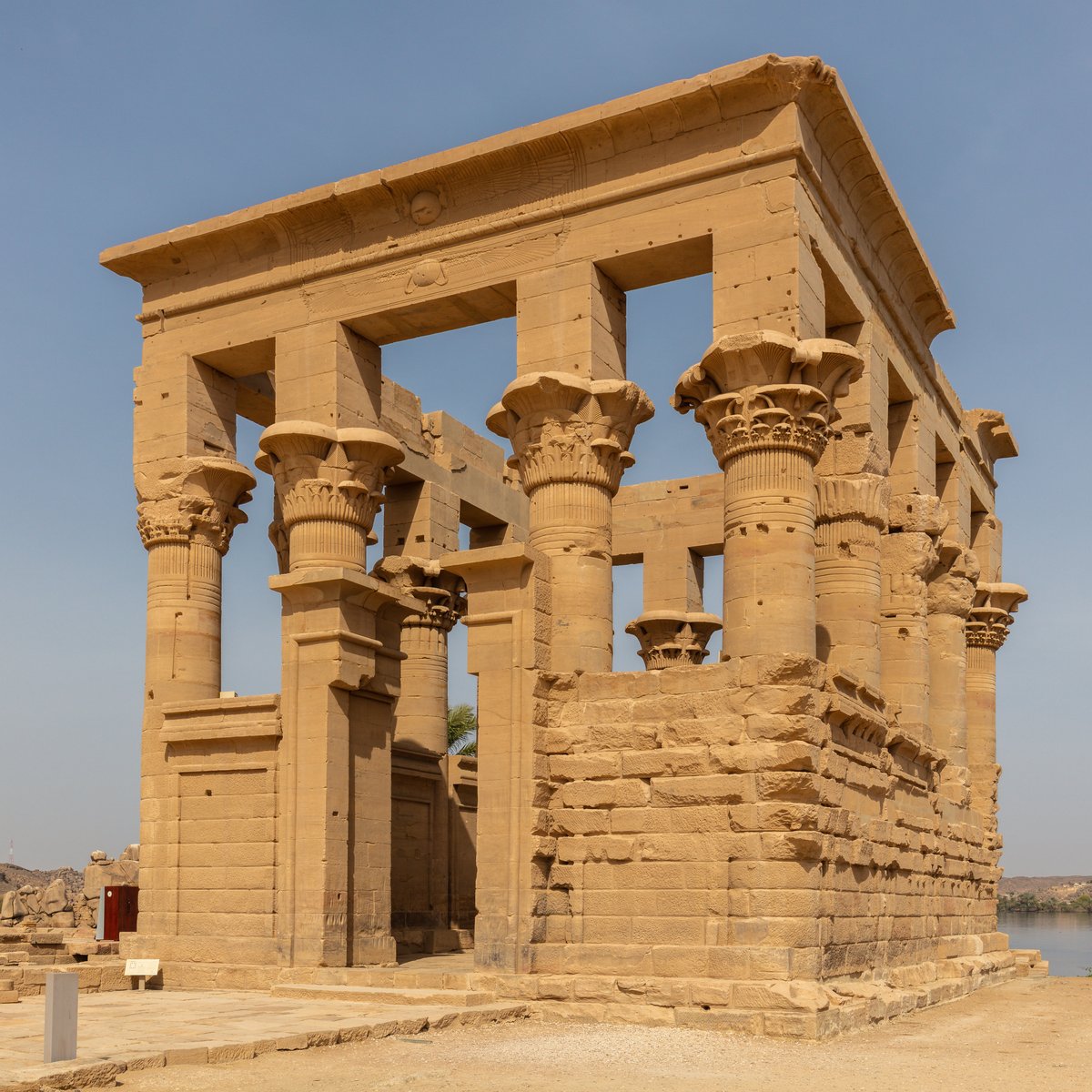

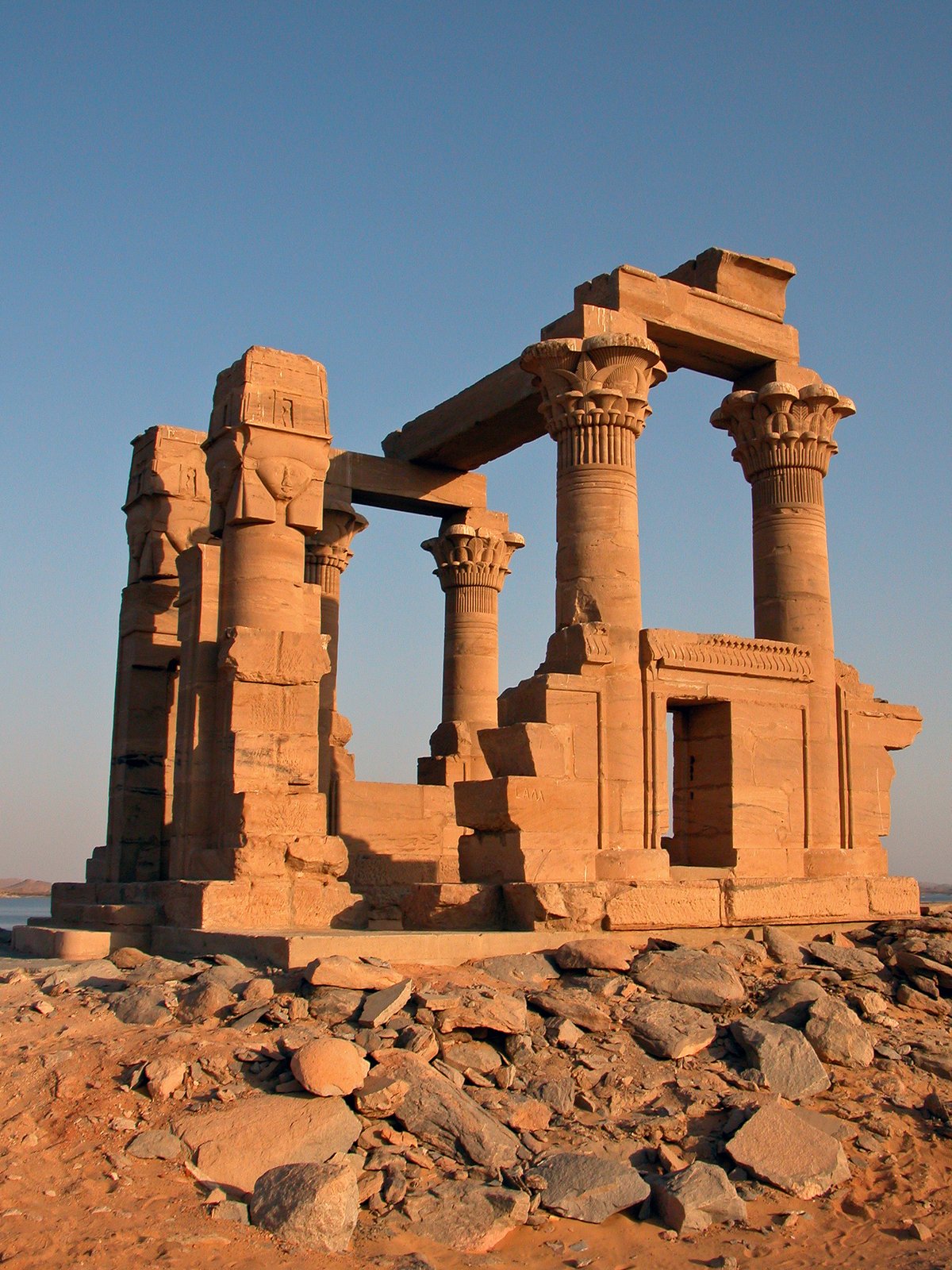
Located on Agilkia Island in southern Egypt, Trajan's Kiosk - also known by locals as Pharaoh's Bed - is a hypaethral temple. While the monument is attributed to the Roman emperor Trajan due to interior reliefs depicting him as a pharaoh, the majority of the structure likely dates to the reign of Augustus. This structure is notable for its unusual combination of wood and stone architecture within a single Egyptian temple.
The 15-by-20 metre kiosk stands 15.85 metres high and features fourteen columns connected by a screening wall with entrances on the eastern and western facades. The four by five columns carry lavishly structured composite capitals topped by 2.10-metre-high piers. These were originally intended to be sculpted into Bes piers, similar to those at the birthhouses of Philae, Armant, and Dendera, though this decoration was never completed.
The temple was originally built on the island of Philae as a main entrance to the temple complex from the Nile river. Its function was likely to shelter the bark of Isis at the eastern banks. In the 1960s, the structure was relocated to Agilkia Island as part of the International Campaign to Save the Monuments of Nubia to protect it from rising waters caused by the Aswan High Dam.
Although the structure is now roofless, sockets within the architraves indicate that it once featured a timber roof. Three 12.50-metre-long triangulated trusses were inserted into a ledge at the back of the stone architecture to carry the slightly vaulted roof. The interior contains a carving of the emperor burning incense before Osiris and Isis.
Sources: Wikipedia, OpenStreetMap, Wikidata, Wikimedia Commons

Written by Mutabor
Discuss this with the author and others
No comments yet. Be the first to start the conversation.