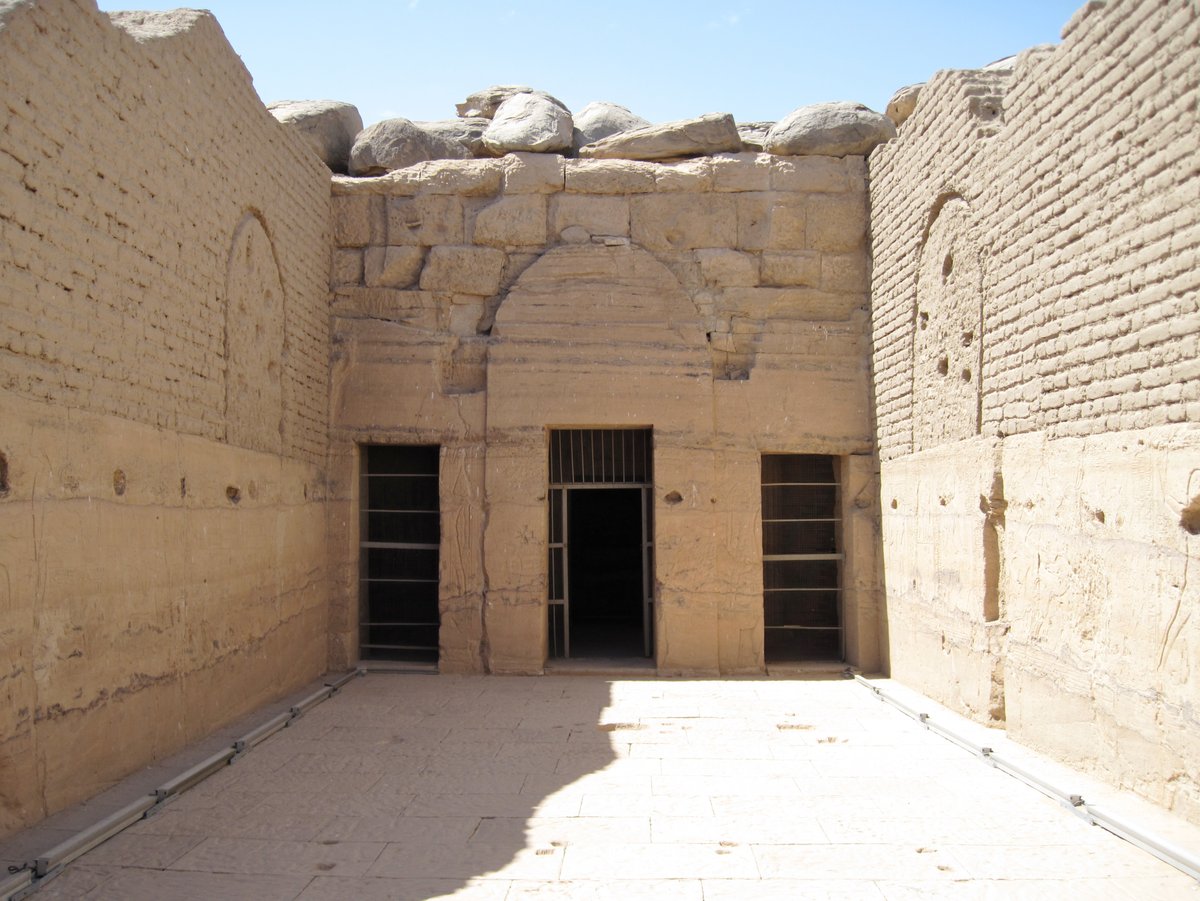
In the seventh year of his reign, the Pharaoh built the Temple of Beit el-Wali, a relic from the past, in the heart of Nubia. This temple, known as the 'House of the Holy Man', was a consecrated ground for four magnificent Egyptian deities - Amun-Re, Re-Horakhti, Khnum, and Anuket. The Pharaoh, wishing to build his first temple here, chose this hallowed soil for its extraordinary allure. The temple's name, a reflection of its storied past, hints at the possibility that it was once sanctified by a Christian hermit.
As you cross the temple's threshold, your eyes are bathed in a kaleidoscope of decorations, relics of a bygone era of grandeur. The inner sanctum still gleams with large amounts of original color. Near the middle of the south wall, a scene unfolds, where the Pharaoh leads his warriors in battle against the Nubians, while his two young sons, Amun-her-khepsef and Khaemwaset, bear witness to this spectacular confrontation. High above, the Pharaoh, enthroned, receives the heartfelt tribute of Nubia.
In the upper register, the Pharaoh's eldest son, and viceroy, Amenemope, leads the tribute procession. The viceroy is blessed with shimmering gold collars in return for his tireless efforts. The walls, intricately carved, speak of the Pharaoh's triumphant campaigns in Libya and Syria, where the Pharaoh, victorious, tramples his enemies and holds others by their hair in his left hand, while wielding his sword with his right. The temple's architecture is striking, with irregular designs set apart from later temples by the Pharaoh, constructed further south in Nubia. The sanctuary contains three rock-cut cult images, perhaps those of Amun, Ptah, and the Pharaoh himself.
Sources: Wikipedia, OpenStreetMap, Wikidata, Wikimedia Commons
Written by Mutabor
Discuss this with the author and others
No comments yet. Be the first to start the conversation.