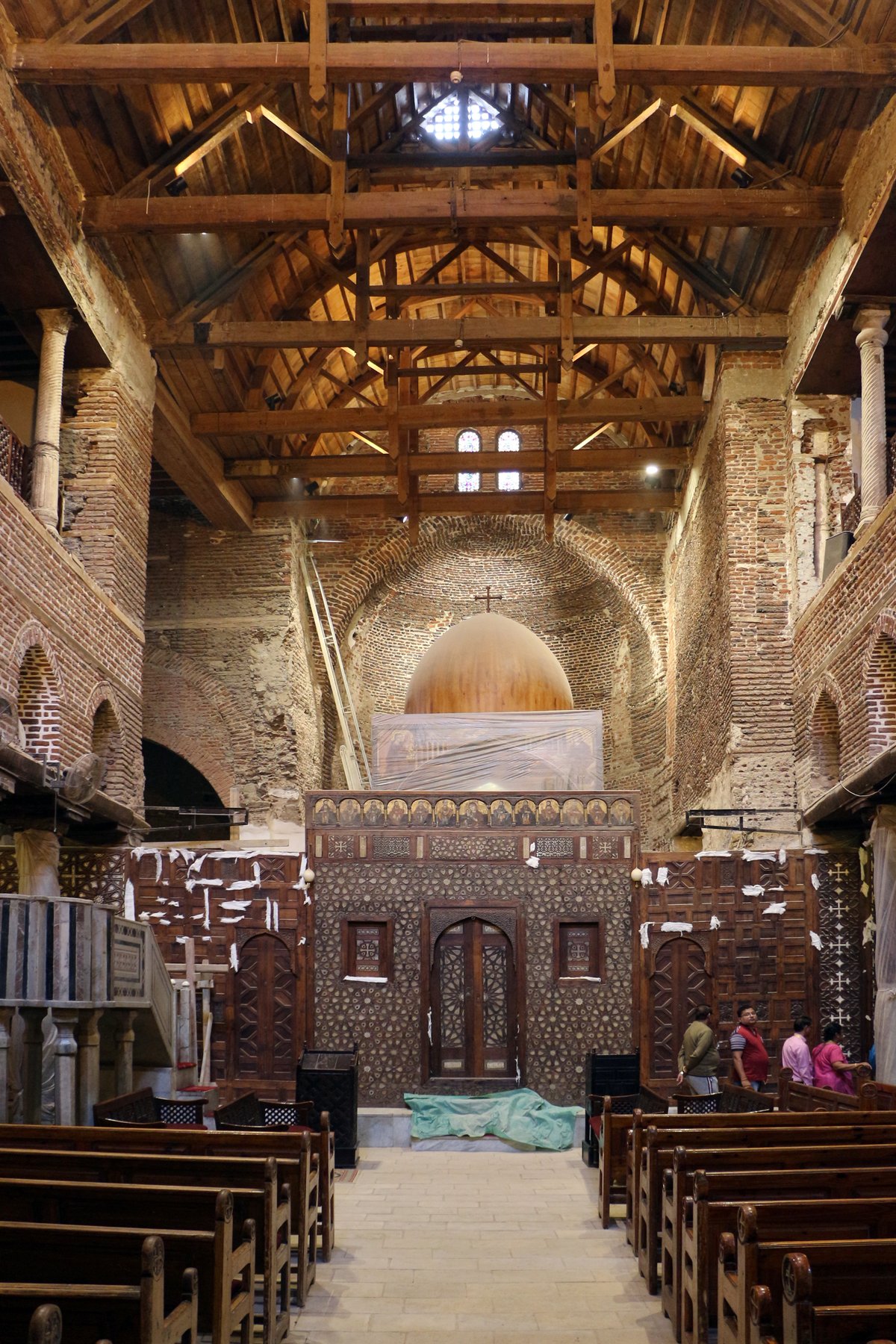

Beneath the floorboards of this ancient Coptic sanctuary lies a limestone wall reaching over six and a half meters high, a remnant of the entrance to the Amnis Traianus. This was a Roman canal hewn by Trajan during the second century to connect Rome and the Mediterranean, by way of the Nile, to the Red Sea and eastern trade routes. Upon these massive stones, a new faith took root.
During the late 7th century, a scribe named Athanasius, who came from Edessa in Syria, founded the church for Sergius and Bacchus, who were martyred there. He constructed it at the center of the remains of the Roman fortress of Babylon. For many centuries, this stone refuge served as the site where many patriarchs and Coptic bishops were elected. It burned in a fire in Fustat around 750 during the reign of Marwan II, and was restored in the eighth century.
The ceiling arches like the belly of an overturned ship, while marble columns divide the nave. In the sanctuary, three altars stand near the space where the Holy Family is said to have rested during their journey from Bethlehem to Egypt. The crypt lies directly below the high altar.
Travelers may walk these halls to behold the icons and the geometric patterns of the ivory-inlaid woodwork on the door panels and iconostasis. The church remains a place of living worship, continuing a tradition of elections that began with Patriarch Isaac in the late seventh century.
Sources: Wikipedia, OpenStreetMap, Wikidata, Wikimedia Commons

Written by Mutabor
Discuss this with the author and others
No comments yet. Be the first to start the conversation.