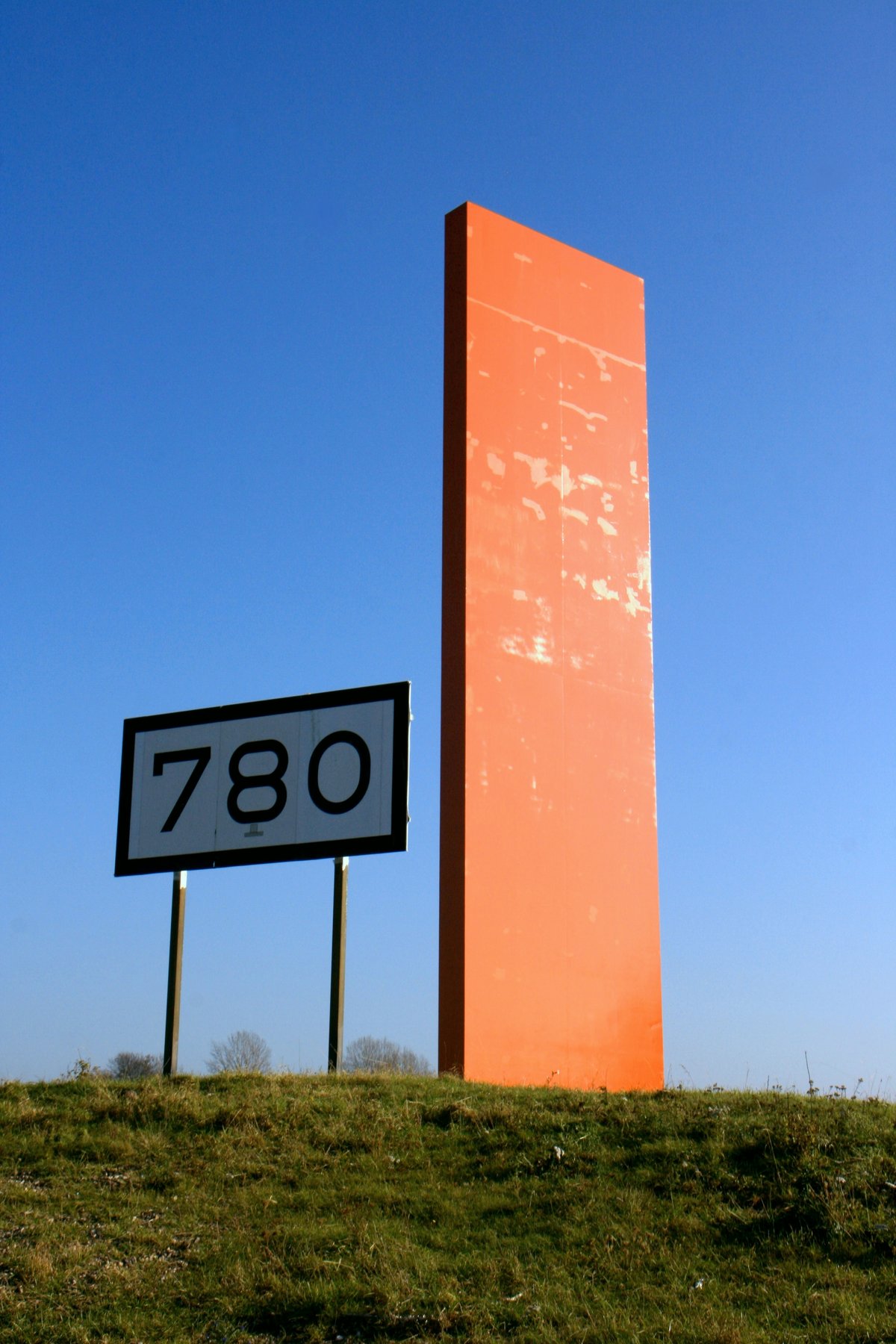
Rheinorange stands as a massive, steel sentinel at Rheinkilometer 780. It is here that the Ruhr river meets the Rhine, a confluence marked by a sculpture that weighs 83 tonnes. To see it is to see a giant, 25-metre-tall shard of metal rising from the landscape of Duisburg-Neuenkamp.
Created in 1992 by the sculptor Lutz Fritsch from Köln, the work is a study in geometry and material. It measures 7 metres wide and 1 metre thick. Its name is a linguistic wink, sounding like the German word for pure orange, which corresponds to a specific shade in the RAL color standard. The sculpture was funded by the Niederrhein IHK, the result of a fundraising initiative by members of the chamber of commerce.
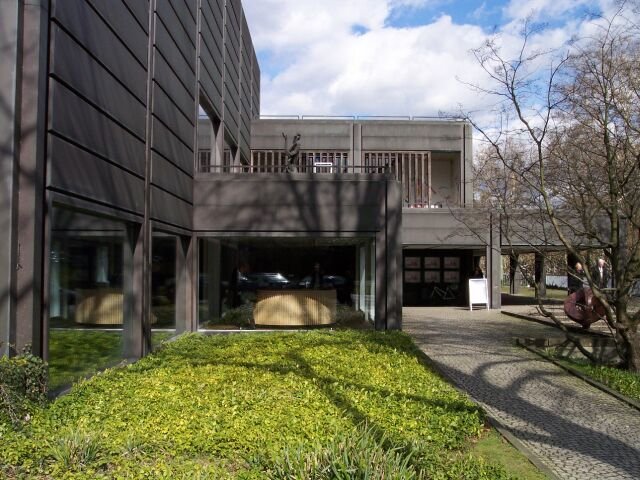
It serves as a bridge between different eras of the city. By standing at the mouth of the river, it connects Europe's largest inland harbour and its most important steel district. It creates a visual line between the technological foundations of the past and the future, pointing toward the Lehmbruck-Museum. It is a piece of cultural architecture meant to ground the surrounding industrial heritage.
Today, it remains a fixed point on the Ruhr Industrial Heritage Trail. Visitors can walk along the water and see the scale of the metal against the sky, a permanent marker of the economic and cultural life that flows through this part of North Rhine-Westphalia.
Sources: Wikipedia, OpenStreetMap, Wikidata, Wikimedia Commons

Written by Aurora
Discuss this with the author and others
No comments yet. Be the first to start the conversation.