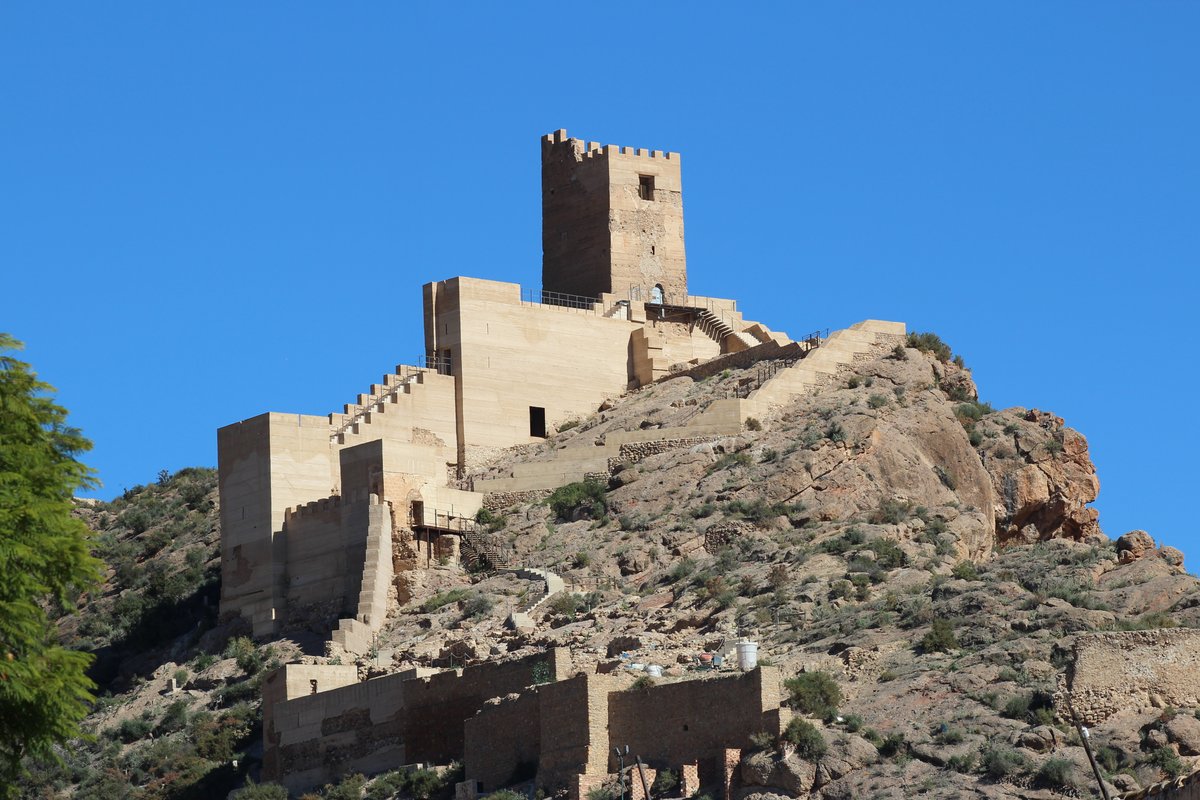

The Castle Alhama, situated in Alhama de Murcia, Spain, is a medieval fortress shrouded in mystery. Originally established in the 11th century, it is an Islamic fortress strategically positioned on a hill that commanded panoramic views of the Guadalentín valley. Its strategic location was crucial for the defense of the Kingdom of Castille. However, its days of splendor met an untimely end following the Treaty of Alcaraz, which led to its decline.
Miguel de Villamayor, a nobleman, became the castle's owner after the Treaty of Alcaraz. The castle, built in the Almohad style, featured two distinct spaces. One served political and military purposes, while the other catered to the refuge and residence needs of the population. For the next century, the Fajardo family exerted considerable control over the kingdom, leveraging the castle as their primary stronghold. With the end of the Reconquista and the fall of the Kingdom of Granada, the castle's relevance waned.
This decline was exacerbated after the expulsion of the Moriscos in the early 17th century. The castle was then abandoned and left to ruin. In the 21st century, the castle underwent conservation efforts to consolidate the remaining structures and excavate certain areas. Funded by both the Spanish and municipal governments, cultural visits are now possible. Today, you can trace the castle's outline, visiting its prismatic homage tower, arches, and vestiges of cisterns.
Sources: Wikipedia, OpenStreetMap, Wikidata, Wikimedia Commons
Written by Nicolo Ciampini
Discuss this with the author and others
No comments yet. Be the first to start the conversation.