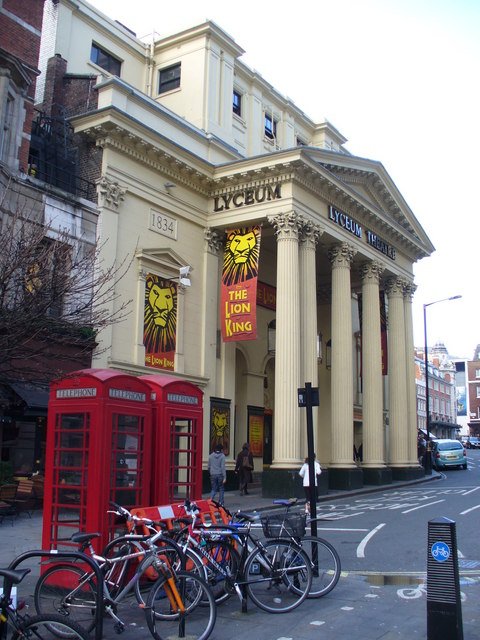

The Lyceum Theatre began as a building for the Society of Artists in 1765, though the society was not a success. It was then leased out for various entertainments, including musical performances by Charles Dibdin and performances by the famed actor David Garrick. By 1802, it served as a chapel, a concert room, and the site of the first London exhibition of waxworks by Madame Tussauds.
In 1794, the composer Samuel Arnold Sr rebuilt the interior of the building to make it a proper theatre. However, because he was not granted a patent, the building was leased to other uses, including Philip Astley, who brought his circus there after his amphitheatre burned down. During this period, the building also served as the home for the Sublime Society of Beef Steaks, where members met every Saturday night to eat beefsteaks and drink port wine for over 50 years.
The original house was destroyed by fire in 1830, leading to the construction of the present building on Wellington Street. Designed by Samuel Beazley and opened in 1834, the house is unique for having a balcony overhanging the dress circle. It hosted many notable works, including the first modern English opera and adaptations of Charles Dickens's novels.
After being used as a theatre for many decades, the building closed in 1939 and was set to be demolished. It was saved and converted into the Lyceum Ballroom in 1951, where many well-known bands played. The building was closed in 1986 but was restored to theatrical use in 1996 by Holohan Architects. Since 1999, the theatre has hosted The Lion King at its location on Wellington Street.
Sources: Wikipedia, OpenStreetMap, Wikidata, Wikimedia Commons

Written by Nicolo Ciampini
Discuss this with the author and others
No comments yet. Be the first to start the conversation.